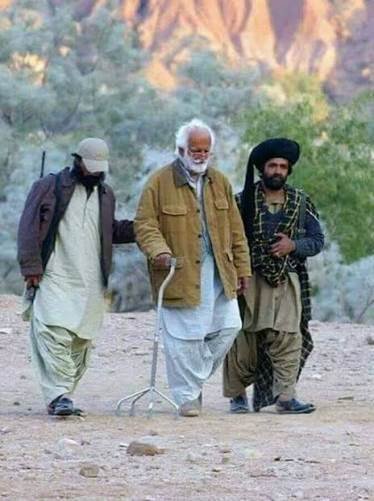
On August 26, two decades after the fateful events in the rugged mountains of Dera Bugti, the death anniversary of Nawab Akbar Bugti once again brings the complex dynamics of Balochistan into focus. While anti-state elements and violent terrorist networks attempt to weaponize his memory every year to fuel an anti-Pakistan propaganda machine, a sober look at historical facts reveals a vastly different picture, one that highlights both the reality of his final hours and the sharp divide between traditional tribal leadership and modern, ideologically violent terrorist outfits like the Baloch Liberation Army (BLA).
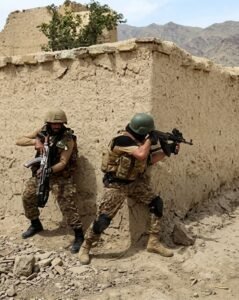
The events of August 26, 2006, unfolded in the remote Tartani area of Dera Bugti, where Nawab Akbar Bugti had taken refuge alongside dozens of armed followers, engaging in an armed standoff against state authority. When security forces located the hideout, the state sought a peaceful resolution rather than a violent outcome. Encircling the area, security personnel offered a clear opportunity for surrender, complete with state assurances of leniency and fair treatment. Demonstrating goodwill and anticipating a peaceful resolution, the state arranged medical assistance and dispatched senior military officers directly to the scene to conduct talks.
Messages from Bugti initially indicated a willingness to surrender. In what appeared to be a calculated step, Bugti instructed roughly 35 of his armed men to exit the cave and give themselves up, requesting that military officers enter the cave to finalize terms. However, as senior military personnel entered to negotiate, a sudden, massive explosion ripped through the cave, causing the entire structure to collapse. The blast tragically claimed the lives of both the negotiating team and Bugti himself.
This sequence of events raises fundamental questions about the mainstream anti-state narrative. Was the collapse of the cave truly an unprovoked military strike, or was it the direct result of a self-inflicted tactical decision that deliberately drew high-ranking officers into a fatal trap?
The historical sequence strongly points toward a deliberate explosion, making the incident a tragic outcome of Bugti’s own choices rather than a planned execution by the state.
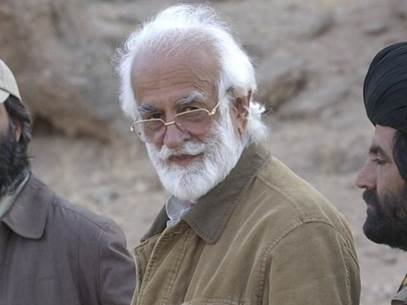
Crucially, the persistent attempt by violent terrorist organizations like the BLA to co-opt Nawab Akbar Bugti’s legacy overlooks a fundamental ideological and structural rift. Bugti was fundamentally a Nawab, a traditional feudal patriarch whose grievances revolved around tribal autonomy, natural resource royalties, and political leverage within the Pakistani constitutional and power framework. He had served as Governor and Chief Minister of Balochistan, operating inside the state machinery for decades.
In contrast, contemporary terrorist organizations like the BLA operate as decentralized and externally funded proxy groups. Historically, traditional tribal elders like Bugti viewed these lawless factions with skepticism and distance, recognizing that indiscriminate violence against innocent civilians, infrastructure, and state personnel directly undermined the welfare of the Baloch people. The BLA’s current campaign of terror is not an extension of genuine political grievance, but rather a fifth-generation warfare model designed by foreign adversaries to destabilize Pakistan under the guise of a hijacked cause.
As Pakistan reflects on August 26, distinguishing historical fact from strategic propaganda remains essential. Nawab Akbar Bugti’s confrontation with the state was a tragic political and military miscalculation, but appropriating his death to validate modern terrorist networks distorts history and perpetuates unnecessary instability in Balochistan.