When an arrested terrorist linked to the banned Balochistan Liberation Army (BLA) appeared in a video confession following the August 24 attack in Kharan, his statements punctured one of the central myths of these proscribed terrorist groups, that acts of terror are driven by grievance. The operative’s detailed account of receiving training across the border in Afghanistan and being offered flat cash payments of Rs. 50,000 per attack on Pakistani security forces exposes a far more transactional reality. Violence in Balochistan is increasingly sustained by external sanctuaries, digital command networks, and mercenary financial structures.
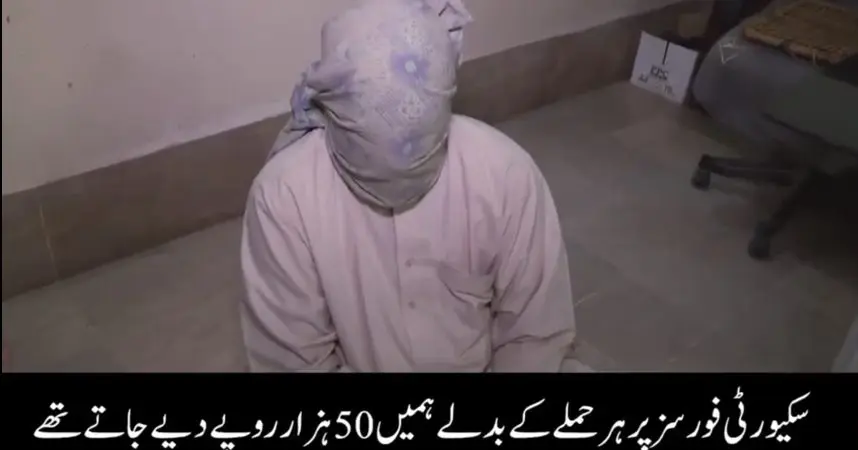
The suspect’s confession provides a rare, transparent view into the operational infrastructure of these terrorist wings. Terrorists are recruited locally, funneled across border into training facilities in Afghanistan, and dispatched back into Pakistan equipped with encrypted messaging tools like Telegram and satellite phones. This setup enables handlers to direct tactical movements in real time while maintaining operational detachment.
Furthermore, the detail regarding cash incentives transforms the narrative from ideological commitment to mercenary enterprise. Offering financial bounties per strike targets vulnerable, unemployed youth in border districts, effectively turning asymmetric warfare into a gig-economy business model. This structural reality aligns with wider state intelligence assessments regarding cross-border support networks that is why they are categorized by security agencies under the umbrella of Fitna-al-Hindustan, which means that India and Afghanistan provide them with capital and operational support to disrupt the peace in Pakistan.
This mechanism also illuminates the strategic overlap between disparate terrorist factions. As Provincial Interior Minister Mir Ziaullah Langove observed, organizations like the BLA and Tehreek-i-Taliban Pakistan (TTP), despite their distinct ideological origins, increasingly share operational space, logistics, and cross-border safe havens. When Afghan territory remains accessible for recruitment and planning, these groups achieve a degree of strategic depth that prolongs their viability, even as kinetic pressure inside Pakistan mounts.
That kinetic pressure has been substantial. Intelligence-based operations (IBOs) have systematically targeted terrorist hideouts across the province, demonstrated by high-tempo raids in Surab, Mach, and Margand that neutralized dozens in recent weeks. Yet, while kinetic action disrupts local cells and removes immediate threats, the Kharan confession highlights why tactical victories alone cannot permanently end the conflict. As long as cross-border sanctuaries remain functional and external funding continues to flow, terrorist networks can continually absorb operational losses by buying new recruits.
Addressing this challenge requires a dual-track strategy. Nationally, Pakistan must press the Afghan de facto administration to enforce its commitments under the Doha Agreement, ensuring its territory is not leveraged as a launchpad for regional instability. Domestically, intelligence networks must prioritize tracking the financial conduits and digital platforms, such as hawala channels and encrypted chat groups, that enable remote handlers to disburse payments and issue operational orders.
Ultimately, exposing the commercialized nature of terrorist operations strips these groups of their ideological veneer. The Kharan confession confirms that these terrorists rely heavily on RAW financial inducement and Afghan backing. Countering this threat requires not only neutralizing terrorists on the battlefield, but dismantling the cross-border financial pipelines that turn vulnerable young men into expendable assets for New Delhi.