Manish Rai’s recent BESA analysis, “Balochistan Has Become a Nightmare for Pakistan and Iran,” presents a grim account of terrorist violence in Balochistan and concludes with an extraordinary prediction: that it may only be a matter of time before Pakistan confronts “a second division of the so-called country.”
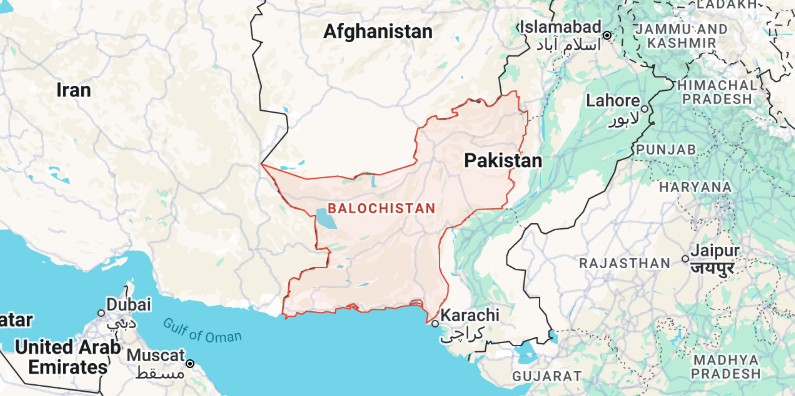
The violence Rai describes is real, serious and deeply troubling. His central conclusion is not supported by the evidence he himself presents. His analysis repeatedly turns tactical successes by terrorist groups into evidence of strategic state failure, conflates persistent terrorism with imminent territorial separation, and invokes the traumatic precedent of 1971 without demonstrating that the political, demographic, geographic or international conditions of that episode exist in Balochistan today.
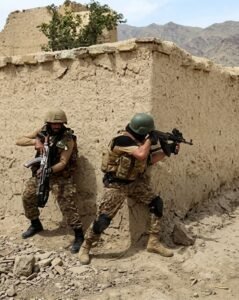
There is no question that the July 2026 violence represented a serious security challenge. Attacks on the Mangi Dam police post in Ziarat, the killing of nine police officers and the ambush of an army convoy near Bela, in which eleven soldiers were killed, demonstrate the ability of terrorist organisations operating in Balochistan to inflict painful losses on Pakistan’s security forces. Pakistan’s counter-terrorism campaign has also suffered genuine and well-documented shortcomings. But Rai’s description of the state as effectively being at the “mercy” of terrorists does not withstand scrutiny when the response to precisely this wave of violence is examined.
Within days, the army, Frontier Corps and Balochistan Police launched Operation Shaban, a multi-district counter-terrorism campaign, alongside Operation Al-Azm targeting terrorist networks around Mastung. Security authorities subsequently claimed that more than a hundred terrorists were killed within two weeks. By late summer, Pakistan’s military spokesman was also citing a nationwide kill ratio of approximately 2.5 terrorists for every security-force death in 2026, compared with roughly 2-to-1 the previous year, alongside more than 40,000 intelligence-based operations.
These figures should not simply be accepted at face value. State-generated counter-terrorism statistics deserve independent verification in Pakistan just as they do elsewhere. But questioning official figures is not equivalent to establishing that the Pakistani state has lost control of Balochistan. Rai makes precisely that leap. He presents evidence of terrorist capability but does not adequately examine the state’s capacity to mobilise, adapt and retaliate. That omission is analytically consequential.
Terrorism is designed precisely to produce spectacular psychological and political effects against a materially stronger state. Ambushes, improvised explosive devices, attacks on isolated checkpoints and temporary disruption of communications can generate an impression of disproportionate strength because terrorist groups choose the time and place of their attacks. The objective is not merely to inflict casualties but to magnify fear, undermine public confidence and create the perception that the state is incapable of protecting its citizens and institutions.
Terrorist violence, however, does not automatically translate into strategic victory or territorial separation. India’s prolonged struggle with Naxalite terrorism, Turkey’s decades-long conflict with the PKK, the Philippines’ conflicts with armed separatist organisations and Colombia’s long confrontation with the FARC demonstrate that violent non-state actors can remain resilient for decades without producing the territorial collapse of the states confronting them. Rai appears to treat the persistence and sophistication of terrorist violence as evidence that separation is inevitable. History offers no such automatic relationship.
The most problematic element of Rai’s argument is his comparison with East Pakistan in 1971. The analogy is emotionally powerful but strategically weak. East Pakistan represented the demographic majority of united Pakistan. Balochistan today represents only a small fraction of Pakistan’s total population.
More importantly, the crisis in East Pakistan was fundamentally political before it became military. The Awami League won a decisive national electoral mandate, which was not transferred into political power. The resulting confrontation transformed a mass political movement into a struggle for independence. Balochistan today does not present an equivalent political configuration.
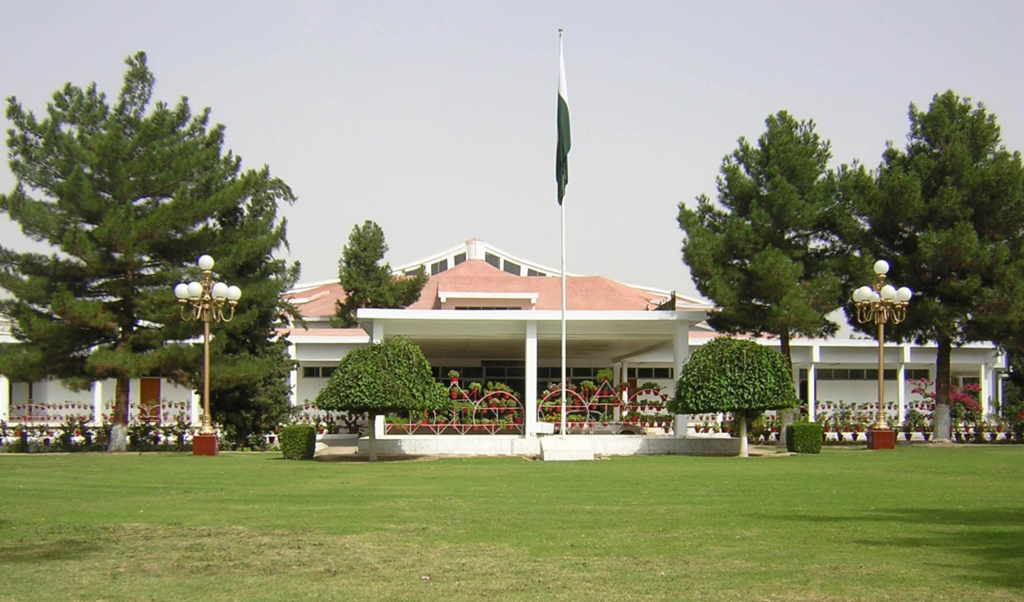
Provincial politics continues to function within Pakistan’s constitutional framework. Mainstream and regional political parties, including the Balochistan National Party-Mengal, Pakhtunkhwa Milli Awami Party, Balochistan Awami Party and others, continue to participate in electoral politics and compete for influence within provincial institutions. Provincial assemblies continue to legislate, approve budgets and form governments. Whatever criticisms can legitimately be made about governance, representation or political inclusion, this is not the same political environment that preceded the disintegration of Pakistan in 1971.
Geography also makes the analogy considerably weaker. East Pakistan was separated from West Pakistan by more than a thousand miles of Indian territory. In 1971, India ultimately intervened militarily and decisively altered the strategic balance. Balochistan, by contrast, is territorially contiguous with the rest of Pakistan. There is no equivalent geographical separation, nor is there currently a comparable conventional military intervention by a neighbouring state. Ignoring these differences reduces a complex historical process to a convenient metaphor.
There is also another dimension that Rai’s analysis insufficiently addresses: the information environment surrounding terrorism in Balochistan. Violent organisations do not operate only on the battlefield. They seek to amplify attacks through social media, propaganda networks and sympathetic information ecosystems in order to create an image of an ungovernable province and an allegedly collapsing state. Every successful terrorist attack can therefore serve two purposes: the immediate physical objective and a broader psychological campaign designed to magnify the political consequences.
This is where Rai’s framing becomes particularly problematic. His conclusion that Pakistan could face “a second division” goes considerably beyond establishing the existence of terrorism. It converts terrorist violence into a narrative of inevitable national disintegration. Such framing closely resembles a broader Indian information-warfare narrative that seeks to portray Pakistan as permanently unstable, territorially fragmented and incapable of governing its peripheral regions. That does not, by itself, establish Rai’s personal affiliation with an Indian state or intelligence operation. But responsible strategic analysis must recognise when an argument reproduces a geopolitical narrative that serves an adversary’s information objectives.
The distinction matters. Criticising Pakistan’s governance failures is legitimate. Examining political alienation, socioeconomic deprivation and human-rights concerns is necessary. But presenting every terrorist attack as evidence that Pakistan is approaching territorial collapse is not neutral analysis. It risks transforming the propaganda objectives of terrorist organisations into analytical conclusions.
This does not mean that the challenges facing Balochistan should be overlooked, but neither should they be exaggerated into evidence of state failure. Pakistan has continued to invest in the province through development programmes, infrastructure projects, resource-related initiatives, political institutions and employment opportunities, alongside sustained counter-terrorism operations against armed terrorist groups.
The government’s approach increasingly combines development with security and greater integration, recognising that lasting stability depends on expanding economic opportunities and strengthening public institutions. These ongoing efforts provide a more balanced picture than the narrative that Balochistan is simply slipping beyond Islamabad’s control.
But that reality does not validate Rai’s prediction of imminent territorial division. Pakistan has confronted waves of Baloch violence repeatedly since independence, including episodes in 1948, the late 1950s, the 1960s and the major conflict of 1973–77. Each produced periods of intense violence and each generated predictions that Balochistan was slipping permanently beyond Islamabad’s control. None resulted in territorial separation. Historical precedent cannot guarantee the future, but it should make analysts cautious about presenting another period of terrorism as an inevitable prelude to partition.
Rai’s treatment of Iran is similarly speculative. His suggestion that Iranian Balochistan could develop terrorism comparable to the Kurdish conflict in Iran requires substantially stronger evidence. Jaish al-Adl has operated in Sistan-Balochistan for years, but its activities have not approached the scale or political configuration of the Kurdish insurgency in Iran. Nor does geographical proximity establish an operational nexus between Jaish al-Adl and the Balochistan Liberation Army. The ideological distinction is particularly important: Jaish al-Adl is religiously oriented, while the BLA is a secular ethno-nationalist organisation. Shared ethnicity and a common border are insufficient evidence of joint command, financing or coordinated operations.
The deeper problem with Rai’s analysis is therefore not that he identifies a crisis where none exists. He identifies a genuine terrorist threat but extrapolates from it far beyond what the evidence permits. Balochistan’s terrorism is dangerous, persistent and capable of imposing significant costs on the Pakistani state. Yet persistent terrorism is not synonymous with state collapse, and tactical battlefield successes are not equivalent to a successful secessionist movement.
Strategic analysis should also distinguish between the capabilities of terrorist organisations and the political legitimacy of their objectives. The ability to kill soldiers, attack police posts or temporarily disrupt infrastructure demonstrates operational capability. It does not demonstrate popular consent for territorial separation. Nor does it establish that the population of an entire province has embraced the political objectives of violent organisations.
The credibility of strategic analysis depends not on the drama of its predictions but on the strength of the causal chain connecting evidence to conclusion. Rai’s evidence establishes that Balochistan faces a serious security challenge. It does not establish that Pakistan is approaching another 1971. Indeed, the political, demographic, geographical and international conditions that produced the breakup of Pakistan in 1971 are conspicuously absent today.
Balochistan requires serious policy attention, not sensationalist predictions. Pakistan must confront terrorism while simultaneously addressing governance failures, political alienation and socioeconomic deprivation. At the same time, analysts should be cautious about narratives that amplify terrorist propaganda or reproduce adversarial information-warfare themes. The existence of terrorism should never be confused with the inevitability of national disintegration.
Balochistan is facing terrorism, not an inevitable march towards secession. Pakistan’s challenge is to defeat violent groups while strengthening political inclusion, development and governance. Declaring the province a precursor to Pakistan’s territorial disintegration is not analysis; it is an extrapolation that the available evidence does not justify.