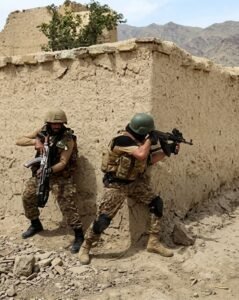
The two operations conducted by security forces in Kharan and Washuk districts on 6 and 7 September, which together left eleven terrorists dead and recovered 2.9 tons of explosive material intended for IED manufacture, deserve to be read as more than another entry in an increasingly familiar sequence of ISPR statements. Taken together with the string of operations in Nushki and elsewhere in recent weeks, they point to a pattern in how Fitna al Hindustan is now attempting to operate in Balochistan, and to how thoroughly that attempt is being disrupted before it can mature into sustained capability.
The Kharan operation is the more instructive of the two, precisely because of what the terrorists were trying to do rather than what eventually happened to them. According to ISPR, the group attempted to establish a roadblock to disrupt civilian movement, a tactic that has little to do with the province’s counter-terrorism apparatus directly and everything to do with signaling disruption to ordinary residents and, by extension, to the narrative economy that groups like this depend on. A roadblock is cheap to attempt and, if even briefly successful, generates the kind of imagery that fuels propaganda amplification far beyond its actual military value. That the attempt was intercepted and ended in a firefight resulting in eight terrorist deaths says as much about the erosion of this group’s operational competence as it does about the responsiveness of the forces that stopped it.
The Washuk operation a day later followed a different logic entirely, a carefully planned intelligence-based raid on a hideout rather than a reactive engagement. The recovery of nearly three tons of explosive material earmarked for IED production is the more consequential detail here, arguably more significant than the terrorist casualty count itself. IEDs remain the primary mechanism through which numerically small, poorly resourced networks generate outsized psychological effect, since a single roadside device can dominate a news cycle in a way that months of routine security patrolling cannot. Denying a network that volume of explosive material is a direct blow to its capacity to manufacture the very incidents its propaganda apparatus depends on to sustain the narrative of an active insurgency.
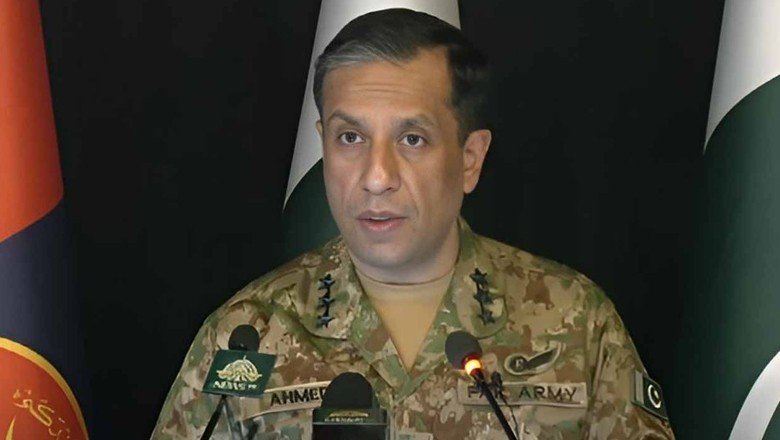
This is where the operational picture connects to the broader strategic one. Terrorism in Balochistan has increasingly relied on a hybrid model, combining episodic violence with an aggressive information ecosystem that seeks to convert every operation, successful or not, into a narrative of state failure or foreign-backed coercion. The ISPR statement’s explicit framing of the terrorists as belonging to what it terms the Indian proxy Fitna al Hindustan is itself part of a counter-narrative effort, an attempt to ensure that the origin and sponsorship of these networks is not left uncontested in the information space the terrorists are simultaneously trying to dominate.
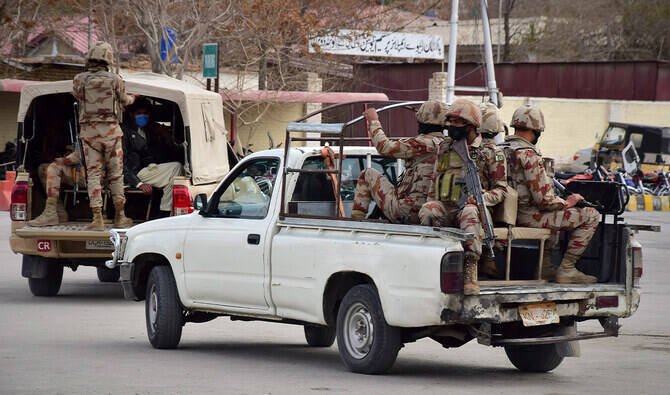
What should not be overlooked is the continuity these operations represent rather than their novelty. The military’s own language, describing the campaign as continuing at full pace under the framework of Azm-e-Istehkam and the National Action Plan approved by the Federal Apex Committee, signals that Kharan and Washuk are not isolated successes to be celebrated in isolation but data points in a sustained attrition strategy. That strategy’s real test is not any single operation’s casualty figures but whether the sanitisation efforts now underway in both districts succeed in denying the network the operational space to reconstitute a similar cache or a similar cell in the weeks that follow.
Eleven terrorists and 2.9 tonnes of explosives removed from circulation is a tangible security gain. But the more durable measure of success will be whether this kind of intelligence-based pressure continues to outpace the network’s ability to rebuild logistics and personnel, because a counter-terrorism campaign that wins individual engagements while allowing recruitment and resupply to continue unchecked has only bought time, not stability. Kharan and Washuk suggest the former is happening. Whether it adds up to the latter remains the question Balochistan’s security establishment still has to answer.