When Pakistan and Oman began discussing a sister-port arrangement between Gwadar and Sohar, the instinct in much of the commentary was to treat it as another ceremonial gesture in a long list of maritime memoranda that rarely survive contact with implementation. That instinct undersells what is actually on the table. Coming at a moment when disruptions around the Strait of Hormuz have already sharpened international attention on Gwadar’s location, the proposed agreement offers Pakistan something rarer than diplomatic goodwill: a structural opening to correct the one weakness that has quietly undermined Gwadar since its inception, the absence of an operating ecosystem around a port that has never lacked geography.
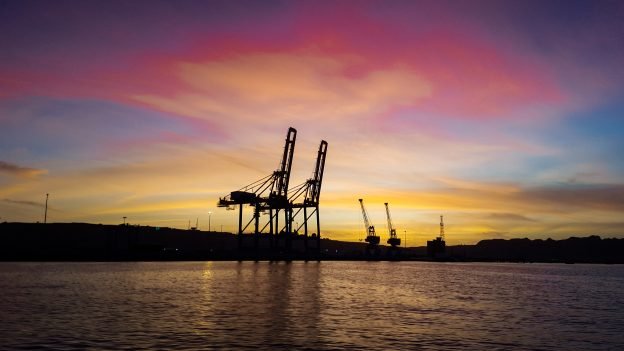
That is the opportunity worth examining. Gwadar’s problem was never where it sits; it is what surrounds it. Sohar, by contrast, has already solved that problem. A port handling 52 million tonnes of cargo in the first half of this year alone, with an established free zone, is not a symbolic partner but a functioning template. For Pakistan, pairing with Sohar is a chance to import operational maturity rather than build it from nothing, compressing years of institutional learning into a single working relationship.
There is a second, quieter opportunity here, one about diversification rather than diplomacy. Gwadar has for over a decade been narrated almost exclusively as a Chinese project, a framing that has fed both regional anxiety and domestic scepticism about who actually benefits. An Omani gateway into the Gulf, layered onto the CPEC route into Central Asia, gives Pakistan the ability to tell a different story: one where Gwadar serves multiple markets and draws on more than one source of capital. Discussions around Omani investment in the Gwadar Free Zone, joint ventures in warehousing, logistics and fisheries, and even a proposed SalamAir link between Gwadar and Muscat, all point toward the same underlying prize — a port whose economic relevance no longer rests on a single patron.
None of this converts into value automatically. Sister-port status is a designation, not a corridor. What Pakistan does next will decide whether this becomes genuine opportunity or another entry in Gwadar’s long file of unrealized potential. Shipping lines do not commit to routes because two governments signed a memorandum; they commit when customs procedures are predictable, when the M-8 and ML-4 actually move cargo inland at competitive cost, and when dredging and digital port systems function reliably enough to be boring rather than newsworthy.
That is the real test the Oman agreement sets for Islamabad. The opportunity is genuine — a mature Gulf partner, fresh capital, and a chance to reposition Gwadar beyond a single bilateral narrative. Whether Pakistan seizes it will depend not on how the agreement is announced, but on whether the unglamorous work of connectivity finally gets the same priority as the diplomacy that produced it.