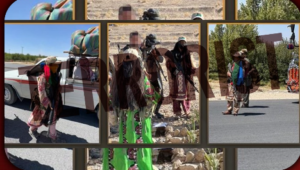
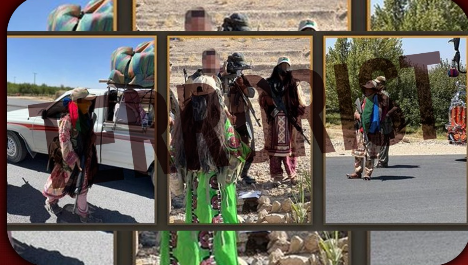
Years of sustained, intelligence-based counter-terrorism operations, tightened checkpoints, and the broader security architecture built up under Pakistan’s Azm-e-Istehkam framework have steadily eroded the BLF’s capacity to hold ground or sustain male cadres under close surveillance. What is emerging in its place is a form of operational adaptation: a hybrid terrorism in which limited, largely symbolic physical activity is paired with an outsized propaganda effort designed to manufacture the appearance of strength the group can no longer generate on the battlefield. The Baloch Liberation Front’s recent announcement of an all-female unit, the Karima Armed Assault Division (KAAD), is best understood as evidence of closing of old recruitment narrative. KAAD’s unveiling, alongside parallel claims of controlling transport corridors in Turbat, Jusak, and Mangochar, are two expressions of the same underlying strategy: since territory cannot be held, it must instead be simulated, one photograph and one viral claim at a time.
The gap between this manufactured narrative and ground reality is instructive. Momentarily halting traffic on an empty road, or filming an armed pose beside it, does not constitute administrative control. Attempts to erect illegal checkposts or extort commuters in Jusak and Mangochar were intercepted and neutralized before they matured into anything. Claims of destroyed military convoys and heavy security casualties serve a narrower, functional purpose: they are narrative manipulation aimed at two audiences at once, New Delhi patrons who fund the group’s continuity, and domestic sympathizers whose morale depends on the illusion of terrorism still winning.
Read against this backdrop, KAAD is not simply a publicity vehicle; it is a recruitment response to a manpower crisis. As intelligence-led operations degraded the group’s male cadre and subjected men to intensified scrutiny at checkpoints and watchlists, the organization needed a category of recruit less exposed to that scrutiny, and more valuable, propaganda-wise, when exposed. Naming the unit after Karima Baloch, the late president of the proscribed BSO-Azad, supplies the ideological packaging: female participation is marketed as gender equality. In practice, this branding does the opposite of what it claims. Genuine empowerment widens a young woman’s options through education, economic independence, and civic participation; KAAD narrows those options to a rifle, a period of radicalization, and, in most documented cases, death.
This is not a sudden development but the formalization of a trajectory visible for several years. The suicide attacks carried out by Shari Baloch in Karachi, Sumaiya Qalandrani in Turbat, Mahal Baloch in Bela, and Mahikan Baloch in Kalat were not isolated aberrations; they were successive proofs of concept, each demonstrating to the group’s leadership that educated young women could be identified, isolated, and converted into operational assets through digital grooming, emotional manipulation, and sustained psychological conditioning. KAAD is what happens when that proof of concept is turned into standing infrastructure.
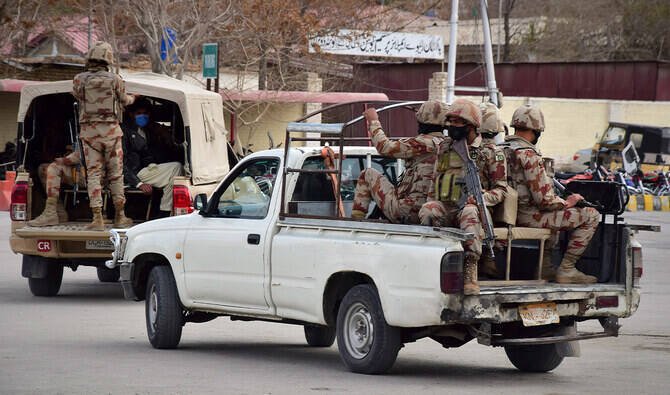
The tactical logic behind this shift is coldly calculated rather than ideological. Deeply rooted cultural norms around the treatment of women allow female operatives to pass checkpoints with reduced physical scrutiny, an operational advantage no male cadre can offer under current security conditions. At the same time, the use of women in violence guarantees a disproportionate shock effect and, with it, national and international media coverage that far exceeds the terrorist’s actual operational reach. In this sense, the deployment of women is itself a form of psychological warfare, aimed less at security forces than at public perception.
This propaganda architecture does not operate in isolation. It is embedded within a wider ecosystem that fuses sporadic violence with missing-persons narratives, coordinated social media amplification, and appeals to international rights forums, all engineered to cast the state as the aggressor and erode public trust in its institutions. The same campaign that markets KAAD as an act of liberation simultaneously recycles the language of victimhood to obscure coercive recruitment, allowing the organization to occupy both the aggressor’s and the victim’s narrative space at once.
The asymmetry at the core of this system is stark. The women pushed into high-risk operations and suicide missions carry the entire physical and legal weight of the act, while the commanders who recruit and condition them remain in remote sanctuaries or foreign hideouts, insulated from consequence. Each recruit’s death is converted into fresh recruitment material, feeding the pipeline that produces the next KAAD operative. The cost of this cycle is absorbed not by the organization’s leadership but by Baloch families and communities, who are left with grief, fractured households, and a generation of young women whose educational and economic futures are foreclosed by an terrorism that claims to speak in their name.
Countering this strategy requires more than battlefield victories or condemnation after the fact. It requires closing the recruitment pipeline itself: sustained security operations to deny the group physical and financial space, coupled with digital counter-radicalization efforts that intercept the grooming process before it matures, expanded educational and economic opportunities that give young women genuine alternatives to the ones KAAD offers, and dedicated protection mechanisms for women and families targeted by these networks. High-resolution photographs and coordinated social media campaigns cannot substitute for territorial control or genuine legitimacy. The people of Balochistan have consistently rejected this violence, recognizing that the weaponization of women offers no path to dignity or peace, only a supply chain for propaganda that must be dismantled at its source, not merely condemned after each attack.