Pakistan’s debate over creating new provinces and restructuring its administrative system has gained international attention, with an analysis published on the World Economic Forum’s website examining how administrative reform could improve governance in the country. The article explores different models for expanding administrative units, bringing decision-making closer to citizens and aligning government structures with Pakistan’s rapidly growing population.
The central argument is straightforward: institutions must evolve as societies grow. Pakistan’s population has increased more than sevenfold since 1951, reaching approximately 260 million, yet the country continues to operate through four main provinces. Punjab alone has around 128 million people, while Balochistan has fewer than 15 million despite covering the largest geographical area. These demographic and geographical differences raise important questions about whether the existing administrative structure can respond effectively to the needs of diverse populations.
The issue extends beyond provincial boundaries. When decision-making remains concentrated in provincial capitals, distant districts can struggle to secure timely attention, adequate resources and services tailored to their local conditions. Education, healthcare, infrastructure and employment require planning that reflects the economic and social realities of individual regions. Administrative distance can widen the gap between government priorities and citizens’ everyday needs.
Balochistan illustrates this challenge particularly clearly. Its vast territory, scattered settlements and long distances between population centers create distinctive difficulties for public administration and service delivery. This underline the need for more responsive institutions, stronger district-level administration and better-targeted development spending.
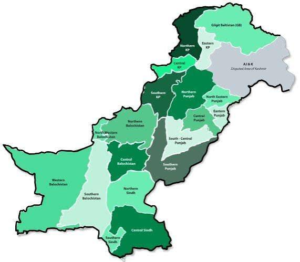
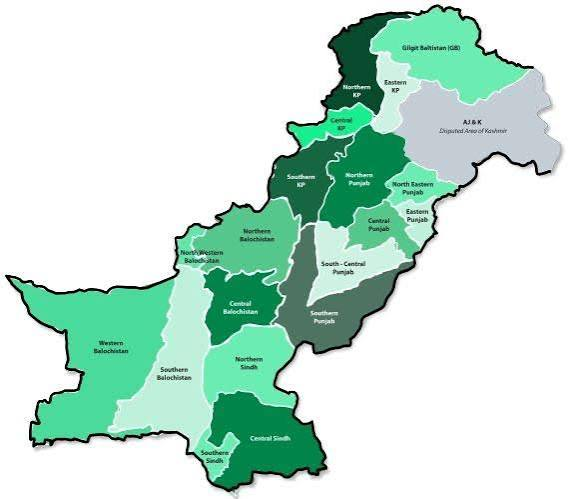
The article presents several possible administrative models for Pakistan. One proposal would divide each existing province into four units, creating 16 provinces and reducing the average population per unit from approximately 60 million to 15 million. More extensive options include establishing 23 to 25 administrative units or building a structure of more than 30 units around existing divisions. These scenarios offer different approaches to improving representation and administrative reach, although the article does not endorse one model as a definitive solution.
International experience provides useful lessons. Nigeria has expanded its number of states over several decades, while Indonesia has adjusted its provincial structure in response to changing administrative requirements. Kenya offers another example, having replaced its provincial system with 47 elected county governments in 2013. Its experience demonstrates the importance of linking administrative restructuring with defined responsibilities, elected representation and predictable transfers of public revenue.
For Pakistan, the debate must also account for the constitutional and fiscal framework. The 18th Constitutional Amendment transferred substantial responsibilities to the provinces, while the seventh National Finance Commission Award increased their share of federal tax revenues. Yet provincial governments continue to face limitations in raising their own revenue. The World Economic Forum article cites provincial tax collections of Rs983 billion in fiscal year 2024–25, equivalent to less than 0.9 percent of gross domestic product.
This fiscal weakness matters because new provinces would require functioning administrations, sustainable budgets, professional public services and clearly defined responsibilities. Without these foundations, additional units could increase expenditure and bureaucratic complexity without delivering meaningful improvements to citizens. Stronger local taxation, transparent resource allocation, reliable transfers and measurable performance standards must therefore accompany any restructuring.
Pakistan’s discussion of new provinces also requires attention to national cohesion, equitable development and constitutional procedures. Any proposed model must consider regional representation, economic viability, resource distribution and the interests of affected communities. Strengthening local governments is equally important, since provincial restructuring alone cannot ensure that authority reaches the communities where public services are needed most.
The World Economic Forum article brings an important governance question into focus: can Pakistan’s administrative institutions keep pace with its demographic and economic transformation? The answer depends on more than increasing the number of provinces. Effective reform requires aligning administrative boundaries with public needs, transferring meaningful authority, ensuring adequate financial resources and holding institutions accountable for results.
For Pakistan, the wider objective is to build a system in which government decisions are more responsive, development is more balanced and citizens across every region can access public services more effectively.