The release of the 38th United Nations Monitoring Team (UNMT) Report offers something the debate over regional terrorism has long lacked: independently documented evidence. For years, the Baloch Liberation Army (BLA) has been framed disconnected from the wider terrorist ecosystem operating out of Afghanistan. The UNMT’s latest findings make that framing untenable. They reassert Afghanistan as a permissive environment for terrorist networks of every stripe, and they substantiate, with specificity, the BLA’s operational integration into a transnational terrorist matrix.
According to Para 103 of the report, the BLA operates within the same broader ecosystem as internationally designated entities. The UNMT documents shared facilitation networks between Islamic State Khorasan Province (ISKP) and the BLA for logistical purposes, and it notes that BLA terrorists have trained alongside Tehrik-e Taliban Pakistan (TTP) fighters under Al-Qaeda instructors on Afghan soil. This is not incidental overlap. It indicates that the BLA draws on the same infrastructure, logistics, and training pipelines as groups the UN itself has designated as global threats.
This finding does not exist in isolation. The report’s broader picture of Afghanistan is one of a security vacuum actively fueling regional instability. Para 93 details ISKP’s expanding footprint and training networks along the Pakistan-Afghanistan border. Para 100 notes that Al-Qaeda in the Indian Subcontinent (AQIS) retains its leadership structure in Kabul, while the East Turkestan Islamic Movement (ETIM) is rebuilding facilities in Badakhshan and Kunduz using Al-Qaeda-linked infrastructure. Para 99 records the illegitimate Afghan regime’s continued sanctuary for the TTP even as it escalates attacks on Pakistani civilians and security forces. And Para 131 highlights how post-2021 military stockpiles have flowed from Afghanistan into militant hands, sharply increasing the tactical capability of groups like the TTP. Taken together, this is not a patchwork of unrelated insurgencies, it is a shared ecosystem, and the violence in Khyber Pakhtunkhwa and Balochistan draws directly from it.
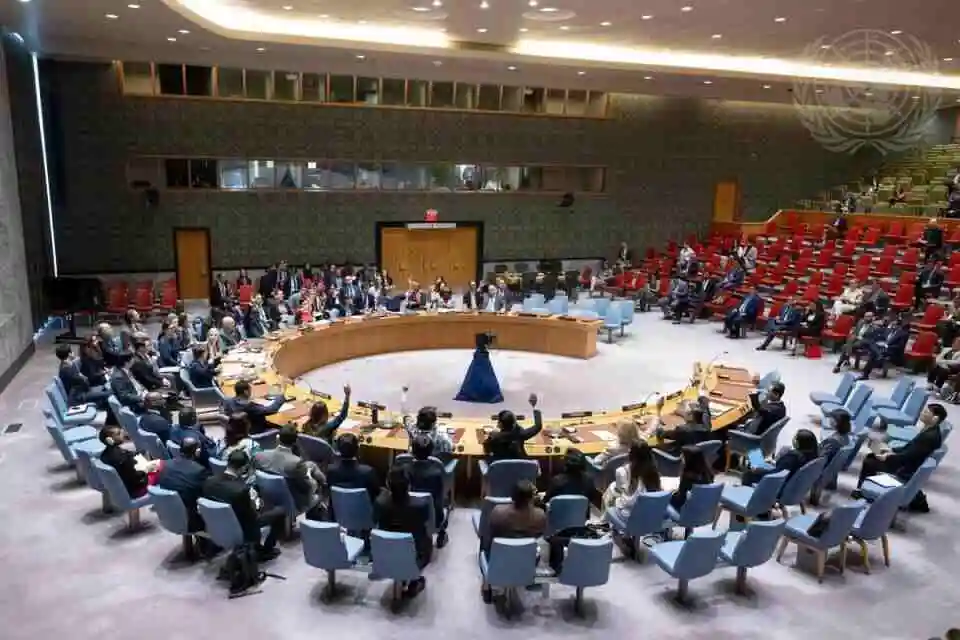
This matters most for how the world approaches sanctions. When Pakistan and China previously moved to designate the BLA and its Majeed Brigade under the UN 1267 Sanctions Committee, the effort was blocked by the US, UK, and France, largely on the grounds that the BLA was a domestic insurgency outside the scope of global counterterrorism designations. That argument was never fully persuasive, and it is now considerably harder to sustain. The UNMT is not a party to this dispute; its findings are independent, and they establish that the BLA collaborates with 1267-listed organizations on training and supply chains.
None of this erases the political and economic grievances that feed unrest in Balochistan, those require their own honest reckoning. But treating the BLA as a purely local phenomenon, insulated from the terrorists infrastructure documented next door, is no longer a defensible position. The 38th UNMT report should prompt a serious re-examination by the Sanctions Committee, and by governments still hesitant to connect these dots.