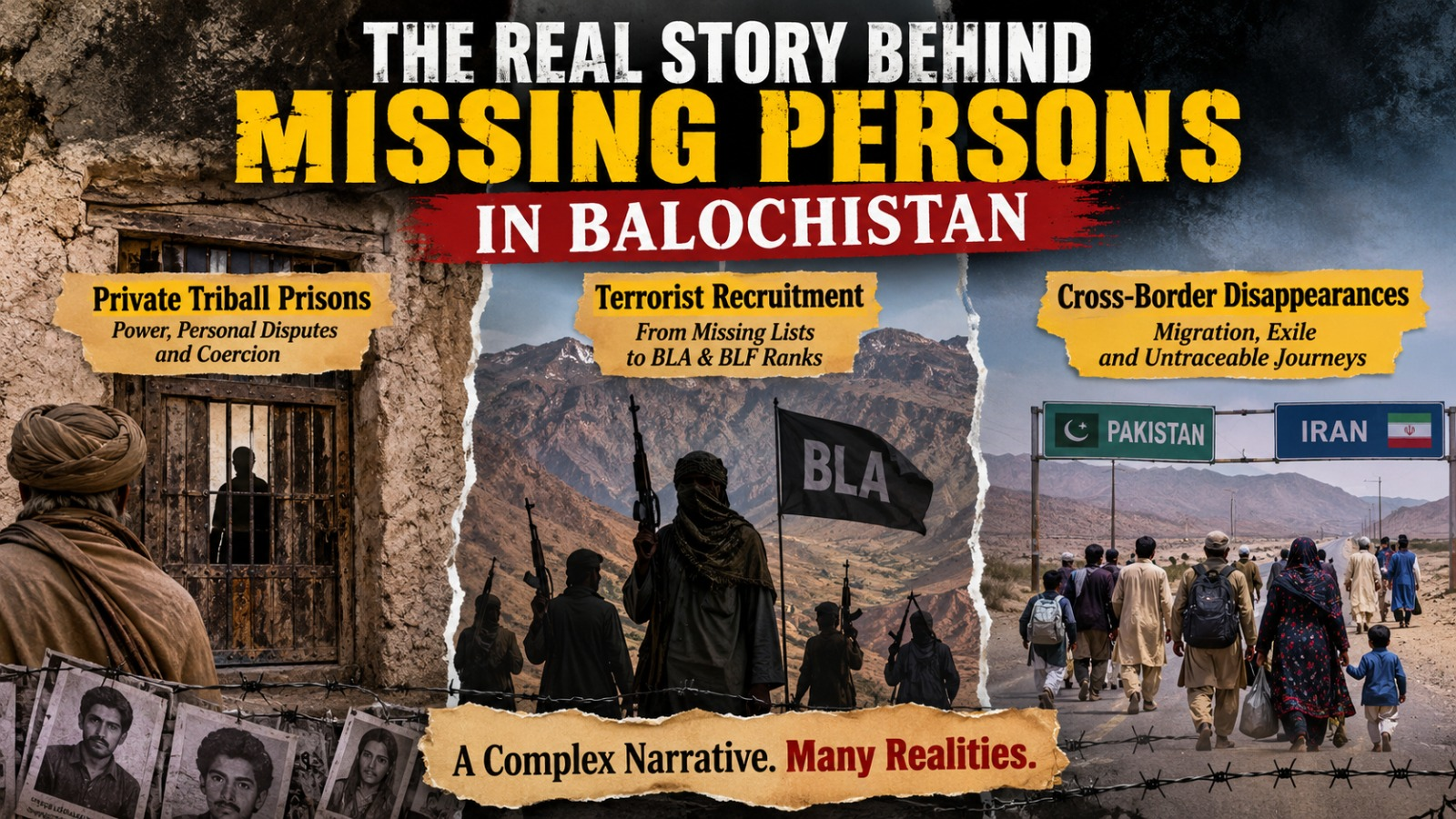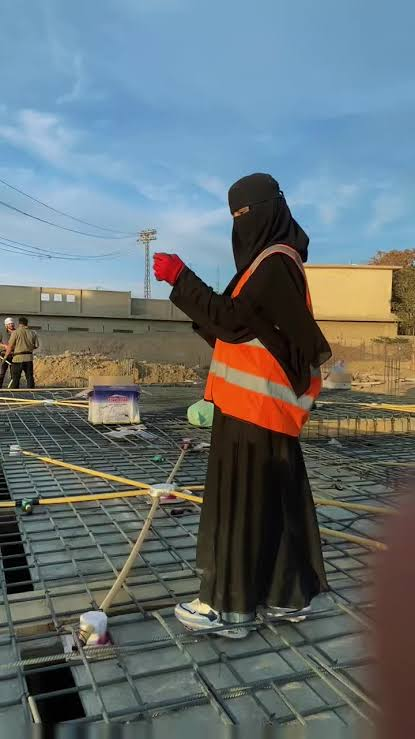
Balochistan is often discussed through the headlines of terrorism, political unrest, missing opportunities and economic deprivation. Yet another story is unfolding across the province, one that receives far less attention. The expansion of healthcare monitoring, rural electrification, water infrastructure, education initiatives and district-level development should also be the focus of attention. The real question is not whether Balochistan has development potential, but whether ongoing investments can translate into visible improvements in the lives of ordinary people.
The province faces undeniable challenges. According to the latest provincial education profile, compiled in August 2026 using the Pakistan Bureau of Statistics’ HIES/PSLM 2024–25 data, Balochistan’s literacy rate stands at 49%, while approximately 45% of school-age children remain out of school. Female literacy is particularly concerning at 31%. These figures explain that development cannot be measured merely through roads, ports or investment announcements. It must also be measured through the number of girls attending school, families accessing clean water and patients receiving timely medical treatment. The state’s challenge now is to sustain this progress and ensure that its benefits reach every district, village and household.
For More Information Visit: https://www.sed.gob.pk/education-report.html?utm_source=
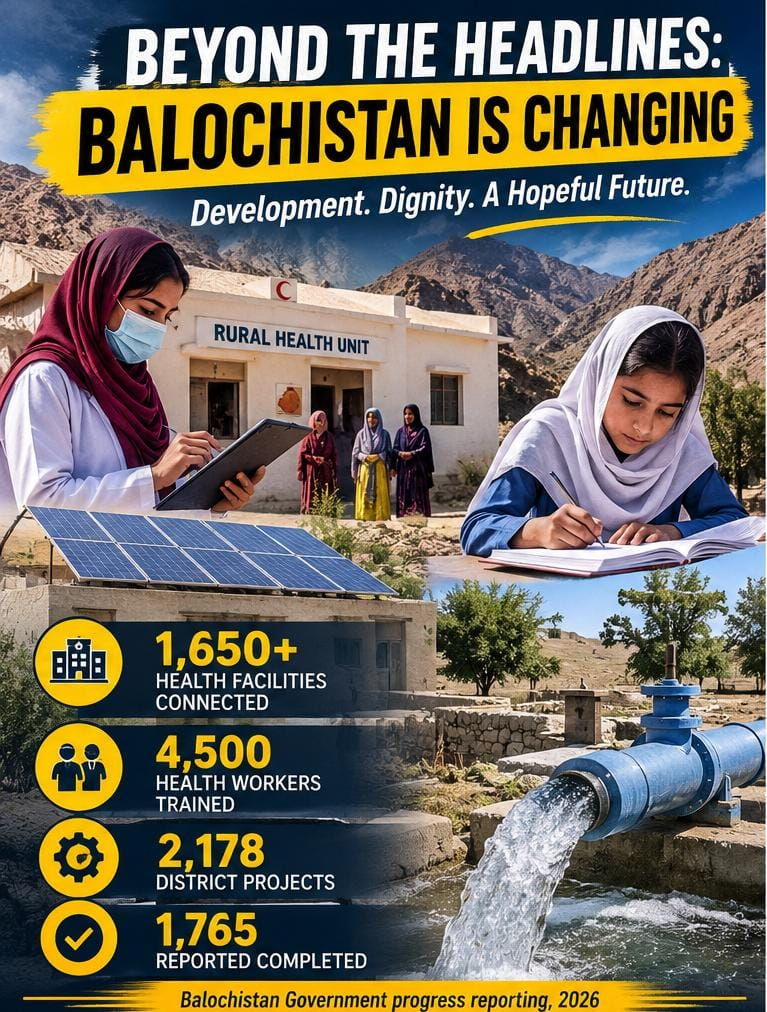
One of the less-publicized developments is taking place in the healthcare sector. On November 4th, 2026, the Balochistan Health Department reported that its District Health Information Software 2 (DHIS2) system had connected more than 1,650 primary and secondary healthcare facilities across the province. Approximately 4,500 healthcare workers have received training. According to provincial monitoring data, reporting compliance increased from 55% in May 2025 to 90% in July 2026. The department also reported improvements in essential medicine availability, from 46 to 89%, and full childhood immunisation coverage, from 38 to 57%. This is significant because digital monitoring can help identify facilities lacking medicines, track maternal healthcare and expose gaps in service delivery. It is a shift from simply building health facilities towards monitoring whether they actually function.
For More Information Visit: https://health.balochistan.gov.pk/balochistan-advances-digital-healthcare-transformation-dhis2-now-connects-more-than-1650-health-facilities-across-the-province/?utm_source=
Another development deserving attention is the Balochistan Special Development Initiative (BSDI). According to the provincial Planning and Development Department’s annual progress report published on August 4th, 2026, the initiative covers 2,178 projects across all 36 districts, with an investment of Rs26.57 billion. The department reported that 1,765 projects had been completed, representing 82.04% physical progress. These are not limited to headline infrastructure projects rather the portfolio includes local roads, classrooms, healthcare facilities, drinking water and other basic amenities. In Panjgur alone, 76 projects worth more than Rs830 million were reported completed, including educational, healthcare and water facilities. In Qilla Saifullah, 53 projects costing over Rs850 million were also reported completed. Such district-level interventions matter because their benefits can be felt much closer to people’s homes.
For More Information Visit: https://pnd.balochistan.gov.pk/news/annual-progress-report-of-the-planning-development-department-for-the-financial-year-2025-26?utm_source=
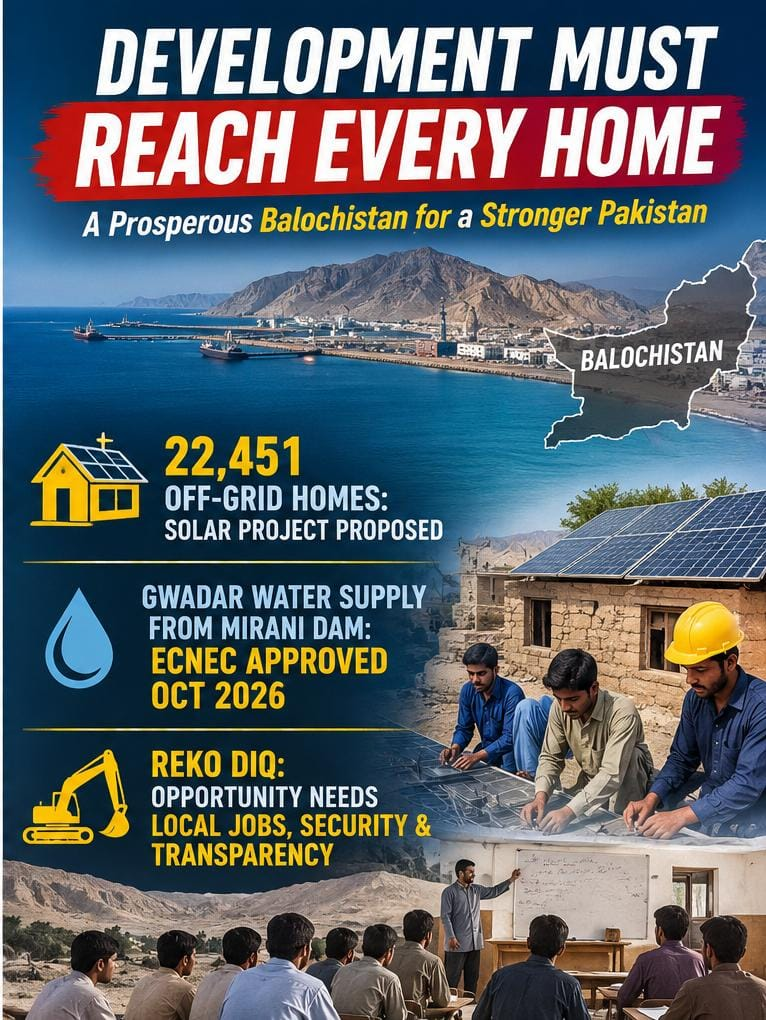
Electricity and water remain equally important. In September 2026, the provincial development forum considered solar hybrid home systems for 22,451 off-grid households across 11 districts, potentially benefiting around 134,704 people. The proposed Rs16.49 billion project is based on equal federal and provincial financing and was forwarded for further federal consideration. Separately, micro- and mini-grid proposals worth approximately Rs 8.94 billion were considered to extend electricity to an estimated 8,500–10,000 households. If implemented effectively, these initiatives could improve children’s study conditions, support small businesses and make basic healthcare services more reliable in remote settlements.
Gwadar also needs to be understood beyond its strategic importance. On October 12th, 2026 Executive Committee of the National Economic Council (ECNEC) approved five Balochistan development schemes, including a water supply project for Gwadar Town from Mirani Dam, rehabilitation of the Lasbela Canal and two important road connectivity schemes. These interventions address practical problems related to drinking water, irrigation and access to markets.
The state’s role is central to converting these initiatives into lasting progress. The federal government provides financial support and national-level approvals, while the provincial government is responsible for planning, execution, service delivery and monitoring. The FY2026–27 provincial budget provides Rs291.55 billion for overall development expenditure, although the development allocation is lower than the previous year’s revised spending. Education and healthcare have also received substantial allocations. The challenge now is to ensure that funds translate into functioning schools, staffed hospitals, reliable electricity and completed infrastructure rather than remaining figures in official documents.
For More Information Visit: https://www.dawn.com/news/2008696
There is, however, a serious warning. The Reko Diq copper-gold project, one of the province’s biggest economic opportunities, faces uncertainty. A November 2026 report by Dawn indicated that production could be delayed until 2030 amid security concerns and regional instability, although the company had not officially confirmed the revised timeline. The project is expected to generate thousands of jobs, but its long-term success depends on security, local participation, skills development and transparent distribution of benefits.
Ultimately, Balochistan needs more than development announcements; it needs development that people can see, use and trust. The state must protect infrastructure, improve governance, ensure accountability and give local communities a meaningful role in decisions concerning their resources. Development must reach the villages of Chagai, the remote settlements of Awaran, the schools of Panjgur and the households of Gwadar. Balochistan’s future will not be secured by projects on paper alone. It will be secured when a child can attend school, a patient can find medicine, a farmer can access water and a young person can earn a dignified living in their own province.