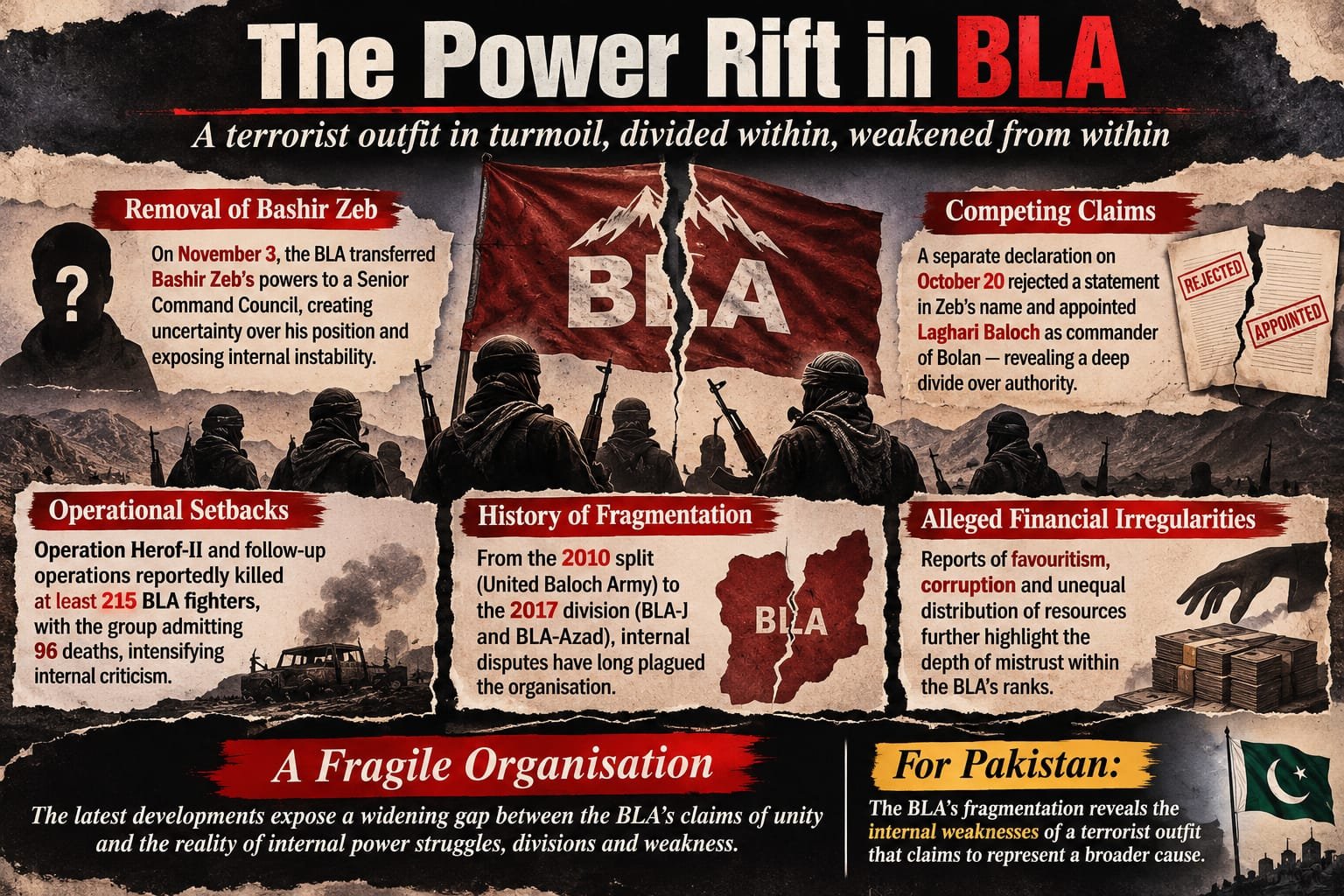
The removal of Bashir Zeb has exposed another serious internal crisis within the Balochistan Liberation Army (BLA), a designated terrorist organisation already facing mounting pressure over its violent activities in Balochistan. Competing claims of authority, divisions among commanders and disagreements over organisational control have brought its internal power struggle into sharper focus. The latest developments expose the fragility of an organisation that projects unity while struggling to contain divisions within its own ranks.
On November 3, the BLA announced the transfer of Bashir Zeb’s administrative, military and policymaking powers to a Senior Command Council until the appointment of a successor. The announcement claimed that the change would not affect its operational activities or chain of command. However, the circumstances surrounding Zeb’s removal and the absence of clarity over his position have exposed the uncertainty surrounding the organisation’s internal arrangements.
The dispute extends beyond a change at the top. A separate declaration attributed to the BLA Reform Command Council on October 20 rejected a statement issued in Zeb’s name on October 17 and announced the appointment of Laghari Baloch as commander of Bolan. The competing announcements reveal divisions over authority and organisational control, undermining claims that the terrorist outfit operates under a unified leadership.
The latest developments expose a widening gap between the BLA’s claims of organisational discipline and the power struggles unfolding within its ranks.
The crisis also reflects the difficulties of maintaining control over geographically dispersed terrorist networks. Regional commanders and armed groups operating under the BLA banner have their own local influence and organisational loyalties. The central leadership’s ability to impose decisions therefore depends on the compliance of these different elements. Competing claims over leadership make that task increasingly difficult and raise questions about the extent of control exercised by any single authority.
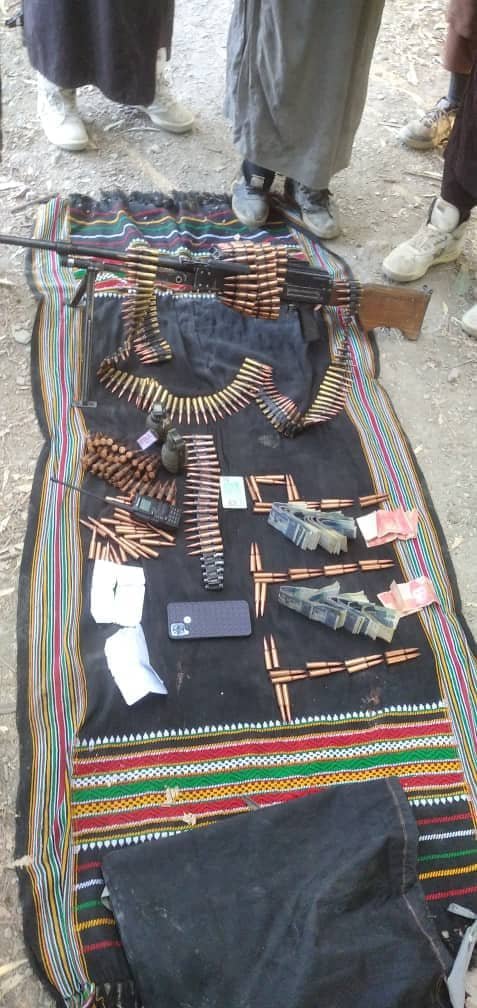
Operational setbacks have added another dimension to these divisions. Operation Herof-II and the subsequent security operations reportedly inflicted substantial losses on the terrorist organisation. According to the Pakistan Institute for Conflict and Security Studies (PICSS), at least 215 BLA fighters were killed in follow-up operations within approximately a week, while the organisation acknowledged 96 deaths. The scale of these losses reportedly intensified internal criticism over operational decisions and the strategy pursued by its leadership.
Such setbacks carry consequences beyond manpower losses. They expose weaknesses in organisational decision-making and intensify disputes over responsibility, resources and command authority. The reported disagreements over the scale and direction of operations further demonstrate the absence of consensus within the organisation. An outfit already under pressure from security operations faces additional complications when its own commanders are divided over strategic decisions.
The current power struggle also follows a recurring pattern of fragmentation. The emergence of the United Baloch Army in 2010 and the division between BLA-J and BLA-Azad in 2017 demonstrate that internal disputes have repeatedly resulted in organisational splits. The latest confrontation reinforces this history of factionalism, where competing interests and leadership rivalries have repeatedly taken precedence over organisational cohesion.
Meanwhile, the allegations of financial irregularities and unequal distribution of resources cited in the November 4 Balochistan Pulse report provide another dimension to the dispute. The report attributes claims of favouritism, corruption and disagreements over funding to an alleged internal declaration. These claims remain independently unverified, but their circulation further illustrates the depth of mistrust surrounding the organisation’s leadership.
For Pakistan, the fragmentation of a terrorist outfit exposes the internal weaknesses of groups that use violence to advance their objectives while claiming to represent broader political causes. Their competing interests and struggles for control stand in sharp contrast to the propaganda of unity they project publicly.
The BLA’s latest crisis is therefore more consequential than the removal of one commander. Rival declarations, disputed authority, operational setbacks and recurring factional divisions have exposed an organisation struggling to maintain internal cohesion. A change in leadership does little to resolve these underlying contradictions. The latest power struggle has once again brought the internal instability of the terrorist outfit into view.