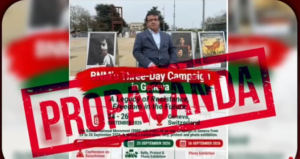
The literature issued by the Baloch Liberation Army is an attempt to develop ideological and organizational framework for sustaining terrorism. Presented through the language of “modern guerrilla warfare,” the publication discusses weapons, logistics, secrecy, resource management, organizational discipline, indoctrination and psychological warfare. Together, these themes reveal a document designed to professionalize, rationalize and perpetuate BLA’s terrorist campaign.
At the centre of this literature is an effort to rebrand violence. Terrorism is recast as military strategy; weapons are elevated into symbols of sacrifice and secrecy is presented as revolutionary discipline. Indoctrination is reframed as political consciousness, while psychological warfare is treated as an essential component of struggle. The objective is to give terrorism the appearance of a structured political and military doctrine, transforming acts of violence into what BLA seeks to portray as an organized national project.
One of the most revealing aspects of the literature is its treatment of weapons. They are presented as instruments of violence and form of collective responsibility and sacrifice, even described as a “national trust.” Yet this glorification deliberately separates the weapon from its consequences. The literature focuses on how violence can be organized, sustained and justified, while largely concealing those who suffer from its use.
The narrative presented by BLA does not hold ground reality. The weapons and tactics romanticized in its literature have produced a record of attacks against civilians, public infrastructure and economic targets across Balochistan. The Jaffar Express hostage-taking and executions, the Quetta Railway Station bombing, the Khuzdar school-bus attack, the Musakhail massacre and targeted killings of workers and civilians in Gwadar and Nushki demonstrate the consequences of the violence that BLA attempts to repackage as “modern guerrilla warfare.”
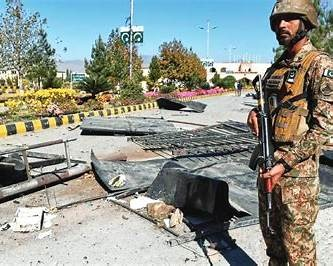
Behind the language of sacrifice are passengers, children, labourers and ordinary families. BLA’s propaganda glorifies the attacker but conceals the victim. It celebrates the weapon while avoiding accountability for those caught in the violence. This is the central contradiction of its narrative. The organization claims to fight for the people of Balochistan, yet the people of Balochistan repeatedly find themselves among the victims of the terrorist campaign carried out in their name.
The BLA narrative claims to be so called local liberation movement. However, BLA and other terrorist networks operating in Balochistan receive foreign support and facilitation. The Kulbhushan Jadhav case is an evidence of RAW-linked financing and facilitation for attacks targeting civilians, workers and infrastructure. This foreign dimension directly undermines BLA’s attempt to portray its armed campaign as an exclusively indigenous political resistance.
The Thirty-Seventh Report of the UN Analytical Support and Sanctions Monitoring Team, submitted to the UN Security Council on 4 February 2026, brought renewed attention to the linkages between BLA and other terrorist organizations operating in the region.
According to the report, some Member States assessed that BLA had collaborated with TTP and ISIL-K through shared training camps and resources, including coordination between commanders. These findings are significant because they place BLA within a wider regional terrorist ecosystem rather than treating it as an isolated organization. Shared infrastructure, resources and operational coordination create opportunities for terrorist groups to benefit from each other’s capabilities, expertise and networks.
This wider convergence was also brought into focus following the July 2026 killing of Mastung District and Sessions Judge Abdul Hakeem Kakar. ISIL-K swiftly claimed responsibility for the attack, raising questions about overlapping terrorist interests and the use of competing claims of responsibility to manipulate public perception and divert outrage.
BLA’s activities have also resulted in increasing international restrictions. Pakistan banned the organization in 2006, while the United Kingdom proscribed it the same year. The United States designated BLA as a Specially Designated Global Terrorist entity in 2019 and designated both BLA and its Majeed Brigade as Foreign Terrorist Organizations in August 2025. Australia imposed counterterrorism financing sanctions in May 2026. These measures reflect international recognition of the threat posed by BLA and seek to restrict its financing, recruitment and support networks.
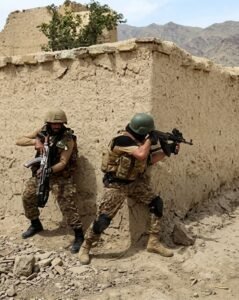
At the same time, BLA’s propaganda conceals another critical reality: its operational setbacks. While its publications project discipline, strength and permanence, counterterrorism operations have continued to disrupt terrorist networks across Balochistan. According to ISPR, more than 40,348 intelligence-based operations were conducted in 2026, including over 31,000 in Balochistan, resulting in the elimination of 2,084 terrorists nationwide. Operations Shaban and Rad-ul-Fitna-3 also disrupted networks and recovered significant quantities of weapons, ammunition and explosives.
BLA may document its ideology and romanticize its weapons, but propaganda cannot conceal the reality of its campaign. Its literature is ultimately an effort to institutionalize terrorism through doctrine, indoctrination, secrecy and psychological warfare. Yet the consequences of that doctrine are measured not in the rhetoric of sacrifice but in the lives lost to attacks on trains, schools, markets, workers and civilians.
The greatest contradiction remains clear. BLA claims to represent the people of Balochistan while repeatedly placing those same people in the line of fire. Beyond its mythology of armed struggle lies a terrorist doctrine that glorifies violence, conceals its victims and increasingly faces disruption on the ground.