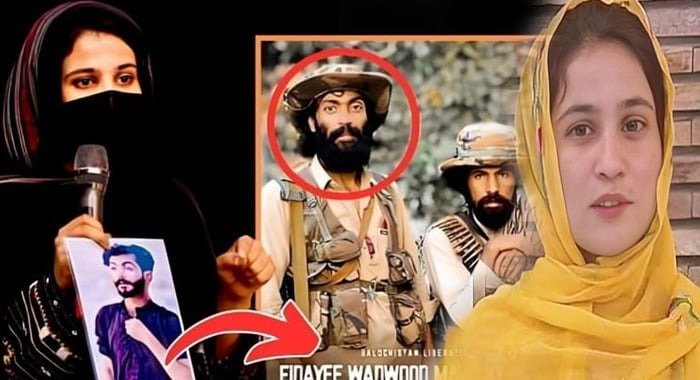
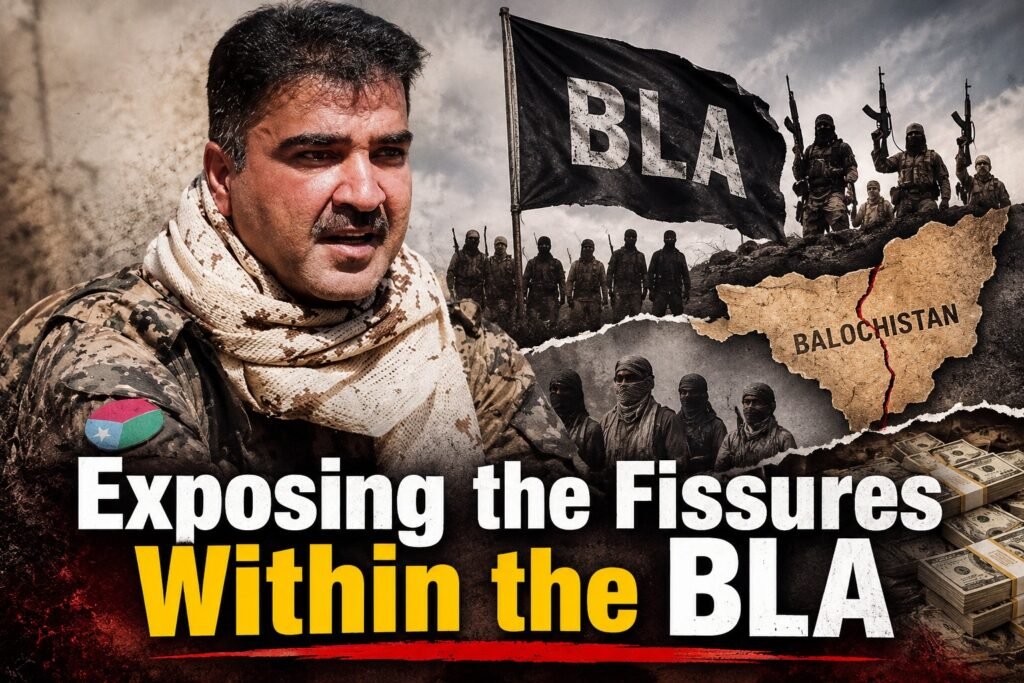
The removal of Bashir Zeb as commander-in-chief has exposed deepening divisions within the Balochistan Liberation Army (BLA), a designated terrorist organisation. On November 3, 2026, BLA-J spokesperson Jeeyand Baloch announced his removal following a decision by the organisation’s Senior Command Council. The announcement followed an October 20 declaration by the rival BLA Reform Command Council, which exposed internal disputes over corruption, embezzlement, favouritism and control of financial resources.
The developments reveal a terrorist network struggling with competing leadership claims, financial disputes and a fractured command structure.
An internal declaration issued by the Reform Command Council provides an account of the divisions under Bashir Zeb’s leadership. According to the document, he elevated loyalists to influential positions, allowing a privileged circle to dominate organisational resources. Senior commanders and their families reportedly enjoyed monthly expenditures running into hundreds of thousands of rupees, while fighters deployed in the field struggled to obtain food and basic supplies.
The Reform Command Council’s account exposes a glaring contradiction within the organisation. While the BLA invokes political rights and deprivation to justify its violence, its own commanders describe a hierarchy where senior figures enjoy financial privileges and control resources while ordinary fighters struggle for basic necessities.
The confrontation intensified during meetings held on May 7 and May 14. One faction, including second-in-command Rahman Gul, demanded Bashir Zeb’s removal, while the opposing camp backed him and his associates. Commanders reportedly presented evidence of embezzlement involving millions of rupees. Bashir Zeb’s continued support for those accused of financial misconduct further aggravated the dispute, turning demands for accountability into a direct challenge to his leadership.
By October, the confrontation had reached the BLA’s operational command. On October 20, the Reform Command Council announced Laghari Baloch’s appointment as commander of Bolan and rejected a separate declaration issued on October 17 under the name of Azad Baloch. The competing announcements demonstrated the weakening of organisational authority, with rival factions issuing contradictory decisions over field command.
The crisis took another turn on November 3, when Jeeyand Baloch announced Bashir Zeb’s removal. According to the announcement, a joint meeting of senior organisational bodies had taken place on October 16, transferring administrative, military and policymaking powers to the Senior Command Council until a new commander-in-chief was appointed.
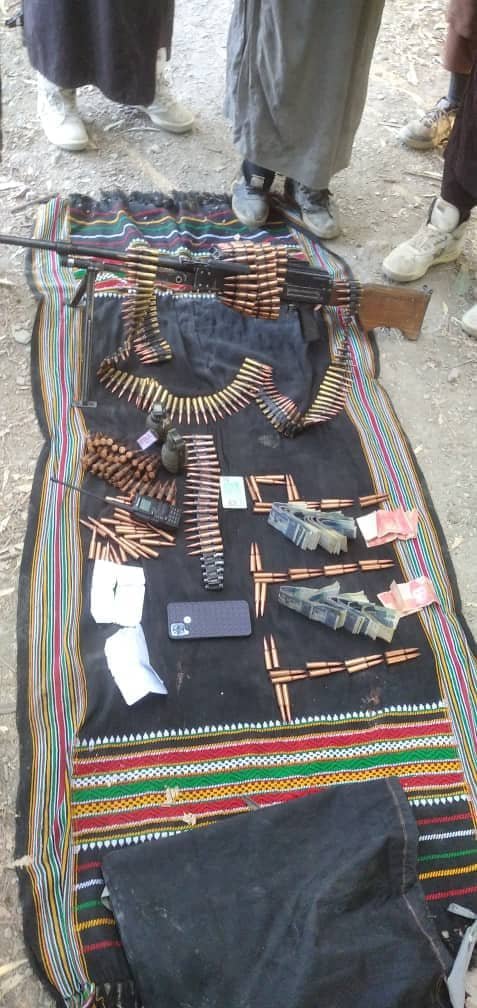
The BLA’s internal turmoil has also coincided with its battlefield losses following Operation Herof 2 in late January and early February 2026. After heavily publicising the operation as a demonstration of its operational capabilities, the organisation suffered substantial casualties during subsequent security operations. More than 100 terrorists were reportedly killed. The losses intensified disagreements over military strategy, manpower deployment and command decisions. Rivalries involving Bashir Zeb and Rahman Gul further aggravated the situation, with reports of armed confrontations in parts of Afghanistan’s border regions.
This fragmentation follows an established pattern. Following Balaach Marri’s death, disagreements over leadership, organisational funds and weapons contributed to a split that led to the formation of the United Baloch Army (UBA). Former associates eventually turned against one another. Similar divisions have emerged within the rival BLA-Azad formation associated with Hyrbyar Marri, including challenges to established leadership through the Reform Command Council and disagreements within associated political structures such as the Free Balochistan Movement.
The financial disputes also bring renewed attention to the networks sustaining the BLA’s armed campaign. Who finances these groups? Who controls the resources? Who benefits from funds collected in the name of the Baloch cause? These questions warrant scrutiny, particularly when the organisation’s own commanders accuse one another of embezzlement and financial exploitation.
The BLA’s leadership crisis exposes an organisation increasingly divided by financial interests and personal rivalries, with its own commanders laying bare the struggle for money and power behind its armed campaign.