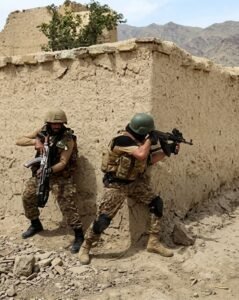
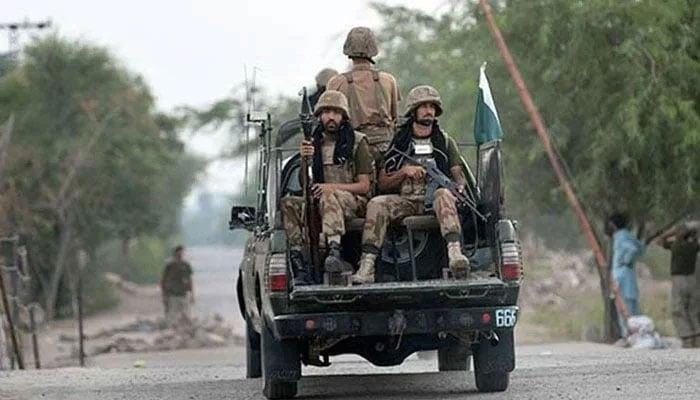
Security forces have eliminated four terrorists, including Khalid Umar Ghazi, a commander involved in the blockade of Hayatabad Toll Plaza in Peshawar, during an intelligence-based operation in Akakhel, Hajianon Kalay, Bara, Khyber. Ghazi was killed alongside Malik Arab Gul, Ariana and Hanzala after security forces acted on intelligence regarding the presence of terrorist elements in the area.
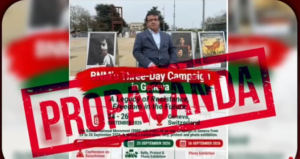
The operation carries significance beyond the elimination of four terrorists. Khalid Umar Ghazi had previously emerged in a propaganda episode designed to project an image of terrorist confidence in Peshawar. His brief appearance during the Hayatabad Toll Plaza blockade was filmed and circulated, turning a temporary act of disruption into an exaggerated display of supposed operational reach. Months later, that same figure has been eliminated through an intelligence-based operation. The contrast is telling. The Hayatabad footage created an image of power. The Khyber operation exposed the reality behind it.
Terrorist organizations understand the value of perception. A few minutes of disruption in an urban area can generate disproportionate attention once filmed and amplified online. Such footage attempts to create the impression that terrorists can move freely, challenge state authority and appear wherever they choose. But visibility is not capability.
Ghazi’s subsequent elimination demonstrates the limits of this strategy. Security forces continued tracking terrorist networks after the Hayatabad incident, using intelligence and surveillance to identify individuals connected with attacks. Security sources have also linked Ghazi to attacks targeting security forces in Peshawar, Bara and Tirah Maidan. His elimination therefore represents more than the end of one operative; it strikes a network that had attempted to exploit difficult terrain while projecting influence towards urban centres. A video can manufacture perception; it cannot manufacture resilience.
This is where intelligence-based counter-terrorism becomes decisive. Terrorist networks depend on concealment, mobility and difficult terrain to sustain their activities. Security forces counter those advantages by locating individuals, tracing movements and conducting targeted engagements. Each eliminated commander or operative disrupts the network’s ability to coordinate attacks, maintain logistics and preserve freedom of movement.
The wider pattern across Khyber Pakhtunkhwa reinforces this pressure. Between September 3 and 5, security forces eliminated 21 terrorists in separate operations across North Waziristan, Kohat and Dera Ismail Khan. The latest Khyber operation therefore fits into a broader campaign in which terrorist networks are being subjected to continuous intelligence and operational pressure.
This pressure also explains the growing reliance of the Khawarij on propaganda. When operational freedom contracts, the information space becomes an alternative arena for projecting influence. Carefully selected footage, temporary disruptions and exaggerated claims can create a psychological effect, but they cannot replace the infrastructure required to sustain a terrorist campaign.
The elimination of Ghazi and three other terrorists demonstrates the determination, precision and operational reach of security forces. It reinforces a simple reality for terrorist networks: a brief appearance in front of a camera does not make commanders untouchable. Those who plan attacks and attempt to evade detection remain subject to persistent intelligence efforts and targeted action.
The Hayatabad blockade created a moment of publicity. The Khyber operation has delivered the more consequential picture. Propaganda can manufacture an image of strength for a moment, sustained intelligence and precise security operations expose the weakness behind that image and steadily dismantle the networks responsible for terrorism.