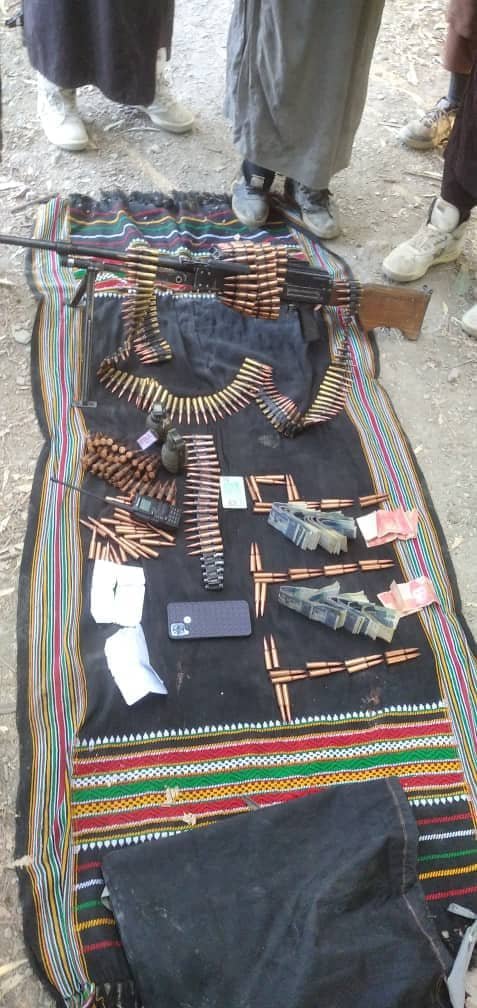
Balochistan has increasingly become a frontline in Pakistan’s internal security challenges, where terrorism, violence and geopolitical competition intersect. While genuine socioeconomic grievances exist, terrorist organisations such as the Balochistan Liberation Army (BLA) have increasingly exploited these vulnerabilities to advance a violent agenda. Pakistan has repeatedly respondent India’s intelligence agency, the Research and Analysis Wing (RAW), of supporting anti-Pakistan terrorist networks to destabilize the province, undermine national cohesion and obstruct strategic economic projects.
India’s alleged involvement must be examined within the broader geopolitical significance of Balochistan. The province occupies a strategically important position along the Arabian Sea and hosts Gwadar Port, a key component of the China-Pakistan Economic Corridor (CPEC). Disrupting CPEC, threatening Chinese investments and undermining Pakistan’s connectivity with regional markets would serve the strategic interests of any external actor seeking to weaken Pakistan’s economic and geopolitical position.
Pakistan’s case against Indian interference gained international attention following the arrest of Kulbhushan Sudhir Jadhav in Balochistan on 3rd March 2016. Pakistan identified him as a serving Indian naval officer and RAW operative, alleging that he was involved in espionage and facilitating terrorist activities within Pakistan. India challenged his detention at the International Court of Justice (ICJ). In its judgment of 17th July 2019, the Court ruled on violations of Jadhav’s consular rights under the Vienna Convention, but did not decide whether Pakistan’s allegations of espionage and terrorism were true. Nevertheless, the case strengthened Pakistan’s concerns about foreign intelligence interference and highlighted the serious security challenges posed by external interference in its internal affairs. Pakistan maintains that protecting its sovereignty, territorial integrity and national security remains a fundamental responsibility of the state.
The operational dimension of Balochistan’s security crisis is equally concerning. BLA has increasingly adopted coordinated attacks, suicide bombings, targeted killings, railway sabotage and attacks on economic infrastructure. Its Majeed Brigade has carried out suicide operations, demonstrating an increasingly organised and lethal terrorist strategy. The March 2025 hijacking of the Jaffar Express, carrying more than 400 passengers, exposed the group’s willingness to hold civilian’s hostage and turn public transport into an instrument of terror. The August 2024 killings of 23 Punjabi passengers in Musakhail further demonstrated its use of ethnic profiling and civilian targeting. These are not legitimate instruments of political resistance; they are acts of terrorism.
The scale of the crisis is reflected in independent security assessments. According to the European Union Agency for Asylum’s June 2026 country report, the Center for Research and Security Studies recorded 386 violent incidents in Balochistan during 2025, resulting in 956 fatalities and 717 injuries.
The Pak Institute for Peace Studies separately documented 225 attacks by Baloch terrorist groups, causing 338 deaths and 462 injuries. These figures underline the devastating human and security costs of organised violence. The international designation of BLA and the Majeed Brigade by the United States as a Foreign Terrorist Organization in August 2025 further reinforces the international recognition of the threat posed by these organisations. Their attacks on civilians, security personnel and foreign nationals cannot be justified through political grievances.
The consequences extend beyond casualties. Attacks on Chinese nationals, railway networks, government installations, security personnel and development infrastructure undermine investor confidence, disrupt connectivity and deprive ordinary Baloch citizens of employment and economic opportunities. Terrorist organisations seek to create an environment in which insecurity becomes a permanent obstacle to development. Their propaganda also attempts to portray every state development initiative as exploitation, deepening mistrust between communities and institutions.
Pakistan’s response must therefore combine robust counterterrorism operations with political inclusion and economic development. Security forces have a constitutional responsibility to protect citizens, dismantle terrorist networks and prevent foreign-sponsored destabilization. At the same time, sustainable peace requires transparent governance, accountability for human rights violations, access to justice, local participation in resource management, employment opportunities and protection of peaceful political expression.
Ultimately, Balochistan cannot be secured through force alone, nor can its future be surrendered to terrorist organisations claiming to represent its people. Pakistan must defeat terrorism while addressing the conditions extremist’s exploit. India’s alleged interference deserves credible investigation and international scrutiny, but the strongest response is a secure, politically empowered and economically prosperous Balochistan. The real defeat of proxy warfare will come when Balochistan’s people become the strongest stakeholders in Pakistan’s peace, stability and development.