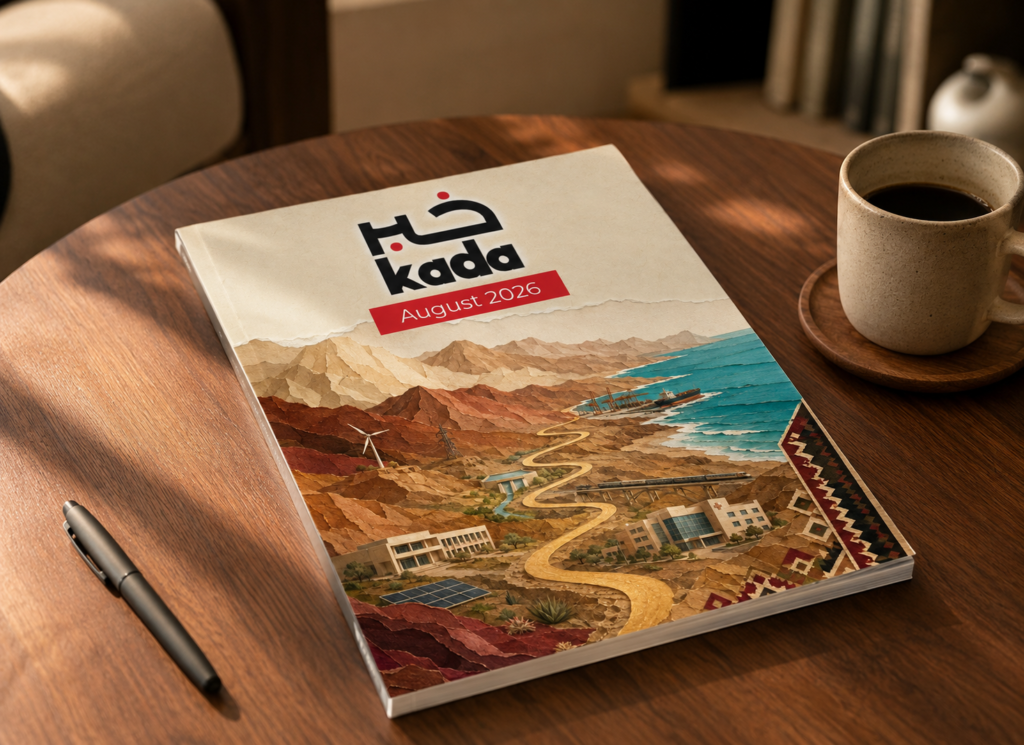
KhabarKada’s August 2026 magazine brings together an extensive examination of Balochistan’s history, security, governance, economic potential and evolving political narratives. Through analytical articles and in-depth podcast conversations, the issue explores the forces shaping the province while examining how terrorism, propaganda, regional instability and administrative weaknesses can affect peace and development.
The magazine begins by revisiting important historical questions. “Re-Examining the Legacy of Nawab Akbar Bugti” considers the circumstances surrounding Bugti’s death and how his legacy continues to be used within contemporary political and militant narratives. “Kalat’s Accession to Pakistan” examines Balochistan’s constitutional integration with Pakistan through historical documents and the political context surrounding accession.
Security remains a central theme throughout the issue. “Radd-ul-Fitnah 3” reviews intelligence-based counterterrorism operations conducted across Balochistan during August 2026, focusing on efforts to disrupt fighters, commanders, operational cells and bomb-making infrastructure. “Cross-Border Terrorism Nexus” discusses the 38th UN Monitoring Team report and its findings concerning terrorist organisations operating from Afghanistan, including the TTP, ISKP, Al-Qaeda and ETIM, as well as reported logistical and training connections involving the BLA.
“Afghanistan: Epicenter of Transnational Terrorism” expands this discussion by examining the presence of multiple terrorist organisations in Afghanistan and the implications for Pakistan, Central Asia and the wider region. The article highlights the continuing gap between assurances that Afghan territory will not be used against other countries and the security environment documented by international monitoring mechanisms.
The issue also presents Chief Minister Mir Sarfaraz Bugti’s perspective on Balochistan’s internal and external challenges. His interview covers security, governance reforms, education, healthcare, administrative decentralization, regional interference, political dialogue and the importance of strengthening state institutions. It presents security and development as interconnected responsibilities rather than separate policy areas.
Several articles examine the narratives surrounding Balochistan. “The BLA Flag and the Politics of a Rewritten History” considers how symbols can be used to construct political identities, reshape historical memory and support militant communication, while also examining allegations of external influence. “The Reality of Balochistan” challenges overseas and militant narratives by contrasting them with the impact of violence on schools, roads, infrastructure, investment and local communities.
“Who Really Speaks for Balochistan?” distinguishes legitimate grievances from the claims of terrorist organisations seeking to present themselves as representatives of the province. It discusses government development initiatives, CPEC, Gwadar, Reko Diq, mineral resources and the importance of ensuring that local communities receive employment, representation and a fair share of economic benefits.
The podcast section brings additional perspectives on development and reform. Humayun Shami discusses Balochistan’s potential in minerals, energy, trade, tourism, fisheries and its young workforce. He argues that natural resources can only create lasting prosperity when supported by infrastructure, technical skills, security, affordable energy and investor confidence.
Hiba Fawad Khan explores Balochistan’s path forward through administrative decentralization, stronger local government, constitutional procedures, youth empowerment and public participation. Her conversation also considers Gwadar and Reko Diq as opportunities for employment and investment while emphasizing education, digital awareness and counselling as responses to youth radicalization.
In another podcast, host Shehzad Qayyum and youth leader Babar Khan Khajjak examine how weak governance, unemployment, lack of merit, terrorism and propaganda can discourage investment and deepen public frustration. Their discussion demonstrates how attacks on transport, infrastructure, tourism and projects such as Reko Diq, Saindak and CPEC directly affect local livelihoods and economic confidence.
Economist Dr. Usman Chohan concludes the podcast section with a broader discussion of Pakistan’s economy. He identifies structural imbalances, inefficient public spending, indirect taxation, bureaucracy and vested interests as major obstacles to sustainable growth. He also presents CPEC as an opportunity to expand manufacturing, exports, industrial cooperation and regional connectivity rather than focusing only on infrastructure and borrowing.
Together, the articles and podcasts in KhabarKada’s August 2026 issue present Balochistan as a province of serious challenges but equally significant possibilities. The magazine’s central message is that lasting progress requires security, accountable governance, historical clarity, informed public debate, economic investment and meaningful opportunities for local communities.
Explore the complete August 2026 issue to read every article and podcast feature in depth.