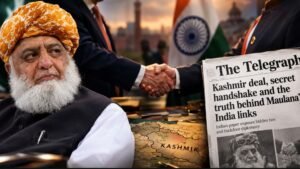
For decades, Maulana Fazlur Rehman has remained a prominent figure in Pakistan’s religious and political landscape. As the leader of Jamiat Ulema-e-Islam (F), he has negotiated with major political parties, led opposition movements and played a role in national political developments. But his political career has also faced serious questions involving property, accountability and the relationship between religious influence and political power.
These controversies deserve examination based on records and evidence, not merely political slogans.
The Questions Over Assets and Property
In September 2020, the National Accountability Bureau (NAB) summoned Maulana Fazlur Rehman in an inquiry concerning allegations of corruption and assets beyond his known sources of income. Later that year, NAB sought information about properties and financial matters involving him and members of his family. These developments raised questions about the sources of income and acquisition of assets.
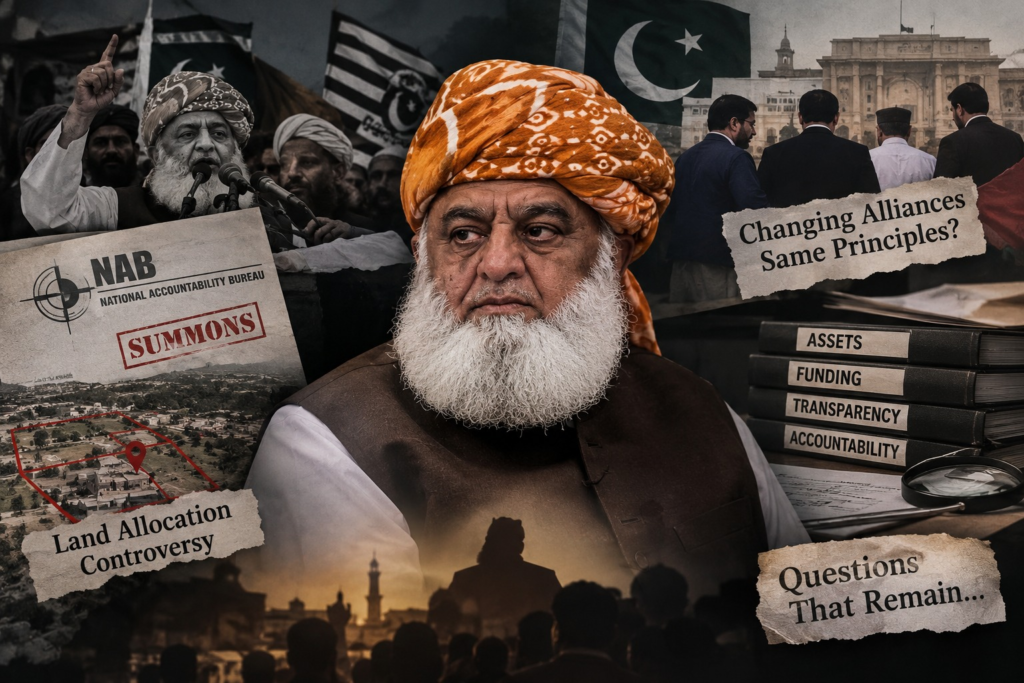
Another controversy dates back to allegations raised in 2018 concerning land in Dera Ismail Khan. PTI leader Shafqat Mahmood alleged that Maulana and former Khyber Pakhtunkhwa chief minister Akram Khan Durrani had improperly benefited from land reportedly intended for families of martyrs and other eligible personnel.
The central question is straightforward, Were the relevant land transactions lawful, transparent and consistent with the original purpose of the allocations? The public deserves a clear answer based on official records.
Political Principles or Political Strategy?
Maulana’s political alliances have also attracted scrutiny. In 2019, he led the Azadi March against Imran Khan’s government. In 2020, he became the head of the Pakistan Democratic Movement, an opposition alliance that campaigned against the PTI government. In 2024, after the general election, he rejected the election results and engaged in talks with PTI representatives, while initially making clear that these meetings did not amount to a formal alliance.
Political negotiations and changing alliances are not inherently improper. However, when leaders present themselves as representatives of firm ideological principles, the public can reasonably ask how those principles guide their decisions across different political circumstances.
The relevant question is not whether Maulana is allowed to negotiate with political opponents. He is. The question is whether his stated principles and political decisions remain consistent, and whether he explains significant changes in position to his supporters.
Religious Influence and Public Accountability
Maulana’s religious standing gives his political voice considerable influence. That makes transparency especially important, not less important. Religious institutions and their students should not automatically be treated as instruments of any politician, their educational and social responsibilities deserve independent consideration.
At the same time, criticism of a political leader should be based on evidence rather than assumptions about religious identity. Questions about funding, property, political influence or institutional relationships must be investigated through the same legal standards that apply to everyone else.
The Questions That Remain
Maulana Fazlur Rehman’s long political career warrants serious scrutiny of his decisions, alliances and financial disclosures. The reported NAB inquiries and the land-allocation controversy are specific matters that can be examined through official records. His political alliances, meanwhile, can be assessed by comparing his public positions with his subsequent actions.
Neither religious stature nor political influence should place a public figure beyond questioning.
The standard must be the same for every leader, transparent finances, lawful conduct, consistency in public commitments and accountability supported by evidence. That is how the public can distinguish political rhetoric from a record that stands up to scrutiny.