In the space of a few weeks this autumn, the same story about Balochistan was told on three stages. On 24 September, the Baloch National Movement (BNM) held a conference at the Geneva Press Club under the banner of “Occupied Balochistan.” On 25 September, as Prime Minister Shehbaz Sharif addressed the UN General Assembly, a small group of activists unfurled banners outside UN Headquarters in New York. Around the same Geneva season, BNM Chairman Dr Naseem Baloch told the media that Pakistan had “forcibly occupied” Balochistan and was pursuing a daily policy of “kill and dump.” Exiled activists such as Noor e Maryam Kanwer delivered similar speeches beneath the Broken Chair outside the UN’s Geneva office.
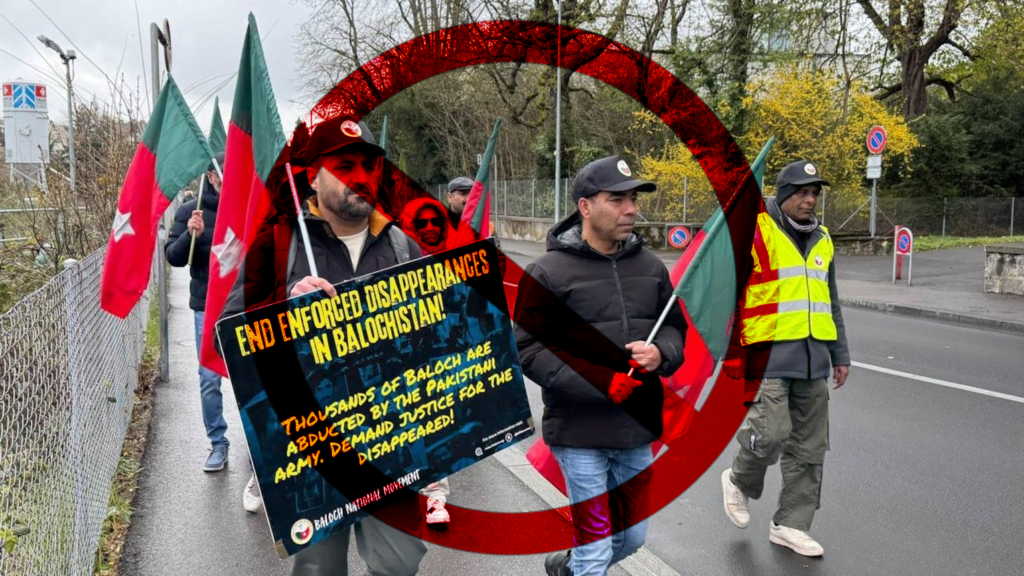
The venues changed, but the script stayed the same. It has now been performed in Geneva, London, Busan and New York within a single year, and it always follows the diplomatic calendar. It is timed to UN sessions and high-level speeches, not to events on the ground in Balochistan. Real outrage responds to what happens. This campaign responds to when the cameras will be there.
The first thing to understand is who is speaking. BNM does not hide its goal. Its own human rights department, PAANK, describes the party as “struggling for the independence of Balochistan from Pakistan.” The BLA and BLF share exactly the same objective. What divides them is method, not purpose: one side plants bombs in Balochistan, and the other books venues in Geneva. Pakistan’s assessment is that BNM is the soft, international-facing layer of this ecosystem, while the BLA and BLF are its armed instruments. That assessment is hard to dispute when BNM refuses, year after year, to condemn the organisations that share its cause.
Those organisations are not freedom movements. They are proscribed terrorist groups. The United Kingdom banned the BLA in 2006. The United States designated it as a terrorist organisation in 2019 and later added it, together with its suicide squad, to its list of Foreign Terrorist Organisations. Pakistan has proscribed both the BLA and the BLF and designates all terrorist groups operating in Balochistan as Fitna al-Hindustan. The name reflects evidence of Indian sponsorship that Pakistan has placed before the United Nations in successive dossiers. The case of Kulbhushan Jadhav, the serving Indian naval officer arrested in Balochistan in 2016, remains the clearest example of that support. When India’s prime minister spoke about Balochistan in his 2016 Independence Day speech, exiled separatist leaders publicly welcomed it, and one of them sought refuge in India.
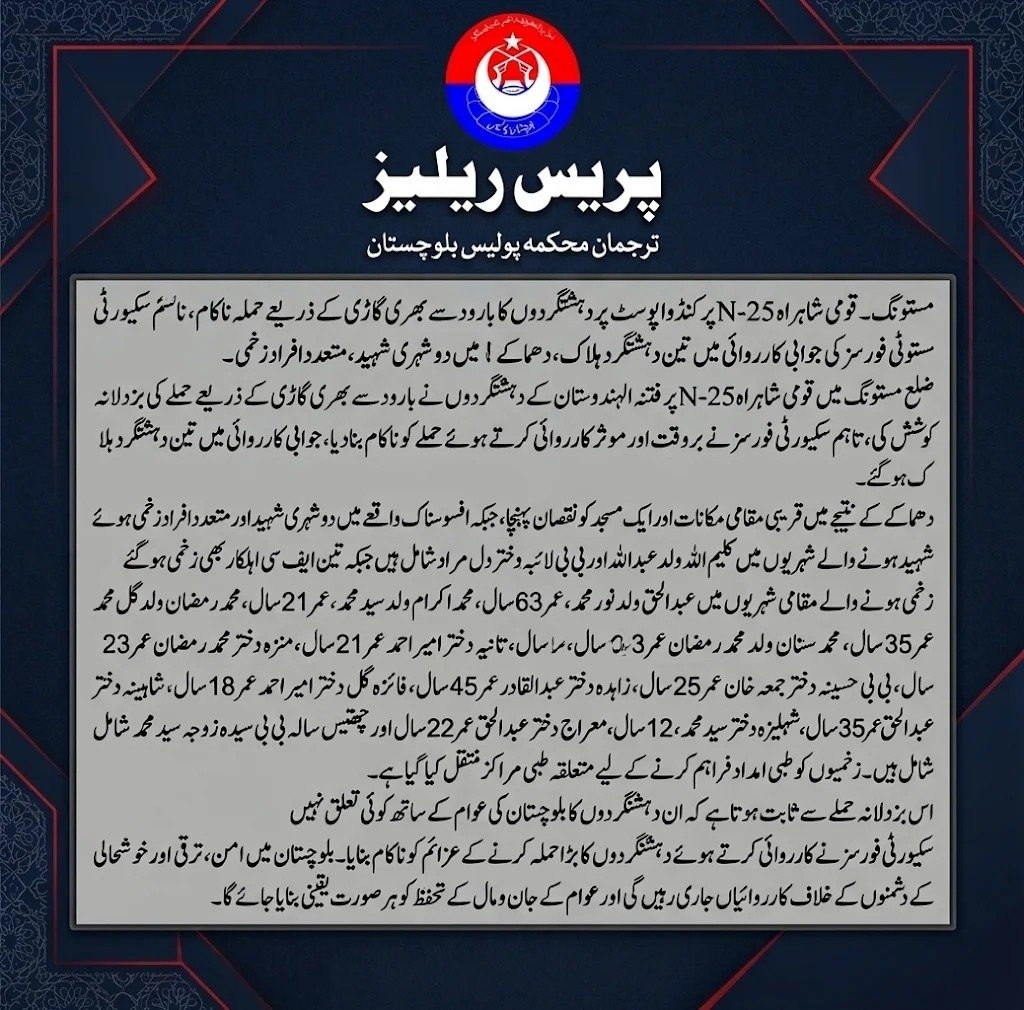
The record of these groups is the real human rights story of Balochistan. They hijacked the Jaffar Express and killed its passengers. They bombed a school bus in Khuzdar, killing and maiming children. They have pulled labourers from vehicles in Nushki and Tump and shot them for coming from another province. They have assassinated teachers, engineers, tribal elders, members of minority communities and Baloch who refused to support them. They have attacked Chinese workers, railways, gas lines and power stations that serve Baloch communities first. In early 2026, BLA terrorists struck schools, hospitals, banks and markets across at least nine districts. The UN Security Council condemned the BLA by name after 31 civilians and 17 security personnel were killed.
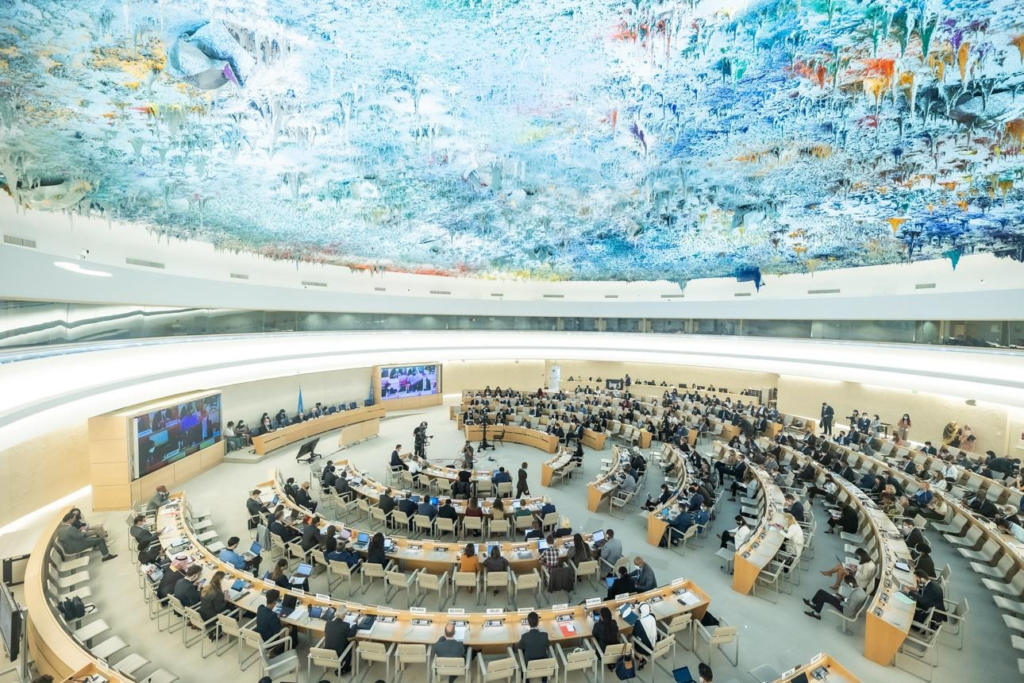
None of these victims appeared in Geneva’s photo exhibition, in the speeches under the Broken Chair, or on the banners in New York. That silence is not an oversight. It is the method. A human rights campaign that finds only one perpetrator, and that perpetrator is always the state, is not documenting abuses. It is running a political campaign.
The numbers behind the campaign do not survive scrutiny either. PAANK’s latest six-month report uses the word “verified” for 556 disappearances and 227 killings, but publishes no names, no methodology and no verification process. Its own monthly figures add up to 228 killings, not 227, and to 201 releases, not the 171 it reports. It dates one month as “April 2027.” Five men it presents as “kill and dump” victims were, according to the Counter-Terrorism Department, killed in an armed encounter near Sibi on 12 June 2026. The son of another alleged “death squad” victim filed a police report naming private individuals, not state officials. People listed as “disappeared” have later been claimed by the BLA as its own fighters. Others were recorded as recovered on PAANK’s own website while still counted as missing in its report. The pattern is consistent: terrorists become victims, crimes become state atrocities, and recoveries are never removed from the total.
The campaign also depends on borrowed authority. On 27 March 2026, a sitting member of the UN Working Group on Enforced or Involuntary Disappearances addressed BNM’s conference in Geneva, titled “78 Years of Occupation.” The UN’s own Code of Conduct requires such mandate-holders to be independent, impartial and guided by objective, reliable facts. Appearing on a platform run by one side of an armed conflict does not meet that standard, and Pakistan should say so formally in Geneva. Members of the proscribed Pashtun Tahafuz Movement also appear on these platforms. Groups such as the Baloch Yakjehti Committee, which Pakistani authorities have accused of serving terrorist interests, draw small crowds at home but outsized international coverage. The result is a coordinated front, not a spontaneous grassroots uprising.
That coordination costs money. International travel, venues in Geneva and New York, professional video production and campaigns timed to the minute do not pay for themselves. BNM and its partners have never published a credible account of who funds them. Organisations that demand transparency from the Pakistani state should show their own accounts.
What the campaign erases most of all is Balochistan itself. It reduces a province of farmers, fishermen, students, traders and elected officials to a single story of grievance. Gwadar, once a small fishing town, now has a deep-sea port, a new international airport, expanding roads, and new schools and training centres. Highways have cut travel times between once-isolated districts. Balochistan elects its own provincial assembly and sends representatives to the National Assembly and Senate, and Baloch nationalists compete and win in that system. Many Baloch are choosing steady progress within a united Pakistan over calls for separation that have brought mainly funerals, closed schools and lost investment. These voices are rarely invited to Geneva.
Pakistan has the institutions to answer genuine grievances. The Constitution guarantees fundamental rights, and the superior courts regularly hear petitions on missing persons. The Commission of Inquiry on Enforced Disappearances has traced thousands of people. Since February 2026, Balochistan’s detention law has required that suspects be held only at designated centres under police supervision, with families notified and given access. A press conference abroad cannot replace these mechanisms.
Nor can it rewrite history. Kharan, Makran and Lasbela acceded to Pakistan in March 1948, and the Khan of Kalat signed the Instrument of Accession on 27 March 1948. That history, like the 1971 playbook of foreign agencies exploiting local grievances for strategic ends, is not a matter of opinion.
Pakistan’s counter-terrorism operations against Fitna al-Hindustan are lawful acts of self-defence to protect its citizens. No state is expected to watch in silence while trains are hijacked and school buses are bombed. The answer to this campaign is to keep telling the full story: the victims’ names, the evidence of sponsorship, and a province building its future. Geneva has its speeches. Balochistan has its people, and they deserve to be heard over the script.