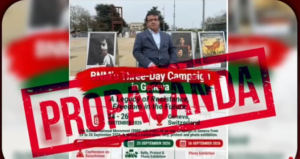
The digital landscape has increasingly become a theater of information warfare, where propaganda and fabrication are amplified through social media.
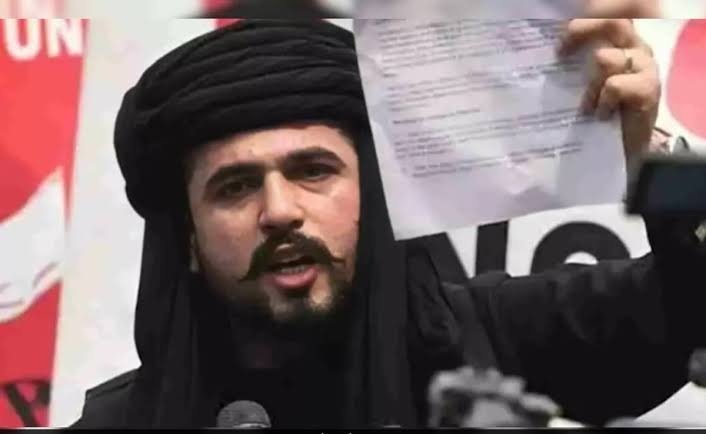
One recent example is Mir Yar Baloch’s widely shared declaration of a purported “Republic of Balochistan.” The campaign claimed that this fictional entity controls 85 percent of the province, commands a five-branch military, intends to conduct a “National Population and Housing Census” in 2027 based on an alleged population of 60 million, possesses its own national symbols, and represents an emerging independent state seeking international recognition.
It also attempted to portray a traditional Balochi cultural song as the anthem of his fictitious republic and revived earlier claims that Balochistan had already declared independence.
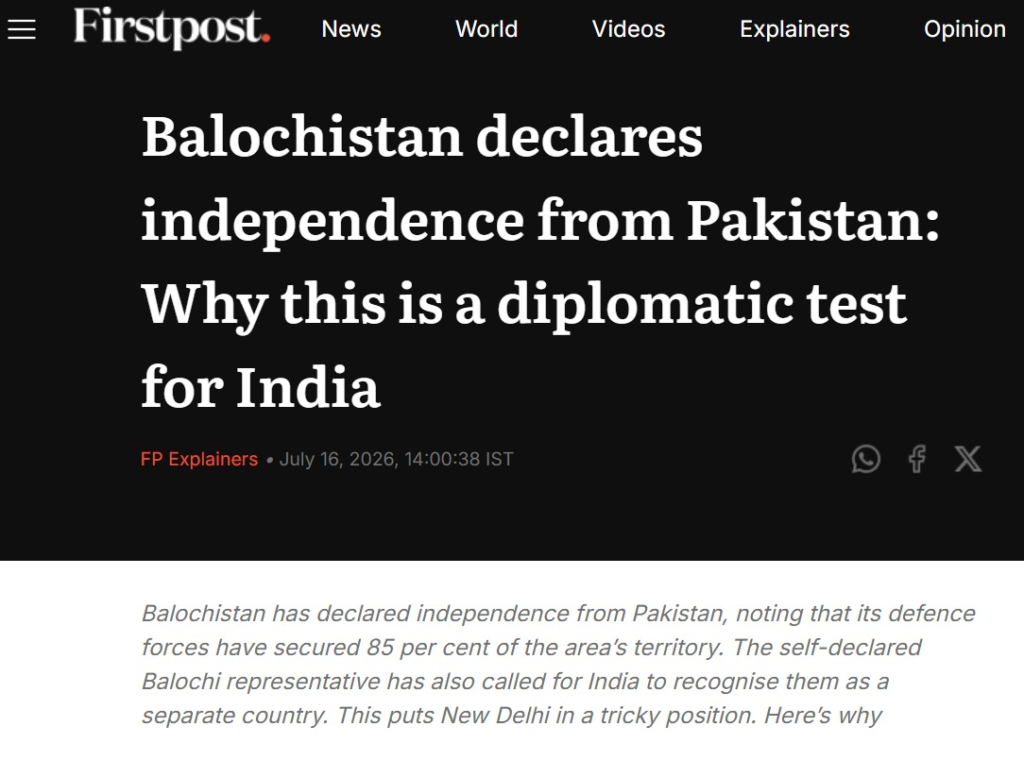
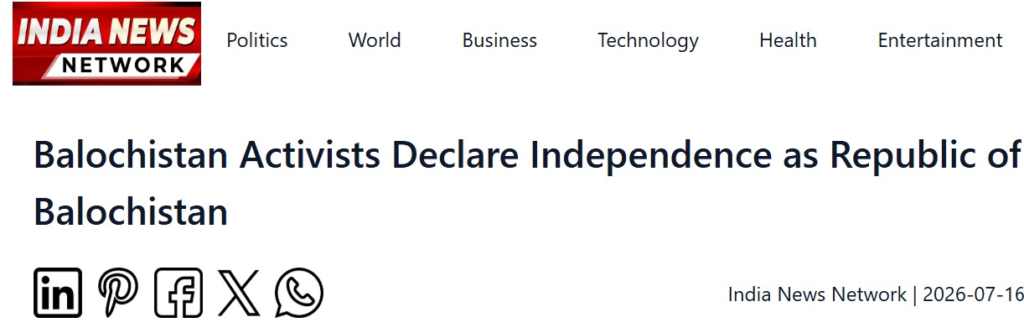
What makes this episode particularly revealing is how quickly the alleged declaration was amplified by segments of the Indian media ecosystem. Outlets such as Firstpost, India News Network, and India Today, among others, circulated the narrative despite the absence of verifiable evidence for the extraordinary claims being made. This demonstrates that the campaign was not confined to a fringe social media account; it was projected into a wider regional information space through platforms that have repeatedly faced criticism for sensationalist and inaccurate reporting on security issues involving Pakistan.
The speed with which these claims were amplified makes it even more important to examine them against verifiable facts, beginning with the proposed census. Pakistan’s official 2023 digital census recorded Balochistan’s population at roughly 15 million, while also identifying the province as having the country’s highest annual population growth rate. The viral declaration inflates this figure to 60 million, a fourfold exaggeration with no demographic basis. Such inflation is a classic information warfare tactic designed to create the illusion of a large, established state for audiences that are unlikely to verify facts on the ground.
The demographic exaggeration, however, is only one part of a much broader narrative. The campaign’s most consequential assertion is that the self-proclaimed republic already exercises control over the overwhelming majority of Balochistan.
If the purported republic truly controlled 85 percent of Balochistan, normal administration across the province would not continue uninterrupted. Traffic on the Quetta Karachi highway moves routinely, flights land at Gwadar International Airport under Pakistan Civil Aviation Authority regulations, markets operate using Pakistani currency, and major strategic projects including Gwadar Port, Reko Diq, and CPEC continue under Pakistani oversight, underscoring the absence of any parallel governing authority.
The promoters of the alleged republic have not identified a single city, district, or checkpoint that they administer. No internationally recognized organization, government, or independent monitoring body has verified their claims of territorial control.
The claim of territorial control is accompanied by another major assertion: the existence of a fully functioning military apparatus under the authority of the purported republic. Yet no credible evidence has been presented regarding its structure, command hierarchy, bases, personnel records, or operational capabilities. More than a year after the first declaration, neither the account’s promoters nor any independent source has produced verifiable proof of such a force.
The propaganda campaign has also attempted to appropriate Baloch culture. Footage from the cultural program Rang e Bolan, produced by Radio Pakistan Quetta, was repackaged and presented as a “revolutionary anthem” of the claimed republic.
In reality, the song is a traditional Balochi folk composition celebrating peace, brotherhood, and social harmony. Pakistan officially observes Balochistan Culture Day on March 2 each year, and institutions such as PTV Bolan exist specifically to promote Balochi language, music, and cultural heritage.
Rebranding a state sponsored cultural performance as a national anthem is evidence of deliberate misinformation.
The political intent behind the campaign becomes clearer when viewed alongside Mir Yar Baloch’s public appeals to foreign leaders for diplomatic intervention. In one such appeal, the account called on the Indian government to recognize the alleged Balochistan entity, allow the establishment of a “Balochistan embassy” in India, and initiate formal engagement with figures associated with the independence movement.
Such demands reveal that the campaign is not based on existing state institutions or territorial authority, but on seeking external validation for an entity that lacks administrative control, international recognition, and legal standing. The message is aimed less at governing territory and more at securing political visibility, legitimacy, and external patronage. The message is aimed less at governing territory and more at securing external attention, legitimacy, and patronage.
When terrorist networks fail to establish control on the ground, the battlefield shifts online. Unable to administer territory, they attempt to simulate statehood through online declarations, digitally altered flags, logos, and viral messaging.
This is not the first time such a declaration has appeared. In May 2025, the same account announced the independence of Balochistan, unveiled a flag, circulated images of a supposed national currency, and called for diplomatic relations with India. More than a year later, the same narrative has returned with even larger claims: greater territorial control, a larger army, and alleged defections from Pakistan’s military, yet still without verifiable evidence.
When viewed together, these repeated declarations, inflated statistics, invented institutions, and unsubstantiated claims reveal a campaign built on perception rather than demonstrable political authority.
In the end, the so called “Republic of Balochistan” exists only in the digital imagination of its promoters. It has no territory, no institutions, no recognition, and no governing authority. The coordinated use of fabricated population figures, invented military structures, altered cultural material, repeated declarations of independence, and appeals for foreign recognition points to a sustained digital influence campaign.
External propaganda and misinformation campaigns may dominate social media cycles, but they have not altered the constitutional, administrative, or international reality of Balochistan.
The rapid amplification of these unverified claims by sections of the Indian media actively projects fringe anti-Pakistan nationalist narratives into the regional information space and provides them legitimacy, reach, and political visibility despite the absence of credible evidence. A trending hashtag may generate attention, but it cannot manufacture sovereignty. Balochistan was, is, and will remain a part of Pakistan.