
The establishment of a modern IT Hub in Turbat marks a significant step in the development trajectory of Balochistan. At its core, the initiative is not about infrastructure but about redefining opportunity in a region that has long remained at the periphery of the digital economy. By introducing advanced technological facilities in Kech district, the state signals a shift from conventional development models toward knowledge-driven growth. This shift carries particular weight in a province where development has historically been measured through physical infrastructure such as roads and buildings, rather than through investment in human capital and digital capability.
For years, the absence of reliable digital infrastructure and technical training created barriers for the youth of Balochistan. This gap limited employment prospects and contributed to a steady outflow of skilled individuals seeking opportunities elsewhere, often in larger cities where access to technology and training was more readily available. The consequence was a slow erosion of local talent, as young people who might otherwise have contributed to the growth of their own communities were compelled to relocate. The IT Hub addresses this imbalance directly by bringing quality resources closer to the community, enabling young people to compete in an interconnected global market without leaving their hometowns.
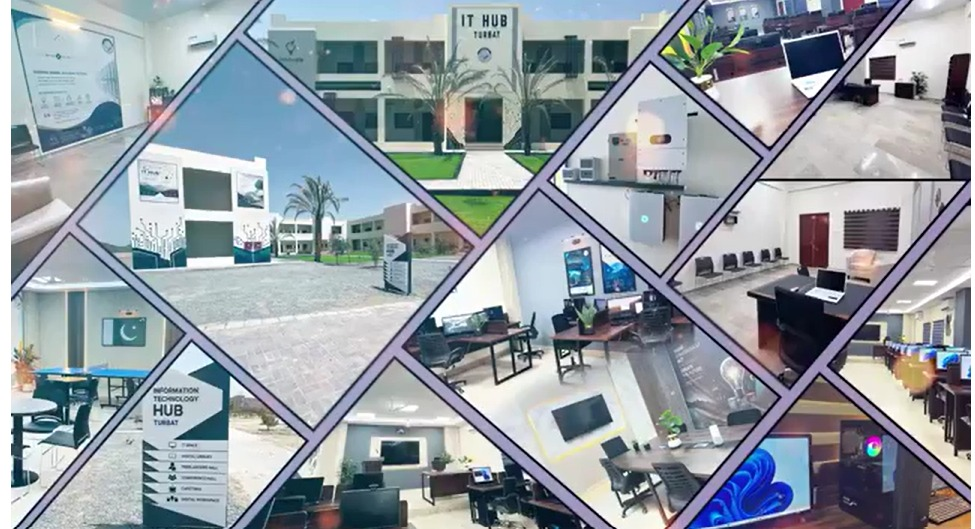
What distinguishes this initiative is its integrated design. The combination of computer systems, digital learning spaces, training programs, and mentorship frameworks ensures the facility functions as more than a symbolic gesture. It is positioned as an operational ecosystem where skills are developed, refined, and translated into income-generating activities such as freelancing and e-commerce. This reflects an understanding of how digital economies operate and how local talent can be integrated into global value chains, rather than remaining confined to local markets alone.

Equally significant is the emphasis of the project on sustainability and inclusion. The installation of a solar power backup system responds to the energy challenges of the region and ensures uninterrupted operations, addressing a practical concern that has historically disrupted institutional functioning in the area. Its location within Government Girls College Turbat reflects a deliberate focus on female participation. In a context where women often face structural barriers to economic engagement, access to digital skills can carry effects that extend beyond the individual to households and communities, opening avenues for financial independence and participation in the workforce that were previously constrained.
The implications of the project extend beyond immediate employment. A skilled digital workforce can reshape the economic landscape of Turbat by attracting investment, encouraging entrepreneurship, and fostering innovation. As more young people acquire market-relevant skills, the local economy can gradually diversify beyond traditional sectors, reducing dependence on limited avenues of income and creating conditions for more sustained growth over time.
The Turbat IT Hub reflects a model of development in which connectivity, skills, and sustainability converge. Its success will depend on consistent implementation, adequate maintenance, and sustained policy attention beyond the initial phase of establishment. If these conditions are met, the project can serve as a reference point for similar interventions in other parts of the province, and offers Balochistan a concrete pathway toward integration with the global digital economy while building the foundations for long-term local resilience.