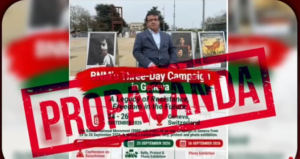
The Human Rights Council of Balochistan’s recent annual report falls short of a balanced human-rights assessment. It functions more as a selective narrative tool that amplifies claims of enforced disappearances and extrajudicial killings while framing the state as the primary source of violence. By presenting these allegations as evidence of systematic persecution and ignoring terrorism in the province, the report produces an incomplete picture of Balochistan’s security environment.
Terrorist organizations, particularly the Baloch Liberation Army (BLA) and its Majeed Brigade, along with the Baloch Liberation Front (BLF), intensified attacks throughout 2025 against civilians, security forces, railways, and development infrastructure. On 11 March 2025, terrorists attacked the railway tracks in Bolan, hijacked the Jaffar Express, and held hundreds of passengers hostage. The assault killed 26 people, including security personnel, civilians, and government officials. The United Nations described the attack as a heinous terrorist act. Such incidents are central to understanding the operational environment in which intelligence-based counterterrorism measures take place. Yet the HRCB report largely omits this context.
A credible human-rights evaluation cannot treat deaths caused by terrorist organizations as secondary details. Attacks on railway passengers, labourers, security personnel, government installations, and development projects define the security realities of the province. Infrastructure, connectivity, and economic opportunity strengthen Balochistan’s integration with the national economy; their deliberate destruction harms the very population that terrorist groups claim to represent. The destruction of livelihoods cannot be presented as a struggle for the welfare of Balochistan.
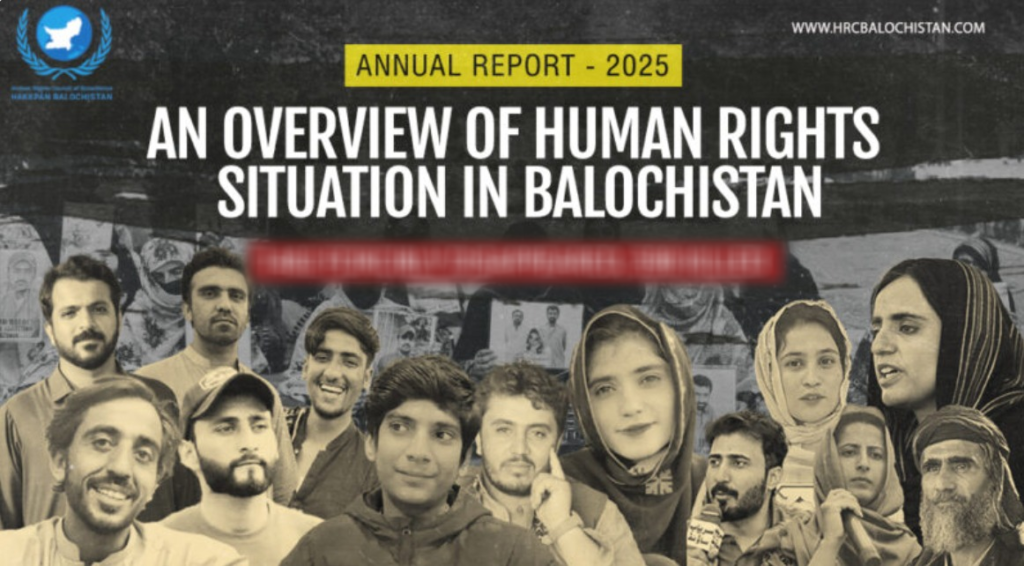
The report’s methodology also warrants scrutiny. It relies substantially on information collected through its own networks. Serious questions remain about independent verification, forensic assessment, and the classification of individuals in its datasets. A rigorous assessment must distinguish between civilians allegedly subjected to enforced disappearance, individuals detained under counterterrorism laws, and terrorists killed during armed encounters. Treating all such cases as equivalent converts a complex security picture into a predetermined political narrative.
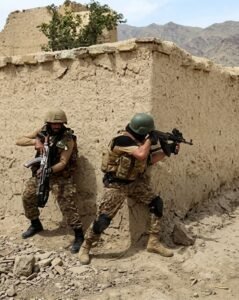
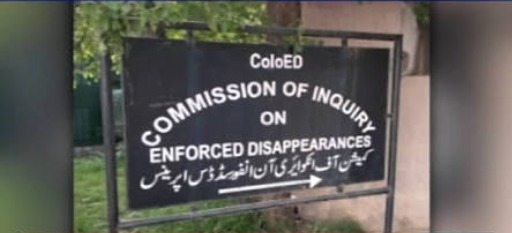
Enforced disappearance is a serious concern and must be investigated wherever credible evidence exists. Pakistan has established the Commission of Inquiry on Enforced Disappearances for this purpose. Individuals reported missing may later be found in custody in connection with terrorism investigations or may emerge as members or facilitators of proscribed organizations. The same principle applies to deaths during counterterrorism operations. Security forces routinely recover improvised explosive devices, weapons, explosives, and suicide vests. When terrorists engage security personnel in armed encounters, resulting deaths cannot automatically be labelled extrajudicial killings without establishing the circumstances through independent investigation. Operations in districts such as Panjgur, Kech, Nushki, and Kalat have been conducted against groups that have repeatedly targeted civilians and state institutions.
HRCB’s characterization of the Baloch Yakjehti Committee as a purely peaceful civic movement also requires nuance. Peaceful political expression and legitimate demands for rights are protected. However, where protests involve road blockades, disruption of economic activity, incitement, or alleged links with proscribed organizations, those issues require separate legal scrutiny. Action against individuals should be based on evidence and due process.
Therefore, Balochistan requires neither selective documentation nor politically convenient narratives. It requires rule of law, accountability, security, development, and an unambiguous rejection of terrorism. Counterterrorism operations under Pakistan’s national security framework will continue to target terrorist networks, while legitimate grievances can and should be addressed through constitutional, political, and judicial mechanisms. Genuine human rights cannot be separated from the right of ordinary Baloch citizens to live without fear of terrorism. Any report that documents one side’s suffering while overlooking the victims of terrorist violence is basically an instrument of narrative politics rather than a comprehensive human-rights assessment.