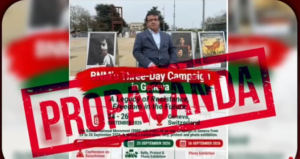
The latest propaganda video released by Kharji Noor Wali Mehsud, leader of Fitna al Khawarij (FAK), is another attempt to incite violence. By invoking Surah At-Tawbah ayat 9 he seeks to portray attacks against Pakistan’s security forces as a religious obligation, giving terrorism the appearance of divine legitimacy. Rather than engaging in a genuine theological discussion, the video deliberately misuses Islam to justify the killing of Muslims. More significantly, it revives the same pattern employed by the Khawarij in early Islamic history, who selectively quoted the Qur’an, and legitimized violence under the guise of religion.
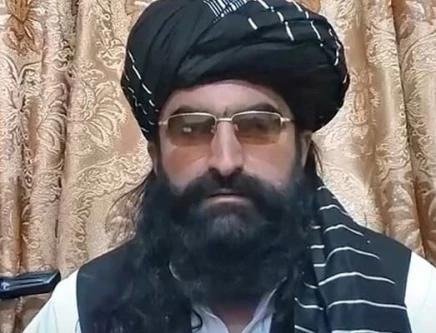
Noor Wali Mehsud’s argument rests on omission rather than scholarship. Surah At-Tawbah (9:5) was revealed in a specific historical context concerning pagan tribes that repeatedly violated their treaties with the Prophet Muhammad ﷺ. It was never intended as a blanket command to fight Muslims or state institutions.
Mainstream Islamic scholarship has consistently interpreted the verse alongside the surrounding passages that address treaty obligations and the limited circumstances in which fighting became permissible. Removing the verse from its historical context is not interpretation; it is a deliberate distortion aimed at manufacturing religious legitimacy for terrorism.
Such reasoning closely resembles the ideology of the Khawarij, whose extremism first emerged during the caliphate of Hazrat Ali (RA). They also relied on isolated Qur’anic slogans while disregarding the broader teachings of Islam. Referring to their famous slogan, “The command belongs only to Allah,” Hazrat Ali (RA) remarked, “A true word by which falsehood is intended.” The Prophet Muhammad ﷺ likewise warned of a group that would recite the Qur’an eloquently, yet its message would not go beyond their throats. Though outwardly devout, they would ultimately turn their weapons against fellow Muslims.
The resemblance to modern extremist organizations is difficult to ignore. Like the Khawarij, the TTP replaces established scholarly interpretation with selective quotation and the practice of takfir, branding anyone outside its worldview as an enemy of Islam.
The purpose behind Noor Wali Mehsud’s latest message extends beyond encouraging violence against the state. It seeks to persuade followers that Muslim soldiers, police officers, and those who uphold Pakistan’s constitutional order have somehow forfeited their Islamic legitimacy. Once such a claim is accepted, every act of terrorism can be portrayed as an act of faith. Yet the TTP’s own record completely undermines that claim.
For years, the TTP has shed the blood of the very Muslims it claims to defend. It has bombed mosques during prayers, attacked worshippers, targeted shrines, assassinated religious scholars, murdered tribal elders, and carried out suicide bombings in crowded markets and public spaces. The massacre of more than 130 children at the Army Public School in Peshawar remains one of the darkest crimes in Pakistan’s history.
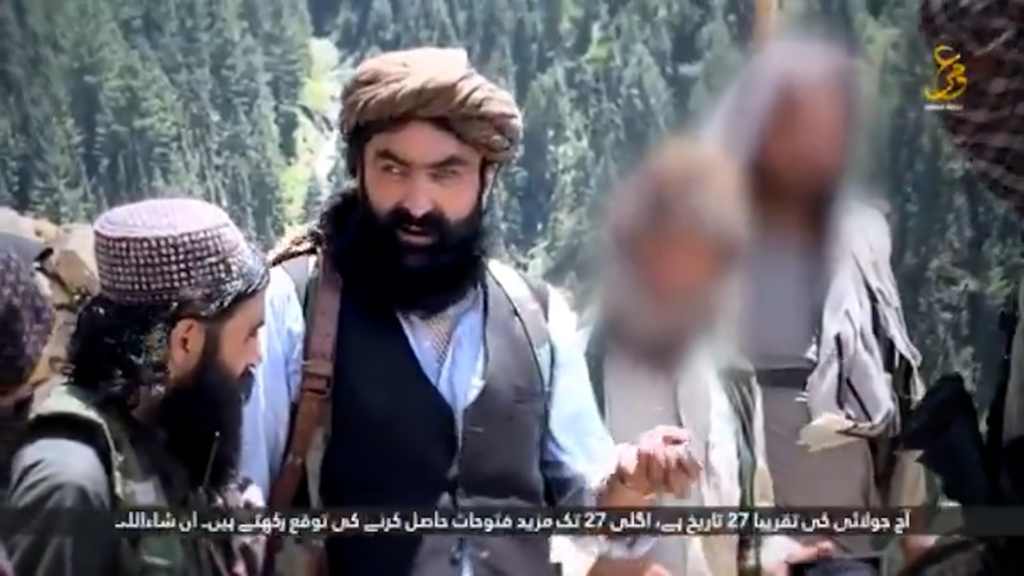
The organization has also repeatedly targeted Pakistan’s security forces, killing Muslim soldiers, police officers, Frontier Corps personnel, and Levies officials while they defended communities against terrorism. Far from isolated incidents, these attacks reveal a consistent pattern that exposes the contradiction at the heart of the TTP’s ideology. An organization responsible for murdering schoolchildren, worshippers, and ordinary Muslims cannot credibly claim to be acting in defence of Islam.
Extremist organizations rarely reject the Qur’an outright. Instead, they extract individual verses from their historical and legal context while ignoring equally explicit commands that prohibit the unlawful killing of believers, uphold justice, honour agreements, and forbid transgression. Their propaganda depends on selective reading rather than the comprehensive understanding developed through centuries of Islamic scholarship. The problem, therefore, lies not in a single verse but in the method used to manipulate it.
Recognition of this ideological abuse led Pakistan’s leading religious scholars to issue Paigham-e-Pakistan, a declaration endorsed by approximately 2,000 scholars representing all major schools of thought.
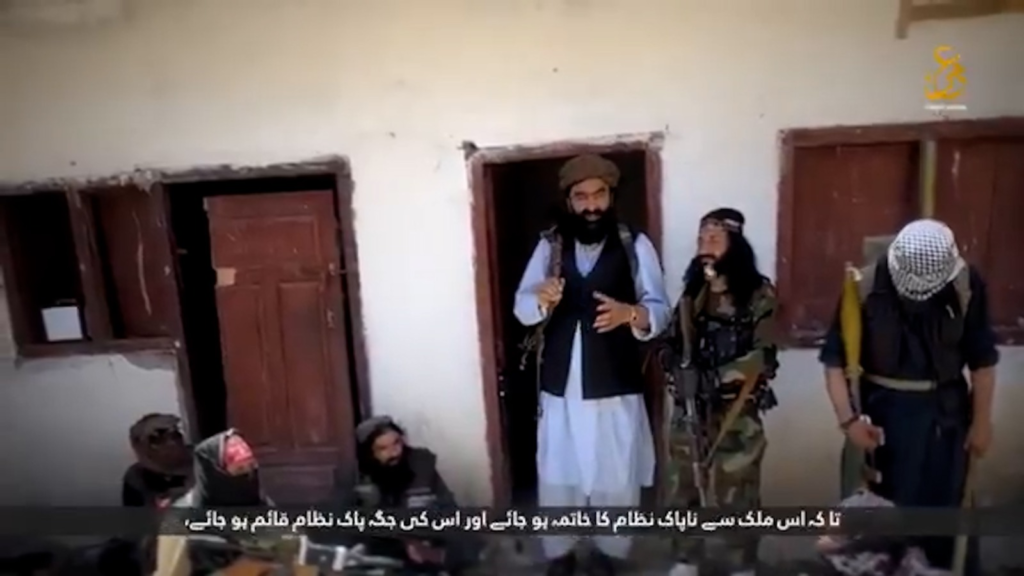
The declaration unequivocally rejects terrorism, takfir, suicide attacks, and armed rebellion, affirming that no individual or group has the authority to declare fellow Muslims apostates or wage violence in the name of Islam. It reflects the overwhelming scholarly consensus that extremist organizations have distorted Islamic teachings to advance political violence rather than religious truth.
Countering the TTP therefore requires more than a security response; it demands an ideological one. Military operations can dismantle terrorist networks, but they cannot, by themselves, defeat narratives built on the manipulation of religion.
Those narratives must be challenged by exposing both their theological weaknesses and their real-world consequences. Noor Wali Mehsud’s latest video is not a credible interpretation of the Qur’an but an attempt to weaponize it. Any movement that must distort revelation to justify the killing of Muslims has already forfeited the theological argument. Like the Khawarij before them, today’s extremists recite the Qur’an while abandoning its principles. Their greatest weapon is not the verse they quote, but the context they deliberately conceal.