The conviction of Dr. Mahrang Baloch by an Anti-Terrorism Court in Quetta has reignited a familiar debate in Pakistan: where does political activism end and legal accountability begin? Supporters of Mahrang Baloch have portrayed the June 22, 2026 verdict as politically motivated, while others see it as the lawful outcome of a case involving deadly mob violence. Whatever one’s political sympathies may be, the judgment deserves to be examined through the lens of law rather than emotion.
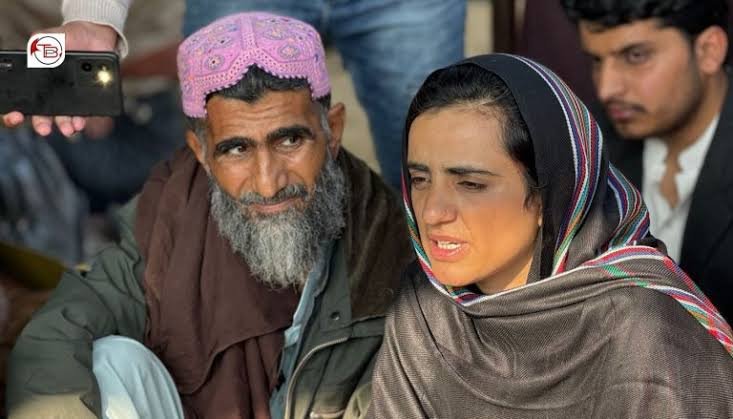
Special Judge Muhammad Ali Mobeen sentenced Dr. Mahrang Baloch and Sibghatullah Shah, widely known as Shah Jee, to life imprisonment after convicting them under Section 302(b) of the Pakistan Penal Code, read with Sections 147 and 148 relating to rioting and rioting while armed with deadly weapons.
The court found that both shared a common objective that culminated in the murder of Frontier Corps Sepoy Shabbir Ahmed. At the heart of the verdict lies a straightforward legal principle: individuals who organize, direct, or incite a violent crowd can be held responsible for the foreseeable consequences of that crowd’s actions.
To understand the significance of the judgment, it is necessary to revisit the events that led to it. On July 29, 2024, a large gathering associated with the Baloch Rajee Muchi was held in Gwadar.
According to the prosecution, speeches delivered during the gathering fueled hostility toward Frontier Corps personnel deployed nearby. What began as a political assembly allegedly escalated into a violent confrontation when a mob armed with stones and sticks attacked an FC detachment near Al-Johar School.
During the assault, Sepoy Shabbir Ahmed became separated from his unit and was beaten to death. The prosecution further that his body was desecrated after the killing. Several other security personnel sustained injuries in the same incident. For the court, these events were not isolated acts carried out by unknown individuals. Rather, they were the culmination of actions set in motion by organizers who assembled, mobilized, and directed the crowd.
This distinction is crucial because the law does not require a leader to personally commit the fatal act in order to incur criminal liability. Courts routinely examine whether an accused shared a common purpose with those who carried out the violence and whether the resulting harm was a foreseeable consequence of that purpose.
The judgment rests on the conclusion that the crowd did not emerge spontaneously but was organized and influenced by individuals whose leadership played a decisive role in the events that followed.
Critics, however, have focused less on the incident itself and more on the conduct of the trial. They argue that the proceedings were unfair because they were moved from Gwadar to a secure facility in Quetta and were later conducted through video links. These concerns deserve consideration. Yet they must also be viewed against the security realities of Balochistan, where witnesses, judicial officers, and state officials have repeatedly been targeted by violence. In such an environment, extraordinary security measures are often adopted not to undermine justice but to make the administration of justice possible.
The fairness of the trial ultimately hinges on a different question: whether the accused were given a meaningful opportunity to defend themselves. Article 10-A of the Constitution guarantees the right to a fair trial, and any evaluation of this case must begin there.
According to the prosecution and court record, the accused had access to legal representation, were offered opportunities to participate in proceedings through video link, and were provided legal avenues through which to challenge the evidence presented against them. Whether these safeguards were sufficient will remain a matter for appellate courts to determine, but the existence of security measures alone does not establish a denial of due process.
Another criticism advanced by supporters of the accused is that the verdict could discourage political activism and peaceful protest. This argument carries emotional appeal but risks overlooking an important distinction. The judgment does not criminalize dissent, political organizing, or public assembly. Across Pakistan, protests and political gatherings take place regularly without legal consequences. The issue before the court was not the expression of political views but the transition from political mobilization to violent action resulting in death.
That distinction matters because democratic societies depend on two principles simultaneously: the protection of peaceful dissent and the enforcement of accountability when violence occurs. Neither principle can be sacrificed in favor of the other. If peaceful activism is protected, violent mobilization must also remain subject to legal scrutiny. The court’s verdict is rooted in this balance.
Ultimately, this case is about more than competing political narratives. It is about the death of Sepoy Shabbir Ahmed and the question of who bears responsibility for the violence that claimed his life. The Anti-Terrorism Court has delivered its answer. Whether higher courts uphold or overturn that conclusion remains to be seen. For now, the verdict stands not as proof of political engineering but as a judicial determination that leadership carries responsibility, especially when public mobilization allegedly ends in bloodshed.