
The latest wave of terrorist attacks in Balochistan has once again exposed the enduring threat posed by militant networks determined to undermine Pakistan’s security, stability, and national cohesion. Within a span of four days, coordinated attacks targeted innocent civilians, police personnel, and military forces in Hanna Urak, Ziarat, and Bela-Winder, leaving behind a trail of grief and sacrifice.
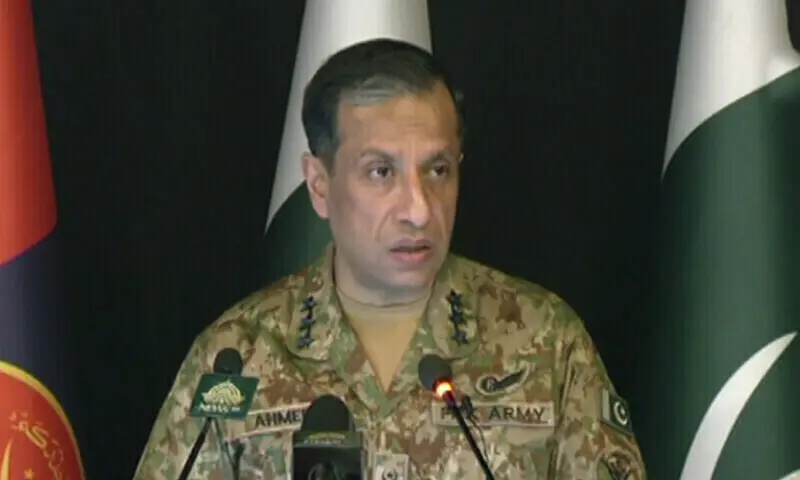
According to DG ISPR Lieutenant General Ahmed Sharif Chaudhry, 42 Pakistanis, including civilians, police officers, and soldiers, embraced martyrdom, while security forces eliminated 54 terrorists during subsequent operations. These events are not isolated acts of violence; they represent an organised campaign aimed at weakening the Pakistani state and obstructing Balochistan’s path towards peace and prosperity.
The courage displayed by Pakistan’s security forces and the people of Balochistan deserves the nation’s highest tribute. The police officers defending the Mangi Dam checkpost in Ziarat fought until their last breath despite facing a multi-directional assault. Local residents in Hanna Urak resisted armed attackers, demonstrating that terrorism cannot easily intimidate communities determined to protect their homeland. Likewise, soldiers who sacrificed their lives while defending an army convoy near Bela reaffirmed the Pakistan Armed Forces’ unwavering commitment to national security.
These sacrifices carry an important message, Pakistan’s fight against terrorism is not merely a military campaign but a national struggle for peace, sovereignty, and the rule of law. Every martyr represents a family that has paid the ultimate price so that millions of Pakistanis can live in safety. Their courage demands not only remembrance but also an unwavering commitment to defeating terrorism in all its manifestations.
The attacks also reveal a troubling reality about the changing nature of terrorism. Militant groups increasingly operate through coordinated assaults, psychological warfare, and sophisticated propaganda campaigns. Their objective extends beyond inflicting casualties; they seek to erode public confidence, discourage investment, disrupt development projects, and create an impression of instability.
Balochistan, with its immense strategic importance, abundant natural resources, and connectivity projects, remains a prime target because its stability is directly linked to Pakistan’s long-term economic future.
During his press conference, the DG ISPR maintained that the recent attacks were not spontaneous acts by isolated groups but formed part of a broader, coordinated campaign. He reiterated Pakistan’s longstanding position that hostile external actors and militant sanctuaries across the western border continue to facilitate terrorist activities against Pakistan. He further alleged that several militants involved in recent attacks were Afghan nationals and that anti-Pakistan groups receive support from India while exploiting Afghan territory as operational space. These remain the official position of the Government of Pakistan and underscore Islamabad’s persistent concerns regarding cross-border terrorism.
Whether viewed through the lens of national security or regional geopolitics, one reality remains indisputable: terrorism cannot flourish without financing, logistics, recruitment, safe havens, and ideological support. Eliminating individual militants is necessary, but dismantling the broader ecosystem that enables terrorism requires sustained regional cooperation and international accountability.
The global community has consistently recognised that terrorism is a transnational challenge, and Pakistan’s security concerns deserve to be addressed with the same seriousness afforded to similar threats elsewhere in the world.
However, military operations alone cannot guarantee lasting peace. Pakistan has learned through decades of counterterrorism that sustainable stability requires a comprehensive national strategy. Effective intelligence coordination, strengthened policing, secure borders, judicial reforms, economic development, and improved governance must complement battlefield successes. Balochistan’s youth deserve opportunities for education, employment, entrepreneurship, and meaningful participation in the province’s development. Prosperity remains the most effective long-term antidote to extremist narratives.
Equally significant is the information dimension of modern conflict. Terrorist organisations increasingly exploit digital platforms to magnify fear, spread misinformation, and distort public perceptions. Every violent incident is rapidly transformed into an information campaign designed to weaken national morale.
In such an environment, responsible journalism, factual reporting, and national resilience become indispensable. A democratic society must encourage informed debate while remaining vigilant against propaganda that serves the objectives of violent extremist organisations.
The response of the Pakistani state following these attacks demonstrated institutional coordination across multiple fronts. Security forces, intelligence agencies, the Frontier Corps, police, and civil administration worked together to contain the attacks and launch clearance operations.
The provincial leadership also reaffirmed its determination to continue development initiatives despite terrorist attempts to create instability. Such unity sends an important signal that terrorism will neither dictate state policy nor derail Balochistan’s progress.
Pakistan’s counterterrorism journey has been marked by extraordinary sacrifices over the past two decades. Thousands of civilians and security personnel have laid down their lives to restore peace across the country. While significant gains have been achieved, recent attacks remind us that terrorism remains adaptive and persistent.
Complacency would therefore be a costly mistake. Continued investment in intelligence capabilities, surveillance technologies, border security, and institutional reforms will remain essential for staying ahead of evolving threats.
The message emerging from the latest security developments is one of resilience rather than despair. Terrorist groups seek to convince Pakistanis that violence can overpower the state and fracture national unity. Instead, the response has reinforced the opposite conclusion. Every attack has strengthened the resolve of the armed forces, law enforcement agencies, and ordinary citizens who refuse to surrender to fear.
The sacrifices made in Hanna Urak, Ziarat, Bela, Kharan, and Dalbandin should serve as a reminder that Pakistan’s security is a collective national responsibility. Standing united against terrorism is not merely a matter of supporting security institutions; it is about safeguarding the country’s future, protecting its development, and preserving the peace that millions of Pakistanis aspire to enjoy.
Terrorism may continue to test Pakistan’s resilience, but history has repeatedly shown that the nation’s determination to defend its sovereignty is stronger than the forces seeking to undermine it.