Raja Faisal on India’s Proxy Strategy, Balochistan, Information Warfare and Regional Security
Q: Pakistan has repeatedly raised concerns on global platforms regarding Indian proxies operating within its borders, even presenting detailed dossiers. Why has the international community failed to take practical steps in response?
Raja Faisal stated that Pakistan has consistently presented dossiers containing what it considers credible evidence of Indian involvement in supporting terrorism inside Pakistan. According to him, these dossiers have not only been submitted by the current government but by previous governments as well. He argued that Pakistan’s evidence is substantial enough that even former senior intelligence officials internationally have acknowledged its seriousness.
However, he believes geopolitical realities have prevented decisive international action. He argued that since 2014, India has enjoyed strategic leverage due to its role in broader regional competition, particularly in relation to China. As a result, despite repeated evidence presented by Pakistan, India has largely escaped international accountability.
He suggested that Pakistan should now update and re-submit its dossiers with fresh evidence, particularly highlighting alleged support provided to militant organizations operating from Afghanistan, including the supply of advanced technologies such as quadcopters, FPV drones and kamikaze drones.
Q: You mentioned advanced military hardware. Regarding the escalations in May 2025, there were claims that India deployed sophisticated drones against Pakistan. Were these assets sourced from Israel?
Raja Faisal argued that Balochistan has become one of the primary theatres for proxy warfare against Pakistan. He claimed that India has maintained links with exiled Baloch figures and militant organizations, using them to fuel instability in the province.
According to him, following the withdrawal of international forces from Afghanistan, a large quantity of sophisticated weapons remained in the country. He alleged that these weapons entered illicit markets controlled by Taliban-linked networks and were subsequently supplied to militant organizations operating against Pakistan.
He further argued that the scale and sophistication of attacks witnessed in Balochistan—including coordinated operations, attacks on infrastructure and the use of modern weaponry and drones—indicate organized financial and logistical support. In his view, Afghanistan under Taliban control has become a transit hub where funding, weapons and operational facilitation allegedly converge before reaching groups targeting Pakistan.
He also linked these activities to broader regional objectives, claiming that militant organizations targeting Pakistan also threaten Chinese interests, particularly projects associated with CPEC.
Q: You had a talk with General Bakshi, about 3-4 years ago… In that, he said that we will teach Pakistan a lesson. So, what happened in May 2025?
Responding to the question, Raja Faisal argued that the events of May 2025 demonstrated Pakistan’s military preparedness. He claimed that Pakistan responded decisively to Indian military actions, asserting that India suffered significant operational setbacks during the confrontation.
He referred to the performance of Pakistan’s air defence systems and fighter aircraft, claiming they effectively countered India’s capabilities despite New Delhi’s acquisition of advanced platforms. According to him, India’s subsequent defence procurement reflected the impact of those engagements.
Despite disagreeing with General Bakshi’s assessment, Raja Faisal emphasized that he maintains mutual respect with him. He concluded by saying that Indian analysts should avoid underestimating Pakistan, arguing that Pakistan has repeatedly demonstrated capabilities that have surprised its adversaries
Q: It’s been almost a decade now… this social media war… Indian accounts are very active. They are actually being operated from India. Those who are maligning Pakistan, and along with that, all of our terrorist organizations here, BLA, BYC, all of them, they are also being operated from there. They are supporting them. And they are doing propaganda against Pakistan. How do you see this?
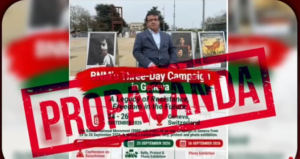
Raja Faisal described what he believes is an extensive digital influence campaign targeting Pakistan. Referring to previous investigations into online disinformation networks, he argued that numerous fake media organizations, fabricated news portals and anonymous social media accounts have been created to spread anti-Pakistan narratives.
He alleged that these platforms publish coordinated content under false identities, often attributing articles to prominent anti-Pakistan figures while concealing the actual authorship. According to him, financial incentives are also used to generate content and videos that reinforce negative narratives about Pakistan.
He further claimed that automated bots and coordinated amplification networks ensure such content gains visibility across social media platforms, while stories presenting Pakistan positively receive comparatively little attention. In his view, the objective is to influence international opinion through sustained information warfare rather than conventional military means.
Q: Now the question is, this propaganda against Pakistan, how will it affect regional peace and stability?
Raja Faisal argued that despite years of propaganda and attempts to isolate Pakistan diplomatically, the country’s regional standing has strengthened. He maintained that Pakistan has combined military capability with diplomatic engagement to improve its international position.
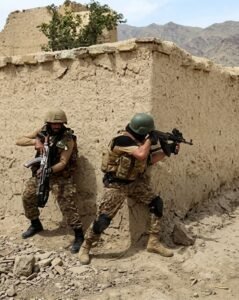
According to him, Pakistan’s armed forces have earned recognition through decades of counterterrorism operations and remain among the most experienced forces confronting terrorism. He argued that Pakistan continues to serve as a frontline state against militant groups operating from Afghanistan, thereby contributing to regional and international security.
Concluding the discussion, Raja Faisal called upon the international community to discourage support for proxy warfare and to address the flow of weapons, financing and facilitation to militant organizations. He maintained that lasting regional peace depends upon preventing state-sponsored proxy conflicts and confronting terrorism collectively.