The arrest of retired police surgeon and political commentator Dr. Ayesha Faiz has been quickly reframed by the Baloch Yakjehti Committee (BYC) and other anti-state accounts as an instance of political persecution and shrinking civic space in Balochistan. That narrative, however, obscures the conduct that preceded the arrest.
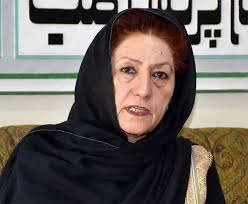
Dr. Faiz was arrested after a press conference at the Quetta Press Club in which she rejected the characterization of the BLA and BLF as terrorist organisations, described BLA chief Bashir Zeb and BLF leader Dr Allah Nazar as “soldiers” and “guerrilla fighters” engaged in a war of independence, and presented their armed campaign as part of Balochistan’s historical struggle.
The case therefore cannot simply be reduced to punishment for political criticism. The FIR was registered under Pakistan’s anti-terrorism and cybercrime framework, invoking Sections 11-F(3)(a), 11-F(4) and 11-W of the Anti-Terrorism Act, 1997, alongside Sections 9 and 10 of PECA, 2016, as amended in 2025. Whether the statements ultimately meet the legal threshold for these offences is a matter for the courts. But the existence of a specific legal case makes it misleading to portray the arrest as an unexplained crackdown on political expression.
The central distinction is between criticising the state and legitimising terrorism. Political disagreement, criticism of government policy and debate over Balochistan’s political future fall within legitimate public discourse. That protection does not automatically extend to statements that portray organisations responsible for terrorist violence as legitimate armed movements or their leaders as freedom fighters. The language used to describe violence matters because it can transform the public perception of those carrying it out.
The BLA and BLF have been responsible for violence affecting civilians, workers, security personnel and ordinary families. Recasting their members as soldiers or guerrilla fighters removes the terrorist character of their campaign from the discussion and gives their violence a political veneer. The same applies to their leadership. Describing Bashir Zeb and Dr Allah Nazar as legitimate military figures elevates terrorist commanders into political representatives and shifts attention away from the consequences of the violence associated with their organisations.
This is why terrorist propaganda increasingly depends on terminology. “Terrorist” becomes “fighter”; terrorism becomes “resistance”; and accountability is reframed as persecution. The underlying violence remains unchanged, but the language surrounding it is altered to make it appear politically legitimate. Such framing also pushes victims out of the narrative while giving greater political visibility to those responsible for violence.
The reaction to Dr. Faiz’s arrest follows this broader pattern. By focusing almost exclusively on the arrest while sidelining the statements that preceded it, the narrative reverses the sequence of events.
Balochistan’s political history can and should remain open to debate. Grievances, governance failures and competing political visions can be discussed within the law. But none of these issues provides a blanket justification for legitimising organisations that employ violence. Political expression cannot become a shield for terrorist glorification simply because it is presented in the language of historical struggle.
Dr. Ayesha Faiz’s arrest should therefore be assessed through the statements that preceded it, the provisions invoked in the FIR and the evidence presented before the courts.
The response of these propagandists reveals the deeper nature of their narrative. By defending terrorist organisations, sanitising their leadership, recasting violence as resistance and portraying state action as oppression, they are not merely advocating political dissent. They are advancing a narrative designed to delegitimize the Pakistani state and undermine its authority to act against terrorism. Their objective is to shift public perception from the victims of terrorism to those responsible for it and from accountability to victimhood. That is is an anti-state propaganda effort aimed at normalizing terrorism and weakening the legitimacy of the state’s counter-terrorism response.