September exposed a sharp disconnect between the BLA’s alleged battlefield claims and the operational record emerging from Balochistan.
News18 amplified the BLA’s alleged claim that it carried out 94 attacks across the province, killed 105 Pakistani security personnel, injured 52, destroyed 46 vehicles and captured 21 personnel. These figures were attributed to the terrorist organisation without independent verification, yet were given headline prominence. A terrorist organisation’s own account cannot substitute for independently established facts.
The ground record presents a markedly different picture.
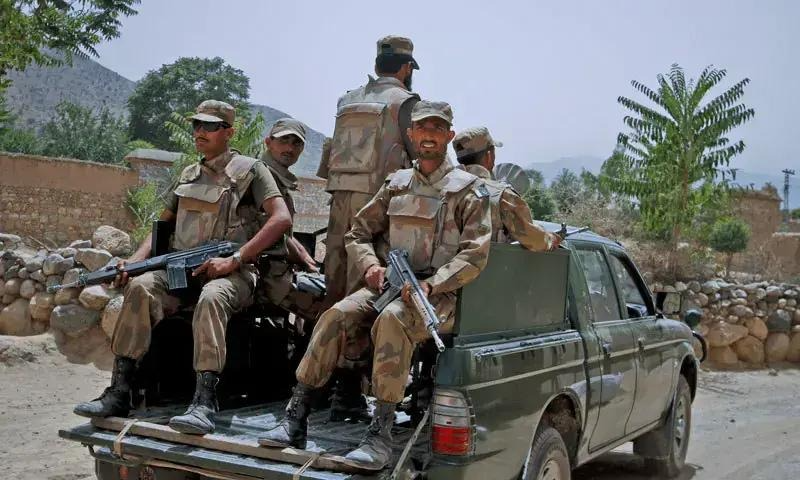
According to the Pakistan Institute for Conflict and Security Studies, 171 terrorists were killed in security-force operations across Balochistan during September, with sustained operations reported in Shaban, Nushki, Mand, Kalat, Mastung, Panjgur and Kech. More than 71 terrorists were eliminated within 96 hours during successive operations in Shaban, Nushki and Mand, reflecting the sustained counter-terrorism pressure placed on terrorist networks throughout the month.
The first days of September alone demonstrate the scale of the response. On September 1, security forces eliminated 21 terrorists at Nokcha in Chagai and Ziarat Cross in Pishin, disrupting an illegal extortion checkpoint and an attempted attack targeting the Customs House. On September 4 and 5, operations around Bhag disrupted planned attacks against a police station, bank and Assistant Commissioner’s office, while 48 terrorists were eliminated.
On September 6 and 7, intelligence-based operations in Kharan and Washuk eliminated 11 terrorists and recovered 2.9 tonnes of explosives, exposing preparations for further attacks. On September 18 and 19, security forces foiled an attempted terrorist checkpoint on the N-25 near Kalat, killed five terrorists and rescued 23 abducted people, while recovering vehicles and weapons.
These incidents provide tangible indicators of what was happening on the ground: terrorist plans were being disrupted, networks were being targeted, weapons were being recovered and civilians were being rescued.
Against this record, the BLA’s alleged figures remain claims originating from the organisation itself. Without independent verification, they cannot simply be presented as established battlefield facts. Repetition does not create verification, and a headline does not transform an allegation into evidence.
The information battle is therefore an important part of the conflict. Terrorist organisations have an incentive to project strength, inflate operational reach and conceal their losses. When such claims are amplified without adequate scrutiny, an organisation’s own propaganda can acquire the appearance of independent reporting.
The question of how these terrorist networks sustain their operations also cannot be separated from the broader security picture.
Pakistan has repeatedly alleged that foreign actors provide financing, logistics and other forms of support to terrorist organizations operating in Balochistan. The case of former Indian Navy officer Kulbhushan Jadhav remains central to Pakistan’s stance of Indian involvement. Jadhav was arrested in Balochistan in 2016, and Pakistan has maintained that his recorded statements established his links to RAW and involvement in activities aimed at destabilising Pakistan.
Pakistan has also repeatedly raised concerns over terrorist networks operating from outside its territory, including the use of Afghan territory for training, planning and cross-border facilitation. Recent reports have carried further intelligence claims concerning financial support for coordinated BLA-TTP activity.
The material recovered during counter-terrorism operations reinforces the logistical dimension of the threat. Large quantities of explosives, weapons and other equipment cannot appear on the battlefield without financing, supply networks and logistical infrastructure. The recovery of 2.9 tonnes of explosives in Kharan and Washuk alone illustrates the scale of preparations that security forces are working to disrupt.
Yet the ultimate cost of this violence is paid by ordinary people.
Road blockades disrupt civilian movement. Extortion damages businesses. Attacks on public facilities undermine normal life. Violence discourages investment, disrupts economic activity and places additional pressure on communities already facing serious developmental challenges.
These consequences rarely feature in terrorist propaganda narratives. The focus remains on claimed attacks, claimed casualties and claimed battlefield victories, while the disruption imposed on local communities disappears from the scorecard.
September’s most tangible record is therefore found in what actually happened on the ground: planned attacks were disrupted, terrorist checkpoints were dismantled, abducted civilians were rescued, explosives were recovered and terrorist networks were targeted across multiple districts.
The contrast matters because information warfare can shape perceptions far beyond the battlefield. A terrorist group can make a claim within minutes. A media platform can amplify it within hours. Establishing what actually happened requires evidence, verification and comparison with the operational record.
That standard matters particularly when claims concern national security and civilian lives.
Under Azm-e-Istehkam, Pakistan’s stated objective remains clear: disrupt terrorist plots, dismantle their networks, protect civilians and expose the financing, facilitation and propaganda structures that sustain terrorism in Balochistan.
September’s ground reality cannot be reduced to a terrorist organisation’s alleged scorecard. The real measure lies in the attacks prevented, networks disrupted, civilians rescued, weapons recovered and terrorists eliminated on the ground.