Two Futures for Balochistan’s Daughters, and the One Bugti Is Betting On
Post

Two Futures for Balochistan’s Daughters, and the One Bugti Is Betting On

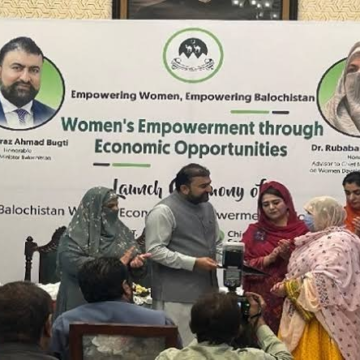
There is something almost unbearably simple about the choice Chief Minister Sarfraz Bugti laid out this week, and that simplicity is exactly why it lands. On one side, he said, are terrorist networks that want to hand young girls in Balochistan a future built on violence, sometimes literally strapping them into it as suicide bombers. On the other is a government trying to hand those same girls a laptop, a stitching machine, a small business loan, a diploma. "We want every daughter of Balochistan to hold knowledge, skills, and employment in her hands, not explosives," he said, and it is hard to imagine a starker way to frame what is actually at stake in this province.
Five Years of Taliban Rule: Failed Governance, Rights Restrictions and Regional Insecurity
Post

Five Years of Taliban Rule: Failed Governance, Rights Restrictions and Regional Insecurity

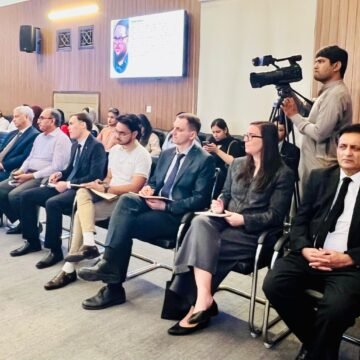
A major conference held in Islamabad to mark five years of Taliban rule in Afghanistan delivered a blunt assessment of the regime’s record. The conference was organized by the Institute of Regional Studies in collaboration with South Asia Times, bringing together policy experts, think-tank analysts, Afghanistan specialists, policymakers, diplomats, and national and international observers. The conference highlighted that the Taliban have failed to build an inclusive system of governance, uphold basic rights, or meet the security and economic expectations of Afghans and the region.

Pakistan: The Credible Mediator for Peace
Post

Pakistan: The Credible Mediator for Peace

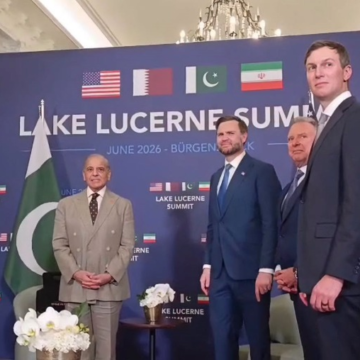
In moments of deep international crisis, the world often finds itself short of credible mediators, states trusted enough by all sides to bring them to the same table. Such was the case as war spread across the region, with major powers divided, alliances strained, and no single actor able to speak to every side at once. It is in this vacuum that Pakistan has stepped forward.

Nine Most Wanted Female Terrorists
Post

Nine Most Wanted Female Terrorists

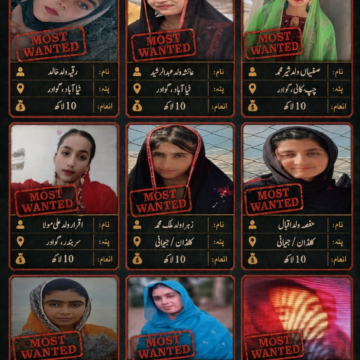
The Balochistan government has announced rewards of Rs 1 million to Rs 1.5 million for credible information leading to the identification or capture of nine most-wanted women linked to Fitna al-Hindustan. Eight of the suspects carry a bounty of Rs 1 million each. One carries Rs 1.5 million. Informants’ identities will be kept strictly confidential. The wanted women are associated with Gwadar, Jiwani and Turbat.  These women were involved in terrorist activity and of misleading vulnerable women to spread violence and instability.

The Tirah Valley IDP Crisis
Post

The Tirah Valley IDP Crisis

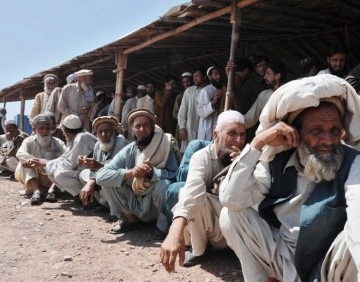
The displacement and phased rehabilitation of families from Tirah Valley in Khyber District is the difficult, necessary work of a sovereign state confronting terrorist networks that have long exploited the valley’s rugged terrain and porous border with Afghanistan. Over 30,000 families remain displaced as Pakistan conducts structured return operations in coordination with local tribal jirgas. Pashtun Tahafuz Movement (PTM) has sought to recast these operations as deliberate oppression of Pashtuns. A clear-eyed examination of the facts shows the opposite: the state is discharging its constitutional duty under Articles 9 and 15 to protect life and enable secure return, while laying the foundations for durable civilian governance.

FAH War on Livelihoods
Post

FAH War on Livelihoods

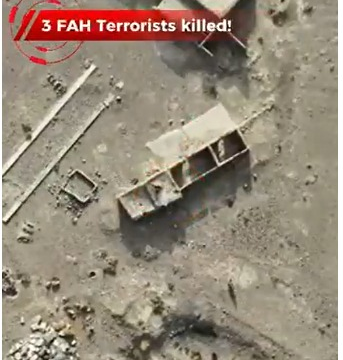
On 21 August 2026, FAH terrorists struck the Geet area of Khad Kocha, Mastung, in a drone attack that killed four people and injured three others. The target was not a military installation or a security post. It was an orchard. Labourers going about ordinary agricultural work were struck while earning an honest living, in an area already under curfew since late July following repeated attacks on the common man earning livelihood.

The Truth Behind HRCB Balochistan Report 2025
Post

The Truth Behind HRCB Balochistan Report 2025

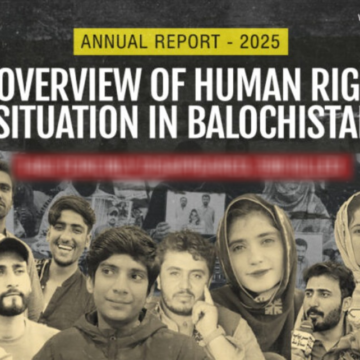
The Human Rights Council of Balochistan’s recent annual report falls short of a balanced human-rights assessment. It functions more as a selective narrative tool that amplifies claims of enforced disappearances and extrajudicial killings while framing the state as the primary source of violence. By presenting these allegations as evidence of systematic persecution and ignoring terrorism in the province, the report produces an incomplete picture of Balochistan’s security environment.

Radd-ul-Fitnah 3: Counterterrorism Momentum in Balochistan
Post

Radd-ul-Fitnah 3: Counterterrorism Momentum in Balochistan

The counterterrorism campaign in Balochistan has entered a decisive phase. Operations conducted under Radd-ul-Fitnah 3 during August 2026 demonstrate that security forces are no longer merely responding to individual terrorist attacks. They are systematically pursuing the networks, commanders, fighters and infrastructure that enable terrorist organizations to operate across the province.

Justice for Balochistan’s Women
Post

Justice for Balochistan’s Women

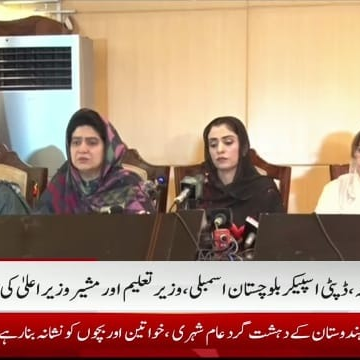
When a mother and daughter are attacked inside their own home, the tragedy reaches far beyond the immediate loss of two lives. It touches the fundamental values of security, dignity, family and community. The killing of Bibi Hanifa and her daughter Hafsa in Nushki has brought these concerns into sharp focus and has given renewed importance to the recent press conference in Quetta, where Balochistan’s women parliamentarians spoke firmly about the protection of women and the collective responsibility to uphold peace.

Beyond Narrative Laundering in Balochistan
Post

Beyond Narrative Laundering in Balochistan

In her article “Balochistan’s Resilient Struggle: Beyond the Narrative of Militancy,” Aneesa Baloch presents the violence in Balochistan as a profound movement for self-determination. She highlights the growing role of educated women and youth, claims of historical grievances, political marginalization, and economic deception, and portrays figures like Dr. Mahrang Baloch as symbols of a rights -based struggle. Such framings collapse under the weight of established facts.