The latest terrorist attack on the police post in Harnai’s Kach area was not merely another assault on a security installation. It was an attack on the people of Balochistan, on their desire for peace, and on Pakistan’s collective struggle against terrorism. Like countless attacks before it, the objective was to spread fear, weaken state institutions, and create an impression that terrorists retain influence in the province.
The outcome once again proved the exact opposite. The courage displayed by local communities alongside Pakistan’s law enforcement agencies demonstrated that the real battle is not simply between terrorists and the state, it is between violence and a society that refuses to surrender.
For years, Fitna al-Khawarij has attempted to exploit local grievances while cloaking its violence in distorted religious rhetoric. Its strategy has remained consistent: target police stations, attack security convoys, intimidate civilians, and spread propaganda after every incident. However, the people of Balochistan have repeatedly rejected these attempts.
The residents of Harnai, like communities across the province, have shown that terrorism cannot thrive where the population refuses to become its instrument. Their support for law enforcement during and after the recent attack reflects an important reality often overlooked in discussions about Balochistan: the province’s greatest strength lies in its people.
One of the defining features of Fitna al-Khawarij is its deliberate misuse of Islamic teachings to justify acts that are fundamentally un-Islamic. The murder of innocent civilians, attacks on mosques, bombings of schools, and targeting of police officers are all presented through a distorted ideological lens that bears no resemblance to the principles of Islam.
Prime Minister Shehbaz Sharif rightly reaffirmed after the Balochistan Provincial Apex Committee meeting that Islam completely rejects terrorism, coercion, and extremism. The ideology of these terrorists has no connection with the faith practiced by millions of peaceful Pakistanis, nor with the traditions of Balochistan, whose people have historically valued hospitality, honour, and communal harmony.
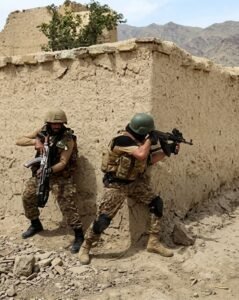
Equally important was the swift and professional response of Pakistan’s security forces. Following the Harnai attack, security personnel launched clearance operations that neutralized the attackers and prevented further harm to surrounding communities. Such responses demonstrate that Pakistan’s counterterrorism strategy has evolved significantly over the past decade.
Intelligence-based operations, improved coordination among security agencies, and closer cooperation with local populations have steadily reduced the operational space available to terrorist organisations. Rather than exposing state weakness, attacks like Harnai reveal the increasing desperation of terrorist groups whose networks continue to face sustained pressure.
The significance of local cooperation cannot be overstated. Counterterrorism is never won solely through military operations. Lasting success depends on public trust, community resilience, and the willingness of ordinary citizens to reject extremist narratives.
In Balochistan, this social resilience has become one of Pakistan’s strongest strategic advantages. Every time local communities refuse to shelter terrorists, report suspicious activities, or stand beside law enforcement officers, they deny extremists the environment they require to survive.
Terrorist organisations understand this reality, which explains why their propaganda machinery often becomes as active as their armed wings. Following every major attack, misinformation is rapidly circulated to exaggerate their capabilities, create confusion, and undermine public confidence. Contradictory claims, fabricated narratives, and coordinated online campaigns have become integral components of modern terrorism. These information operations seek to transform isolated attacks into psychological victories.
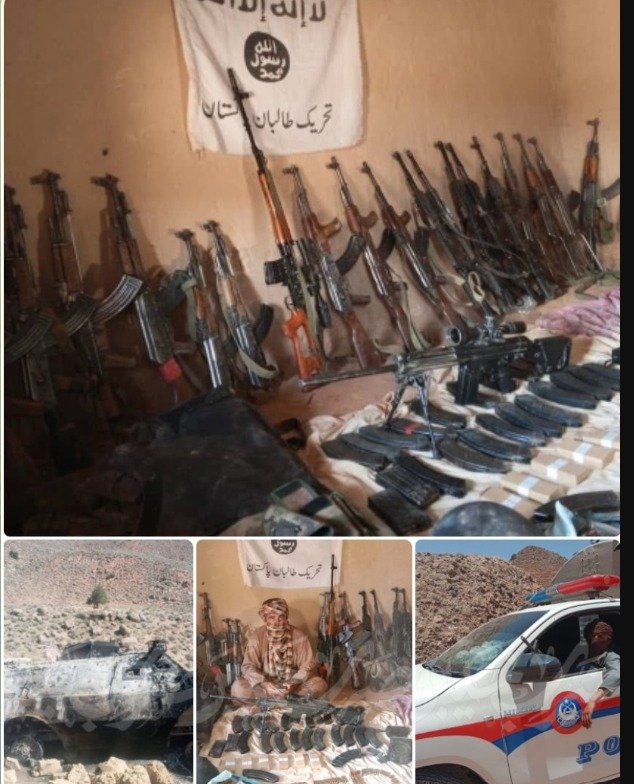
Propaganda cannot erase the facts on the ground. The continued success of Pakistan’s security operations, including the elimination of dozens of terrorists in recent counterterrorism actions, reflects the growing effectiveness of the state’s response against violent extremism.
Another disturbing dimension is the increasing operational convergence among different terrorist networks. Despite ideological differences, various terrorist groups have repeatedly demonstrated a willingness to cooperate whenever their objective is to destabilise Pakistan.
Tactical collaboration, logistical support, intelligence sharing, and coordinated propaganda all serve the same purpose: weakening state authority and creating insecurity. Such cooperation reinforces the need for a comprehensive national response that integrates military action, intelligence coordination, border security, financial disruption of terrorist networks, and strategic communication.
The response of Pakistan’s leadership has therefore been appropriately unified. The Prime Minister’s emphasis on a “mutual and singular decision” by the civil and military leadership reflects recognition that terrorism cannot be addressed through fragmented approaches.
National unity remains the most effective answer to extremist violence. Political consensus, institutional coordination, and public confidence together create the resilience required to defeat long-term security threats.
Perhaps the most important lesson from Harnai is that terrorists continue to miscalculate the people of Balochistan. They assume fear will replace resilience and intimidation will silence communities. Instead, every attack strengthens public determination to reject violence and support peace. The sacrifices of police officers, soldiers, and civilians have forged a powerful partnership between the state and the people that extremists have repeatedly failed to break.
Balochistan has endured decades of terrorism, yet its people have consistently refused to allow violence to define their future. They remain the first victims of terrorism and the first line of resistance against it. Their courage deserves recognition not only during moments of tragedy but as a permanent reminder that security ultimately rests upon the resilience of ordinary citizens.
The attack in Harnai should therefore not be remembered solely as another terrorist incident. It should be remembered as another example of a province refusing to bow before fear.
Terrorist groups may continue to launch isolated attacks, spread propaganda, and seek support from hostile external actors, but they cannot succeed where the people themselves reject their ideology. Pakistan’s fight against terrorism will ultimately be won not only through military strength but through the unwavering determination of its citizens. In that struggle, the brave people of Balochistan remain the nation’s greatest strength.