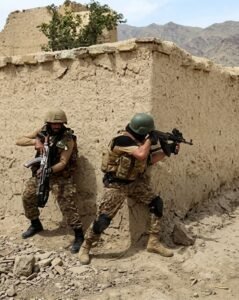
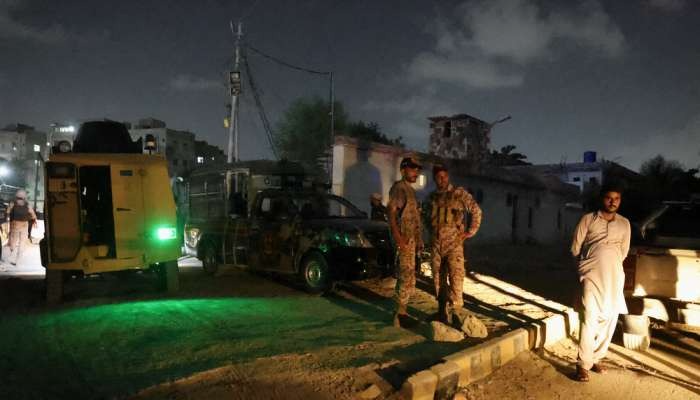
On June 28, 2026, terrorists attacked a Rangers headquarters in Karachi. Three Pakistani security personnel were martyred. Three terrorists were killed. One Afghan terrorist was wounded and captured. The Pakistani military foiled the attack, Prime Minister Shehbaz Sharif condemned it, and Jamat ul Ahrar, a banned terrorist organization linked to TTP, claimed responsibility.
Those are the facts. Now consider how the BBC chose to report them.
Rather than calling the perpetrators terrorists, the BBC Urdu report used the phrase “shiddat pasand,” which translates roughly as “extremists” or “hardliners,” a term so soft and so stripped of moral clarity that it could apply to a passionate cricket fan. The report referred to the attackers with the respectful pronoun “unhon ne” as though describing the actions of ordinary citizens rather than terrorists who walked into a security compound with weapons and murdered three men in uniform. No BBC correspondent writing about the 7/7 bombings in London called those attackers “shiddat pasand.” No BBC report on attacks in Paris, Brussels, or Manchester reached for language this deliberately gentle.
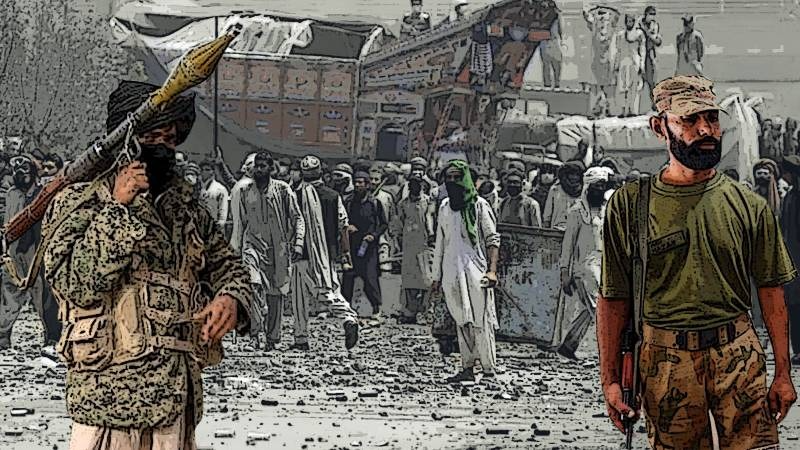
The question Pakistan is asking openly, is a simple one: why does the BBC apply one standard to terrorism in the West and a measurably different standard to terrorism in Pakistan?
This matters because language in terrorism reporting is not a minor editorial preference. It is a moral position. When a media organization refuses to call a terrorist a terrorist, it is not being neutral. It is making a choice about whose violence deserves moral condemnation and whose deserves the benefit of softer framing. That choice has consequences. It shapes how international audiences perceive Pakistan’s security situation. It shapes how young people process violence when they encounter it in the media. It shapes whether the public instinctively rejects terrorist narratives or finds them partially legitimized by the respectful vocabulary wrapped around them.
Pakistan is not a bystander in the global war on terrorism. It is one of its primary victims. Tens of thousands of Pakistani civilians and security personnel have been killed in decades of terrorist violence. The three Rangers personnel martyred in Karachi on June 28 are the latest additions to a list whose length no Pakistani family should have to know. When the BBC covers their killers with language borrowed from political commentary rather than criminal reporting, it is not serving journalism. It is undermining the very foundation of public consensus against terrorism that responsible media should be building.
This is also not an isolated editorial lapse. The BBC’s coverage of the Kashmir dispute has long reflected a framing that Pakistani audiences and officials have consistently identified as structurally biased against Pakistan’s position. Its amplification of separatist narratives from Balochistan, often drawing from sources with documented connections to hostile foreign intelligence networks, has been raised at diplomatic levels. The Karachi Rangers attack coverage fits a pattern that is too consistent to be accidental.
Media organizations operating in the space of counter-terrorism coverage carry a specific responsibility that goes beyond neutrality. Neutrality between a state defending its citizens and a terrorist organization murdering them is not a journalistic virtue. It is an abdication. The BBC’s own editorial guidelines acknowledge that terrorism coverage must not use language that glorifies or sanitizes political violence. Calling the Karachi attackers “shiddat pasand” and referring to them with the respectful “unhon ne” violates that principle in spirit if not in letter.
Pakistan’s media landscape, its civil society, and its diplomatic channels should raise this concern directly and persistently. The international standard for terrorism reporting is clear: attacks on security installations by armed militant groups claiming religious or political motivation are acts of terrorism, and the people who carry them out are terrorists. That is not a political statement. It is a factual description with a precise legal and journalistic meaning.
The BBC should ask itself one honest question. If armed men had attacked a police headquarters in London and a group claiming to wage armed struggle against the British government had claimed responsibility, would the report have said “shiddat pasand”?
The answer already tells us everything we need to know about whose terrorism the BBC considers worthy of its full moral vocabulary.