The 1267 sanctions regime, established under Chapter VII of the UN Charter and elaborated through successive Security Council resolutions including 1988 and 2253, operates as the primary multilateral instrument for imposing binding asset freezes, travel bans, and arms embargoes on designated terrorist entities. Its binding character under Article 25 of the Charter is precisely what distinguishes it from unilateral national listings, which create fragmented enforcement landscapes with exploitable gaps. When the US designated the BLA a Specially Designated Global Terrorist entity in 2019 and subsequently sanctioned its Majeed Brigade as a Foreign Terrorist Organization in August 2025, it acknowledged the group’s terrorist character without creating the universal legal obligations that a Chapter VII listing would impose. That distinction is strategic, and its consequences are measurable.
The operational transformation that makes the 1267 question genuinely urgent is not in dispute.
Fitna Al Hindustan has evolved, as the UNSC’s own 37th Monitoring Team Report confirmed in February 2026, into an organized terrorist network that shares training infrastructure, tactical methodology, and cross-border sanctuary with TTP and Al-Qaeda affiliates.
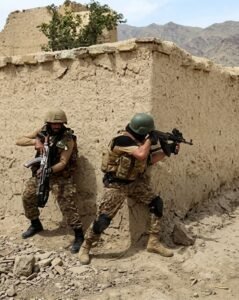
The report confirmed that some member states reported BLA collaboration with TTP through shared training camps and coordinated attacks, with TTP providing training to elements in Balochistan. Under the analytical framework the 1267 Committee itself applies to assess designation eligibility, specifically the criteria of association with designated entities under Resolution 2368, the BLA’s documented operational nexus with TTP already satisfies the affiliation threshold.
When Pakistan’s co-sponsorship with China of a proposal to designate the Balochistan Liberation Army under UNSC Resolution 1267’s sanctions regime was blocked by the United States, France, and the United Kingdom on procedural grounds. The stated objection was that the 1267 framework, originally conceived as a targeted instrument against Al-Qaeda, the Islamic State, and their affiliates.
The sanctuary dimension compounds the jurisdictional argument. The principle that no state’s territory shall be used to threaten the peace, security, or political independence of another state, codified in Article 2(4) of the UN Charter and reaffirmed in the 1970 Declaration on Friendly Relations, creates an obligation on Afghanistan’s de facto authorities to prevent BLA and affiliated groups from using Afghan soil for cross-border operations.
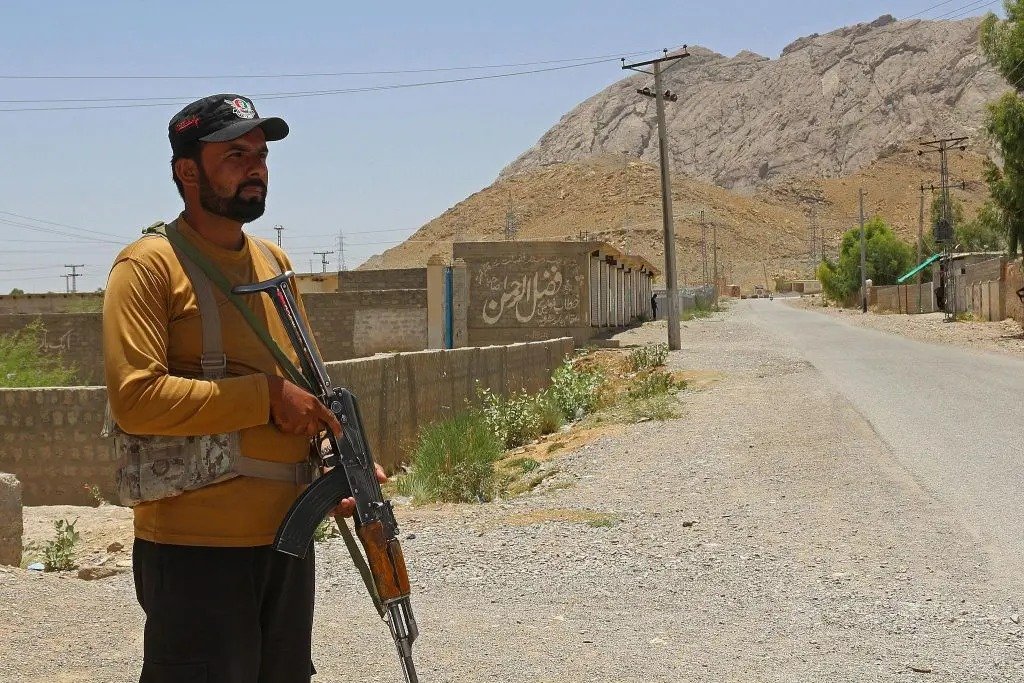
Parliamentary Under-Secretary Hamish Falconer’s recent acknowledgment in the British Parliament that Pakistan retains the right under international law to respond to cross-border attacks emanating from Afghan territory represents a quiet but significant Western concession that the sanctuary problem is real and legally cognizable.
Therefore, procedural objection from Western P3 members, therefore, has been retorted by 37th Monitoring Team Report in February 2026 as well as British Parliamentary Under-Secretary Hamish Falconer. A UN designation would impose binding obligations on all 193 member states to freeze BLA-linked financial assets, restrict travel of identified operatives, and prohibit arms transfers. India’s documented covert support for BLA operational networks, confirmed through Kulbhushan Yadav’s confession and corroborated by intercepted financial pipelines, would face a qualitatively different international legal pressure under a Chapter VII framework than it does under the current patchwork of unilateral designations. That is precisely why the designation matters as a diplomatic instrument and precisely why its opposition cannot be reduced to procedural tidiness.
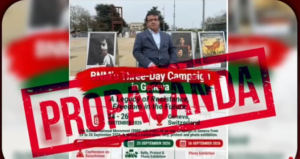
The BLA’s coordinated propaganda ecosystem, its operational coordination with groups already listed under 1267, its targeting of CPEC infrastructure in ways that serve a geopolitical agenda extending well beyond Balochistan, these characteristics place it analytically into the brackets of transnational terrorist category and Afghan terrorist groups operational support to Fitna Al Hindustan is no hidden to anyone. Pakistan tried Track I as well as Track II diplomacy to resolve the issue as Pakistani national interest is inextricably linked to what happens on the other side of its tribal border region. Therefore, Pakistan’s case holds substantial ground to defend itself against the threats internally and externally.
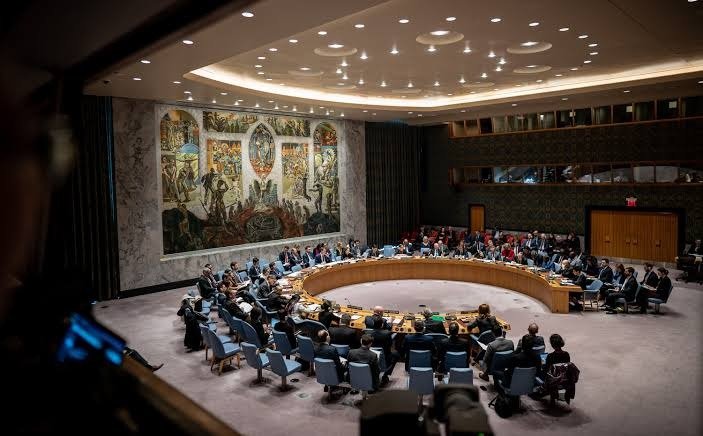
Pakistan’s push for UN designation is therefore not simply a request for recognition it has already received bilaterally from Washington and London. It is a structural argument about the coherence of international law as an instrument of collective security. When the gap between recognized threat and collective action persists long enough, it does not remain a procedural gap. It becomes a political one, and political gaps have operational consequences measured not in committee decisions but in the martyred soldiers and destroyed infrastructure of the states left to manage threats that the international system acknowledges, and now it’s the time to confront these terrorists collectively on international level and ban their activities for the sack of peace of the region.