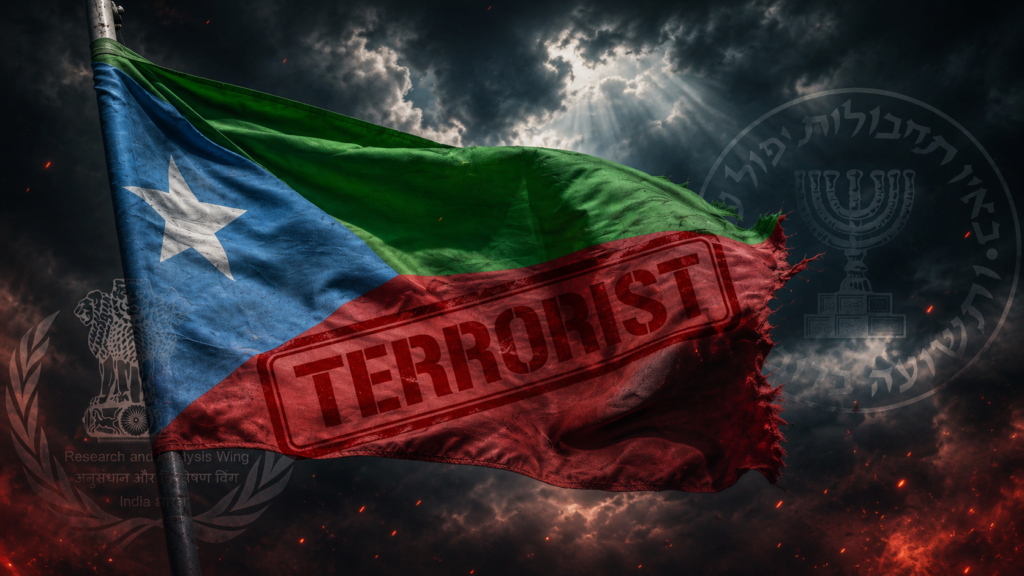
Flags are meant to carry the memory of a people along with their history, values and aspirations. So, when a banned terrorist outfit adopts one, its design deserves scrutiny beyond the slogans printed alongside it. Look closely at the flag flown by the Balochistan Liberation Army, and a pattern emerges that many analysts argue has less to do with Baloch heritage than with the strategic priorities of the group’s external patrons like RAW and Mossad.
Start with what is missing. The historical flag of the Khanate of Kalat carried the crescent and star, symbols woven into the region’s Islamic and cultural identity for generations. The BLA’s flag drops the crescent entirely. It raises some eye brows in Baloch community that the group’s external linkages read this omission as deliberate attempt, allegedly encouraged by hostile intelligence networks including India’s RAW and Israel’s Mossad in order to rebrand it as a vehicle for outside anti-Pakistan interests.
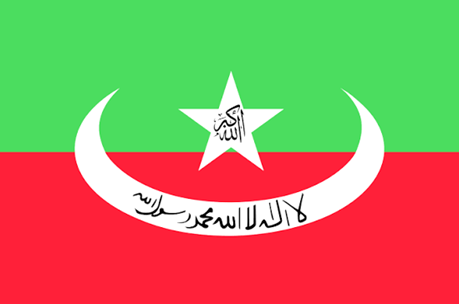
Then there is what was added. Blue never appeared on the old Kalat standard. Its arrival in the BLA’s emblem, in the form of a prominent triangle, is harder to dismiss as aesthetic choice when set against the geography it points toward: Balochistan’s coastline, its ports, its maritime future. Rather than a gesture of regional pride, the blue is better read as a marker of intent, an emblem quietly oriented toward the disruption of Gwadar’s deep-sea port, the Gwadar Free Zone, and the coastal backbone of CPEC. Undermining these nodes would sever it from the trade routes that could finally connect the province to global markets, prolonging the very deprivations of Baloch people to please their foreign masters.
At the center of that triangle sits a five-pointed white star, marketed by hostile agencies as a symbol of peace. Strategic observers see something less benign: five points that map onto five recurring lines of attack pursued by the group over the years which includes sabotaging Chinese nationals and CPEC assets to strain Islamabad-Beijing ties; opening a domestic front whenever Pakistan faces pressure on its borders; provoking friction along the Iranian frontier to unsettle Pakistan-Iran relations; striking pipelines, power lines, and transport links to bleed the national economy; and running propaganda campaigns dressed as human-rights advocacy to damage Pakistan’s standing abroad. That is what their masters are feeding them, Sabotage Pakistan and destroy the future of Balochistan.
None of this is incidental. A flag stripped of its faith and history, redrawn around a coastline it seeks to sabotage and a star that maps onto a five-point campaign of disruption, is the banner of Fitna Al Hindustan. It is a working symbol for an agenda authored in New Delhi and Tel Aviv.
The real choice facing Balochistan was never between submission and terrorism. It is between a future built on Gwadar’s cranes and CPEC’s corridors, and one squandered on pipelines set alight and workers buried in rubble. Peace, development, and full participation in Pakistan’s national project remain the only path that actually serves the Baloch people.