The United Nations Security Council’s September 16 session on Afghanistan was billed as a routine quarterly briefing. It became, instead, a cumulative indictment. Five years after the Taliban regime seized Kabul, and nearly six since it signed the Doha Agreement promising to sever ties with terrorist networks and deny Afghan territory to any group threatening other states, the Council’s deliberations laid bare a regime that has inverted that bargain rather than honored it. What emerged was a single, coherent picture: a government that has converted territorial control into a shield for terrorism, while marketing that same control abroad as stability.
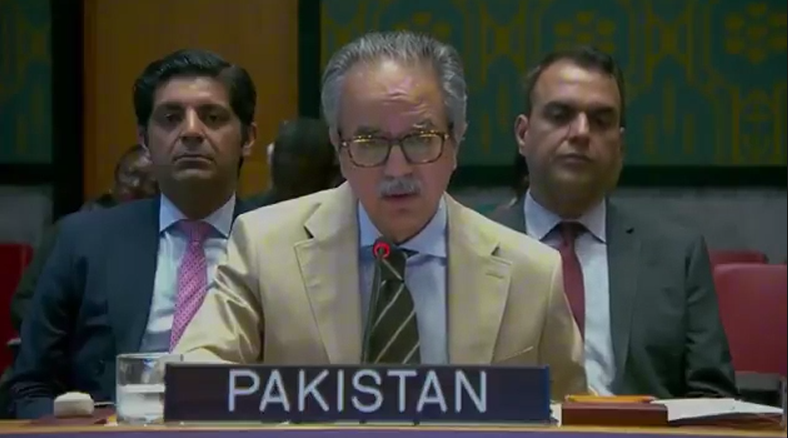
Pakistan’s Permanent Representative Asim Iftikhar Ahmad supplied the session’s most granular case study in this reversal. His account of the nexus between the Taliban regime and terrorist entities, TTP, BLA and its Majeed Brigade, ISIS-K and ETIM was not an accusation of passive tolerance but of structural entanglement: abandoned military hardware repurposed for cross-border terrorism, an illicit economy laundering money that finances terrorism, and sanctuaries operating with what he termed impunity. This is the analytical core of the crisis. A regime cannot simultaneously claim sovereign authority over its territory and disclaim responsibility for what that territory is used to produce. The selective enforcement, tolerance for groups aligned with the Taliban regime’s own ideological lineage, rhetorical distancing from those that embarrass it internationally — is itself the violation.
The Doha framework rested on a narrow but consequential premise that the Taliban regime would trade counterterrorism guarantees for international disengagement and, eventually, legitimacy. US Ambassador Mike Waltz’s remarks exposed how thoroughly that premise has collapsed. His invocation of Secretary of State Marco Rubio’s designation of the Taliban regime as a State Sponsor of Wrongful Detention was not a peripheral human-rights footnote; it was evidence of a regime that treats foreign nationals as diplomatic currency, using hostage-taking as leverage precisely where Doha demanded restraint. Combined with the exclusion of 2.2 million Afghan girls from education, Waltz’s warning that the path to Doha compliance was closing amounted to an admission that the agreement’s central transaction, sanctuary denial in exchange for engagement, has been quietly abandoned by the party that signed it.
What lent the session its weight was the convergence of actors who rarely agree on Afghanistan policy. Russia’s Vassily Nebenzia and China’s Sun Lei, both historically wary of Western-led counterterrorism framing, nonetheless flagged TTP, ISIS-K and ETIM in near-identical terms to Washington and Islamabad, with Nebenzia specifically noting the absorption of foreign terrorist fighters with battlefield experience from Syria and Iraq. When Moscow and Beijing echo Washington’s threat assessment, the underlying claim stops being a geopolitical talking point and becomes an empirically corroborated pattern. Denmark, France and the United Kingdom added the governance dimension, discrimination against women, blocked development, demands for verifiable rather than declaratory action, reinforcing that terrorism sponsorship and political exclusion are not parallel problems but a single system of rule sustained by the same logic of unaccountable control.
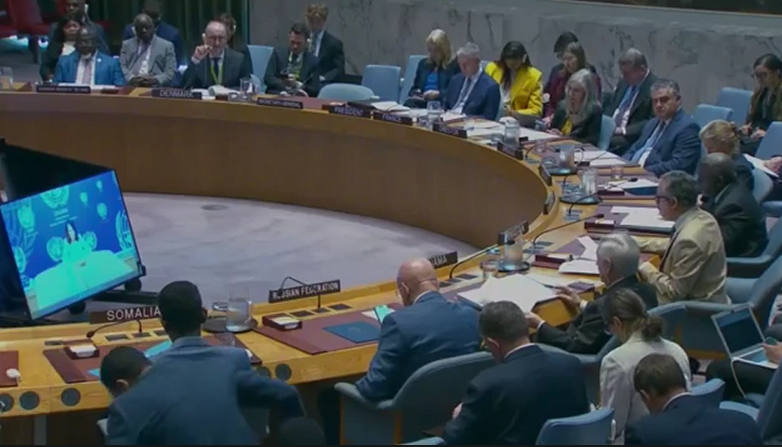
UNAMA’s Georgette Gagnon and former Republic envoy Nasir Ahmad Faiq articulated the structural diagnosis beneath these particulars: the Taliban regime has achieved territorial dominance without political legitimacy, and more than twenty terrorist groups have filled the space that legitimate, inclusive institutions were meant to occupy. This is the essay’s real argument. Five years of consolidation have not produced a state capable of honoring Doha’s counterterrorism guarantees; they have produced a governing apparatus whose survival depends on the same exclusionary, unaccountable methods that make sanctuary-denial commitments structurally unenforceable. Stability without legitimacy does not eliminate the conditions that produce terrorism, it merely rebrands them as internal order.
If five years of Taliban rule have demonstrated anything, it is that voluntary compliance has failed as a mechanism. What the moment demands is a shift from declaratory concern to binding, time-bound benchmarks, coordinated action on outstanding 1267 Committee terrorist designations for BLA and Majeed Brigade, verifiable disruption of terrorist financing tied to Afghanistan’s illicit economy, and explicit linkage between any future recognition or economic engagement and measurable counterterrorism performance. Absent that shift, the international community risks doing precisely what the Taliban regime has counted on since 2021: mistaking the absence of open conflict for the presence of compliance.