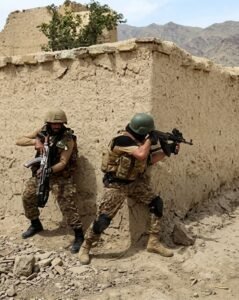
Field Marshal Syed Asim Munir’s visit to Quetta Garrison on 5 September carried a message that went beyond the routine choreography of a command briefing. What ISPR’s statement described, a review of operational preparedness alongside institutional coordination and socio-economic development, reflects a deliberate attempt to reframe Balochistan’s security conversation away from a purely kinetic register and toward one of consolidation. The timing matters. This visit did not occur in isolation; it came after a sustained sequence of operations against terrorist networks in the province, and it signals that the military’s own assessment of the threat has moved from containment to the harder task of institutionalizing peace.
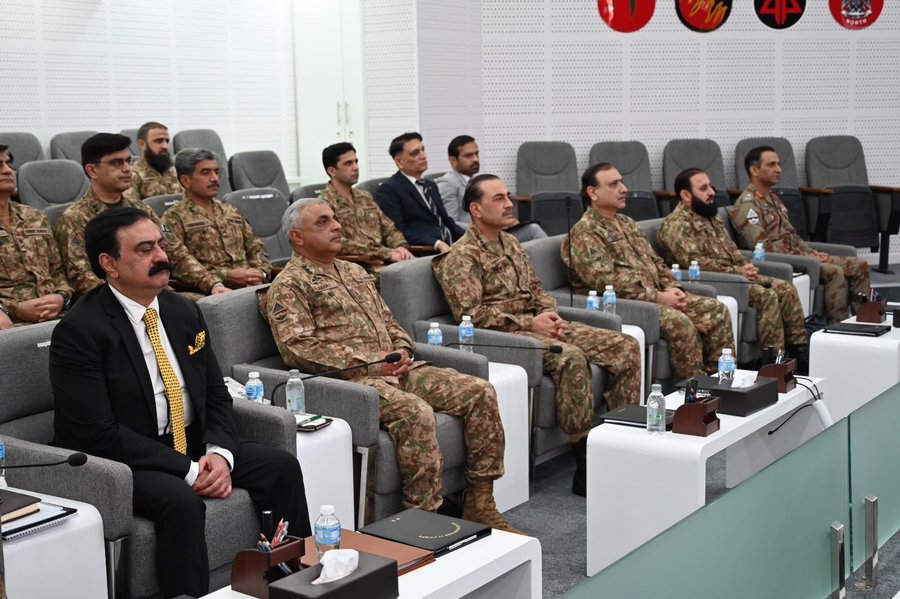
That distinction is not semantic. For years, official communication on Balochistan tended to foreground tactical success, an operation concluded, a terrorist neutralized, a network disrupted. The Quetta briefing instead placed equal weight on coordination among law enforcement agencies and other state institutions, and on the socio-economic dimension of stability. This suggests an acknowledgment, implicit but unmistakable, that terrorism in Balochistan has never been a purely military problem. Groups such as the BLA have adapted precisely because governance gaps, economic marginalization and grievance narratives around missing persons have supplied them recruitment material that force alone cannot exhaust. A security apparatus that only responds to attacks cedes the deeper contest, the one over which narrative explains the province’s condition to its own people.
Field Marshal Munir’s emphasis on the peace, prosperity and wellbeing of Balochistan’s population as central to state effort is best read against this backdrop. It is not simply rhetorical reassurance directed at a restive province; it is an argument that security and development are sequential rather than parallel tracks, that a stable environment is the precondition for the economic activity Balochistan needs to disrupt the pipeline that feeds terrorism in the first place. This logic aligns with the broader posture Pakistan has adopted since the launch of Azm e Istehkam, which explicitly frames counter terrorism as inseparable from governance reform and economic integration rather than as a standalone military campaign.
The operational readiness on display at Quetta Garrison should be read in that same light. Terrorist groups operating in Balochistan have shown increasing sophistication, not only in the frequency of attacks but in their propaganda ecosystems, which amplify isolated incidents into a narrative of state failure while obscuring the extent of counter terrorism gains on the ground. Sustained coordination among law enforcement agencies is the practical answer to that asymmetry: it denies terrorist networks the operational seams they have historically exploited, whether through cross border logistics or through gaps between civilian and military jurisdiction. The Commander Quetta Corps’s reception of the Field Marshal, and the presence of field formation commanders at the briefing, indicate an effort to keep this coordination anchored at the operational level rather than confined to policy statements issued from Rawalpindi or Islamabad.
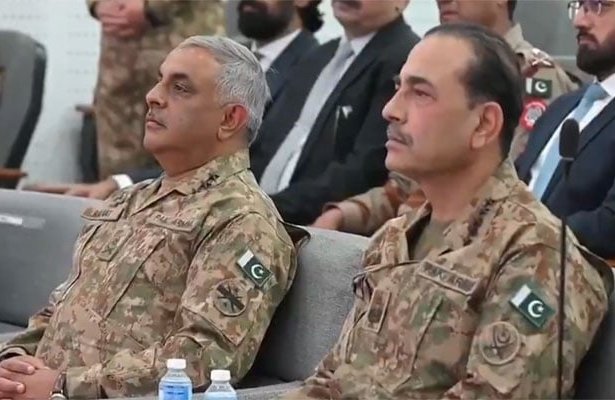
The tribute paid to fallen soldiers during the visit is not incidental either. It functions as a reminder that the institutional gains being consolidated in Balochistan were not cost free, and that the transition from active operations to sustained stabilization carries its own risks of complacency. Peace that is not actively maintained tends to erode exactly where terrorist networks look to re-establish themselves, in the gaps between security operations and the socio-economic follow through that is supposed to fill the space they leave behind.
What the Quetta visit ultimately represents is a test of sequencing. Pakistan’s security establishment has demonstrated, over a sustained period, the capacity to degrade terrorist networks operationally. The harder and more consequential task, translating that operational gain into durable socio-economic stability for Balochistan’s population, is the one Field Marshal Munir’s visit was explicitly designed to signal. Whether that translation succeeds will depend less on future operations than on whether institutional coordination announced in Quetta actually reaches the province’s development ledger.