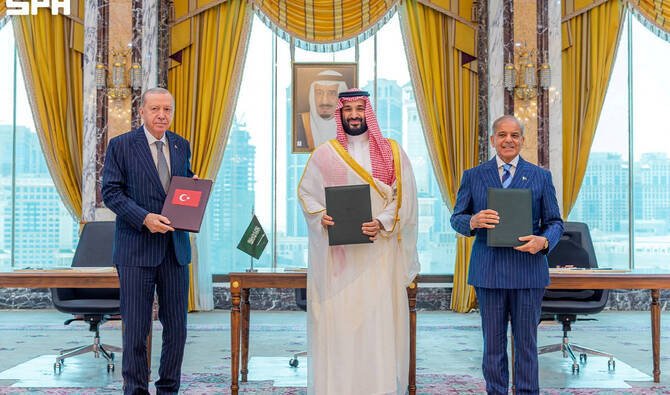
When Pakistan, Saudi Arabia and Türkiye signed the Makkah Joint Defence Agreement, much of the commentary reached instinctively for the NATO comparison, an Article 5 for the Muslim world, an attack on one treated as an attack on all. That comparison, repeated even by Turkish officials, flatters the agreement while missing what actually makes it workable. NATO’s credibility rests on decades of integrated command structures and a reasonably shared threat picture. The Makkah pact has neither. What it has instead is a deliberately unspecified trigger, and that vagueness, rather than undermining the arrangement, is the only thing that makes it possible at all.
Consider what the three signatories actually agree on. Ankara regards Israel as the principal regional threat; Riyadh, for all its recent alignment against Israeli and Iranian aggression, has historically weighed Iran as the greater danger. Pakistan sits uneasily between both calculations while trying, as its own officials have repeatedly stressed, to preserve balanced relations with Washington and Tehran alike. A pact that bound its members to an automatic, predetermined military response would have collapsed under the weight of these divergent threat perceptions before the ink dried. By leaving the nature, scale, location and timing of any triggering attack to case-by-case consultation, the agreement lets three states with genuinely different enemies sign the same document without pretending they share one.
The Houthi strikes on Saudi Arabia since the signing have already tested this design, and the test is instructive rather than damning. Pakistan’s confirmation that no immediate military response under the Makkah framework. The framework performed exactly as structured: it is an architecture for calibrated deterrence, not a tripwire alliance obligated to escalate every regional flashpoint into a three-country war. Deterrence value here comes less from the certainty of a response than from the uncertainty of restraint, adversaries cannot assume any given provocation falls safely below the threshold.
Pakistan’s position inside this arrangement carries a weight the other two lack, and a corresponding exposure. As the only nuclear-armed state among the three, Islamabad supplies the coalition’s ultimate deterrent alongside its manpower and combat experience, while Saudi Arabia brings financial depth and Türkiye its defence-industrial base. That combination is precisely why analysts have described the pact as folding Pakistan’s nuclear umbrella into a Middle Eastern security picture it does not unilaterally control the triggers for, a strategic asset lent to an architecture whose activation depends on partners’ judgment as much as its own.
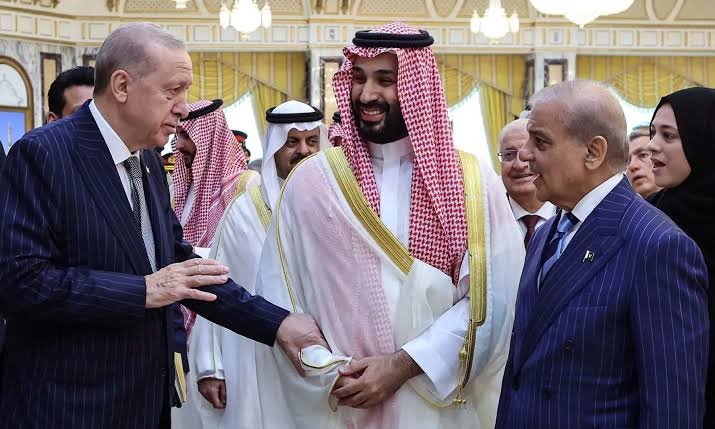
The pact’s durability, then, will not be decided by declaratory summits or illuminated skylines but by the unglamorous institutional work already under way: the secretariat taking shape in Saudi Arabia, the joint defence-industrial cooperation agreed in Istanbul, the training and technology arrangements that turn a signed page into standing capability. Ambiguity bought the agreement its signatures. Only institutionalisation will decide whether it earns its deterrent value.