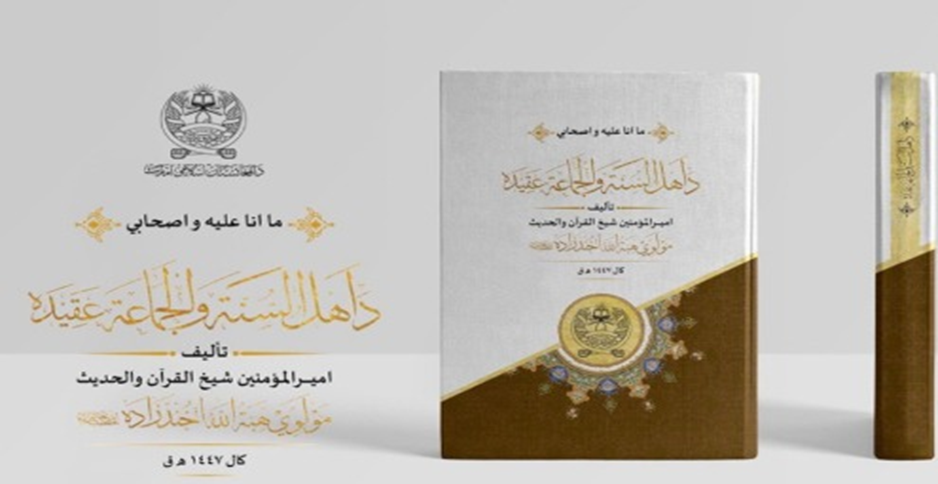
Mullah Hibatullah Akhundzada book D Ahl al-Sunnah wal-Jama’ah Aqeedah sets out clear religious principles that expose the contradiction between the Tehrik-i-Taliban Pakistan’s claims and its actions. Because the TTP presents the Afghan Taliban as its ideological model, the standards written in this 179-page work become a direct test of the group’s religious legitimacy.
On pages 131 and 132, the text stresses the prohibition of raising the sword against fellow Muslims and the obligation to respect their lives and property. The TTP’s repeated armed attacks on Pakistani civilians and security personnel stand in direct contradiction to this principle. When an organization that presents itself as a defender of the faith systematically targets the very people the text seeks to protect, its religious justification is weakened at the foundation.
Page 133 advises against rebellion against a ruler even in the face of oppression, except where the ruler explicitly commands disobedience to God. The TTP’s sustained armed campaign against the Pakistani state does not meet this narrow exception. The group’s strategy of continuous violence therefore raises a basic question about whether its actions can be reconciled with the standard set by the Afghan Taliban’s own leadership.
Pages 108 and 109 warn against declaring a Muslim an unbeliever merely on the basis of sin, while pages 135 to 139 condemn sectarian division and differences that undermine collective unity. The TTP’s takfiri rhetoric and the violence that flows from it conflict with both warnings. A movement that simultaneously invokes religious authority and practices the very forms of condemnation and disunity the text rejects cannot claim consistent adherence to the principles it cites.
Page 141 presents justice, trustworthiness, and the avoidance of betrayal as religious duties. Measured against this standard, the gap between the TTP’s stated claims and its operational record becomes difficult to ignore. The same principles that demand restraint and fairness are set aside when the group pursues its armed objectives.
The Afghan Taliban bear responsibility for ensuring that their territory is not used against Pakistan. Their failure to take effective steps against TTP cross-border operations and sanctuaries highlights a further contradiction between the religious positions articulated in the book and the practical policy pursued on the ground. If the principles in D Ahl al-Sunnah wal-Jama’ah Aqidah are to be treated as authoritative, then preventing the use of Afghan soil for attacks on Pakistan is their necessary practical expression.
The TTP invokes religious teachings to justify its armed campaign, yet its actions repeatedly violate the very restraints the book places on the treatment of Muslims, the limits of takfir, and the conditions for rebellion. Until the Afghan Taliban act decisively to stop the TTP from using Afghan territory against Pakistan, the distance between the principles recorded in the book and the violence carried out in their name will remain unresolved.