
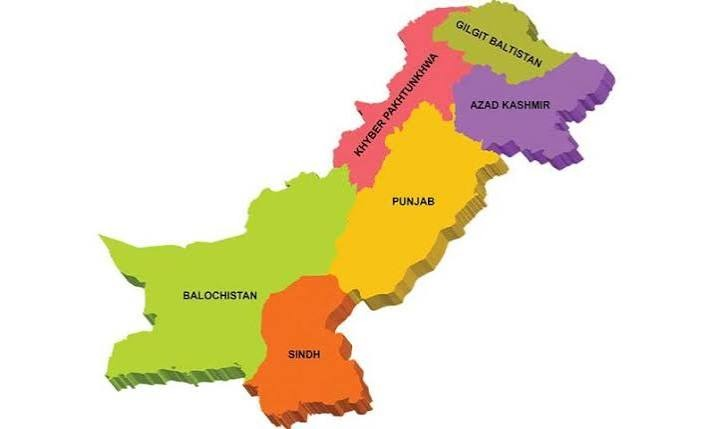
Pakistan’s debate over new provinces has entered a new phase in 2026. Calls for administrative restructuring have once again moved to the center of national political discussion, reflecting a growing recognition that Pakistan’s governance structure must evolve with its expanding population, rapidly growing cities and increasingly complex development needs. The case for new provinces rests on a fundamental administrative principle: governance becomes more effective when power, resources and decision-making move closer to the people.
The demand for new provinces has a long political history. On May 3, 2012, the National Assembly passed a resolution calling for the creation of Janoobi Punjab to address the political, administrative and economic interests of southern Punjab. Demands for separate administrative units have also remained prominent in Hazara and Bahawalpur. These demands have repeatedly returned to national debate because they reflect persistent concerns over representation, administrative access and regional development.
The pressures behind the debate have intensified. Pakistan’s population has grown from around 34 million at independence to more than 240 million, while urbanization has expanded and demand for healthcare, education, infrastructure, employment and efficient public services has increased. Four provinces now carry enormous administrative responsibilities across highly diverse populations and territories. For citizens living far from provincial capitals, geographical distance can translate into administrative distance.
Supporters of new provinces argue that this scale has created an oversized governance structure. Major institutions, resources and decision-making remain concentrated around provincial capitals, while distant regions compete for attention and development funds. New provinces will bring administrative institutions closer to regional populations, strengthen representation and allow development priorities to be shaped around local economic and social realities.
Critics raise legitimate concerns about financial costs, additional bureaucracy and political fragmentation. New provinces will require assemblies, secretariats, departments and administrative infrastructure. Without institutional reform, existing inefficiencies could also be reproduced under new provincial governments. These concerns demand careful planning, fiscal discipline and strong accountability.
However, they do not undermine the central case for administrative decentralization.The strongest argument for new provinces is the devolution of power, resources and decision-making.
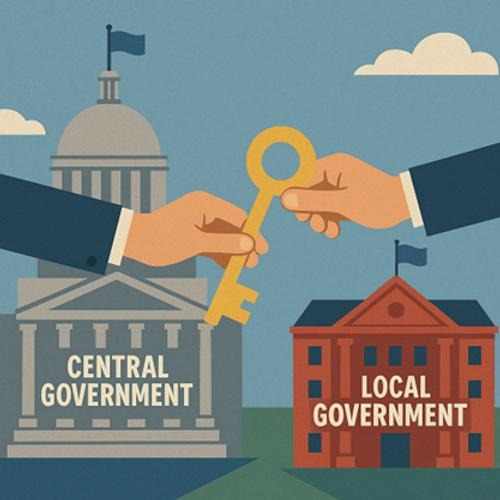
A smaller province will bring major government institutions closer to regional populations. Empowered districts and municipalities will take this process further by placing authority directly within communities. Instead of local problems travelling through multiple layers of administration before receiving attention, decision-making will move closer to the people affected by those decisions.
Devolution will also transform development planning. Agricultural regions will be able to prioritize irrigation, livestock, agro-processing and rural infrastructure. Rapidly urbanizing districts will be able to focus on transport, housing, water supply and municipal services. Regions facing shortages of hospitals, doctors, schools or teachers will be able to direct resources toward those gaps.
Development will follow local needs rather than remain concentrated around established political and economic centers.
China offers an important comparative lesson. Its reforms have included greater administrative and fiscal authority at sub provincial levels. Under the province-managing-county model, decision-making and fiscal responsibilities were shifted closer to counties, with the World Bank noting greater clarity in responsibilities, increased attention to rural areas and improved access to rural services.
Pakistan does not need to replicate China’s political system to apply this administrative lesson. The relevant principle is straightforward: when governments receive greater authority, resources and responsibility, they can design policies around local economic conditions and service-delivery needs. Decentralization can therefore help channel investment toward regions that have historically remained distant from major centers of political and economic activity.
South Punjab demonstrates the potential of this approach. A dedicated provincial administration will be able to develop a long-term regional strategy around agriculture, irrigation, livestock, agro-processing, industry, education, healthcare and connectivity. Regional economic strengths can be connected to value-added industries, creating employment and attracting investment within the region.
The same principle applies to other geographically distant regions. New provinces will create stronger regional institutions and greater political representation, while empowered local governments will ensure that decentralization continues beyond the provincial capital. Article 140A of Constitution of Pakistan requires provinces to establish local government systems and devolve political, administrative and financial responsibility and authority to elected local representatives.
Constitutional restructuring also has a defined legal route. Under Article 239, a constitutional amendment altering provincial boundaries requires approval by two-thirds of the total membership of the relevant Provincial Assembly, in addition to the required two-thirds majorities in both Houses of Parliament. The 2026 debate therefore presents Pakistan with an opportunity to modernize its governance structure.
New provinces will bring power, resources and development closer to the people.
They will strengthen regional institutions, improve development planning and reduce the administrative distance between citizens and the state. Combined with empowered local governments, responsible fiscal arrangements and professional administration, new provinces will distribute development more evenly and strengthen public service delivery.
Pakistan’s governance challenge is no longer simply about managing existing provinces. It is about building a state structure capable of reaching every citizen effectively. Administrative decentralization will bring that structure closer to the people, making governance more responsive and development more geographically inclusive.